With the support of two of Birmingham’s most dedicated philanthropists, the University of Alabama at Birmingham (UAB) Marnix E. Heersink School of Medicine will be able to strengthen the pipeline of early career neurologists serving Alabama’s communities.
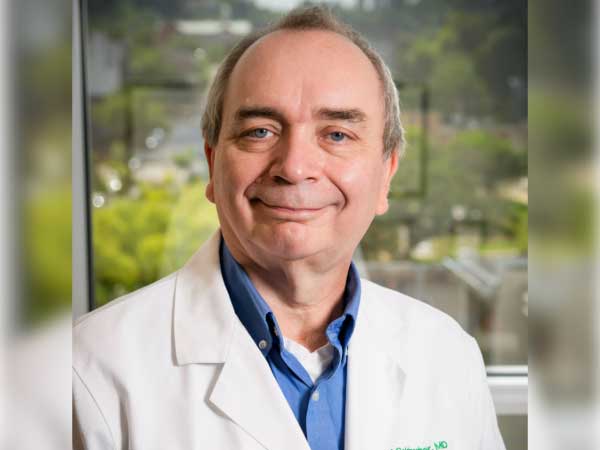 David Geldmacher, M.D., FANA, FACPMike and Anne Warren have been among UAB Neurology’s most steadfast supporters and champions in the community since their 2008 gift to create the Warren Family Endowed Chair in Neurology, which was designed to recruit and retain internationally recognized experts in the field to UAB.
Almost two decades later, the Warren Fellowship in Cognitive and Behavioral Neurology - created through a $500,000 gift - will support aspiring neurologists at the opposite end of their careers, encouraging promising physician-scientists to dedicate themselves to better understanding, treating, and potentially curing neurodegenerative disorders like Alzheimer’s.
“The Warrens are longtime supporters and friends of UAB whose generosity and involvement are felt across all parts of our campus-from our Women and Infants Center, O’Neal Comprehensive Cancer Center, and Heersink School of Medicine, to the Collat School of Business and the College of Arts & Sciences, to WBHM,” said UAB President Ray L. Watts, M.D. “We are deeply grateful for the Warrens’ vision, compassion, and passion for giving that continues to impact the lives of countless patients and their families.”
Meeting the Moment
More than 103,600 Alabama residents, including nearly 12 percent of seniors, currently live with Alzheimer’s. In 2024, Alabama had the sixth-highest rate of Alzheimer’s-related deaths in the United States-a 166 percent increase from 2000-and the incidence of Alzheimer’s and related dementias will only continue to grow as our population ages.
Alzheimer’s is “a disease that knows no socioeconomic boundary,” as Mike Warren put it. “The queen can have it, and so can the pauper.” It’s a fact that the Warren family knows only too well.
“My mom and dad both had dementia,” said Anne Warren. “My mom had Alzheimer’s, my dad had Lewy body 25 years ago-it was not diagnosed until he died-and both of Mike’s parents had dementia. I had a brother who had early onset and died about three years ago.”
The Warrens first began to get involved with UAB Neurology through the Beeson Forum on Aging, an annual conference hosted by their church, Canterbury United Methodist.
“We began to realize that dementia was a real problem in the area, so we had different speakers come and speak on that,” said Anne, who helped organize the conference for approximately 15 years.
The forum’s keynote speakers have included David Standaert, M.D., Ph.D., John N. Whitaker Professor and Chair of the Department of Neurology; Erik Roberson, M.D., Rebecca Gale Endowed Professor and director of both the Frances Gorrie Alzheimer's Disease Center and the Killion Center for Neurodegeneration and Experimental Therapeutics (CNET); and David Geldmacher, M.D., FANA, FACP, University Professor, Vice Chair for Clinical Affairs, and Director of the Division of Cognitive and Behavioral Neurology.
“When Dr. Geldmacher came, Mike and I went to see him really before he’d even unpacked,” Anne said.
“Literally,” Mike interjected. “He had just come to UAB from Virginia.”
The Warrens quickly formed a lasting connection with Geldmacher, who became the inaugural holder of the Warren Family Endowed Chair in 2016. Anne even shared her recipe for sweet potato casserole with Geldmacher’s wife, Elizabeth.
The Warrens had previously set aside gifts to UAB Neurology in their wills, but after learning about the Killion family’s transformative gift to name the Killion CNET, they decided to take a more proactive approach.
“If we can do it now, why wouldn’t we?” Anne said. “Because who knows, in the next 10 or 15 years, what that investment now would mean down the road?”
“Research continues to be important, but so is what you’re going to do for these patients and their families now,” Mike said.
Building from the Ground Up
Anne first recognized the demand for additional neurologists through her “boots on the ground” involvement with Canterbury’s Encore Respite Ministry, which engages people with dementia in artistic enrichment, fitness exercises, games, and more. At a biweekly Encore support group she co-leads for caregivers, she began hearing a similar refrain from attendees.
“Most of our groups have 25 caregivers who come every week, and one of the things we hear is that there just aren’t enough neurologists,” Anne said, citing long wait times for clinical care.
“There is a desperate nationwide need for subspecialists in this field as the number of people affected by Alzheimer’s continues to grow and new complex disease-modifying treatments emerge,” said Geldmacher.
After consulting extensively with Geldmacher to identify the department’s greatest needs-and the areas where they could make the greatest impact-the Warrens decided to “jumpstart” the recruitment of neurology fellows.
A fellowship in cognitive behavioral neurology marks a critical step in a neurologist’s training, Geldmacher explained. It’s an opportunity not only to develop expertise in the recognition, diagnosis, and care of people with Alzheimer’s disease and related conditions, but also to satisfy a requirement to become board-certified in both behavioral neurology and neuropsychiatry.
Although UAB has had an accredited neurology fellowship since 2014, there had never been a dedicated funding source to support those fellows, who are not allowed to bill for their services or benefit from resources set aside for residency training.
“The Warrens’ gift will allow UAB Neurology to actively attract and support the best-qualified candidates in this complicated field over the next several years,” said Geldmacher. “We anticipate that those graduates will continue to bring expert dementia care to the population of Alabama for decades to come.”
From Charity to Philanthropy
When Mike entered into a second retirement following his 13-year tenure as president and chief executive officer of Children’s of Alabama, staying involved in philanthropy was never in doubt. The only questions were where and how.
“I was in charge of young people and Anne was in charge of old people,” Mike said with a laugh. “I was lucky and worked at two really great organizations and had a senior leadership position in both, and there’s a real difference in leaving that world and being a private citizen. People just don’t need you as much anymore, and you’ve got to be OK with that.”
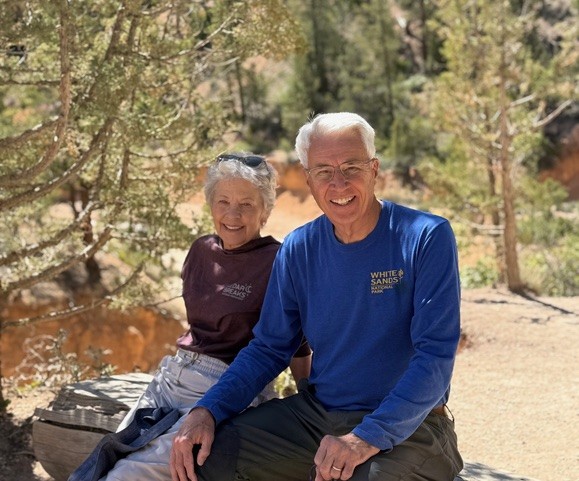 Photo courtesy of Anne and Mike Warren“He loved it,” Anne said, pointing out her husband’s collection of 62 Save the Children ties.
Together, the Warrens identified four pillars to focus their philanthropic efforts on: Children’s of Alabama, the Department of Neurology’s efforts in dementia research and care, United Way, and Canterbury United Methodist, including the United Methodist Church retreat at Lake Junaluska. While those pillars can change over time, both Mike and Anne emphasized that a narrow, strategic focus is one of the things that separates charity from philanthropy.
“Charity, to me, is: ‘I want to give a little money to lots of things,’” Mike said. “Philanthropy is: ‘I want to give targeted money to something that I care about, where I can maybe begin to make a difference.’ Giving $1,000 to an elephant orphanage in Africa is a good thing, and we’re glad to do it, but that’s charity-not philanthropy.”
Philanthropy, Mike says, is an investment. In the case of UAB, it’s an investment that has grown over the years.
“You don’t have to have millions of dollars to get started in philanthropy,” Mike said. “You can make a difference in an area that you care about, and perhaps your interest and your capacity to make a difference will continue to grow. And I think that’s part of our story with the Department of Neurology. We felt really good about the first thing we did there.”
The fruits of that 18-year relationship will help meet one of UAB Neurology’s most pressing needs. And in their well-deserved retirement, Mike and Anne Warren will continue to provide one of Birmingham’s premier examples of philanthropy in action.