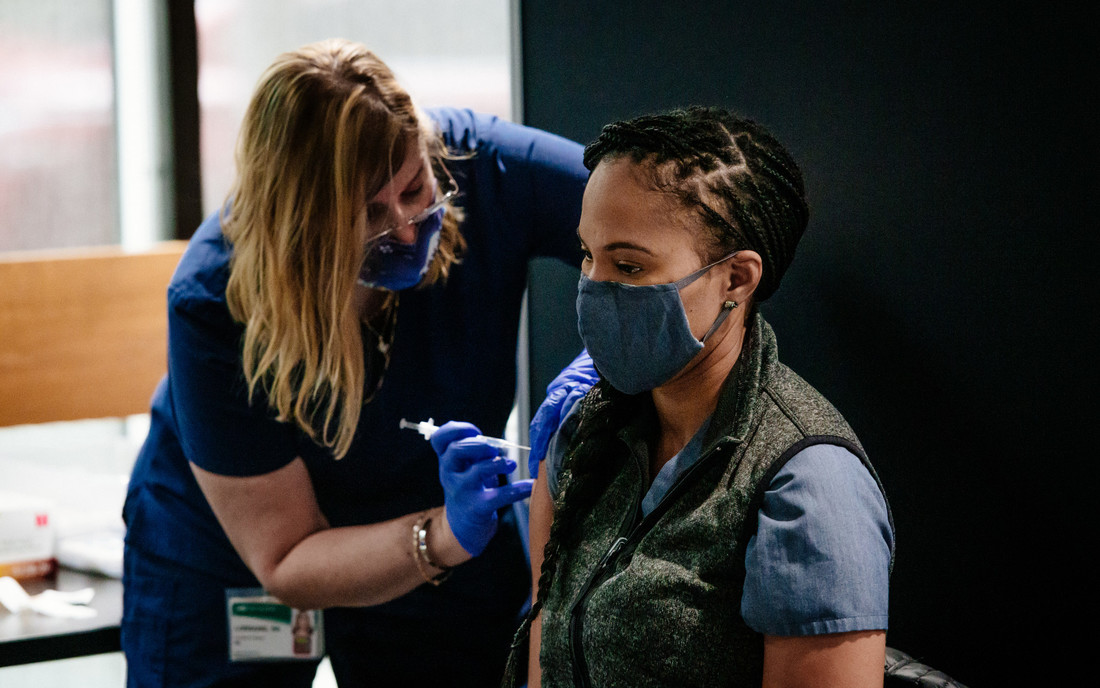
 UAB Medicine has begun administering COVID-19 vaccinations based on the Alabama Department of Public Health’s phased plan. But the Centers for Disease Control also recommends that patients stay current with other yearly immunizations.
Yearly immunizations are considered preventive, and family medicine physicians at the UAB Highlands and Hoover clinics are helping patients schedule appropriate immunizations while keeping their personal health history in mind.
“In addition to the COVID-19 vaccine, there are many vaccines that can help prevent illness and keep patients healthy,” said Erin DeLaney, M.D., assistant professor and vice chair for clinical care and quality in the Department of Family and Community Medicine. “These may include, but are not limited to, vaccines for the flu, pneumonia, shingles, tetanus, and meningitis. If patients have questions about these immunizations, they should discuss them with their primary care physician. Any of these vaccines can be safely given at least 14 days before or after the COVID-19 vaccines.”
Sameera Davuluri, M.D., assistant professor in the Department of Family and Community Medicine, notes the importance of consulting medical professionals when considering yearly immunizations.
“Patients should check in with their primary care doctor who knows their health history,” said Davuluri. “The medical community recommends that nearly everyone take the COVID-19 vaccine as it becomes available to them. The CDC has created a guide for those who have questions about whether or not they should take the vaccine.”
DeLaney and Davuluri outlined several recommendations pertaining to the COVID-19 vaccine and their responses to common questions asked by patients:
- The current available COVID-19 vaccines are safe for most people who are at least 16 years of age.
- Those who should not get a COVID-19 vaccine include anyone who has had a severe allergic reaction to a previous dose or component of either mRNA COVID-19 vaccine, an immediate allergic reaction of any severity to a previous dose or component of an mRNA COVID-19 vaccine (including polyethylene glycol), or an immediate allergic reaction of any severity to polysorbate.
- Precautions should be taken by those who have a history of immediate allergic reaction to any other vaccine or injectable therapy and those with moderate to severe acute illness.
- Patients who have had the COVID-19 illness, and those who have received the monoclonal antibodies or convalescent plasma treatment for the illness, need to wait 90 days before receiving the vaccine.
- Patients with chronic conditions can receive the vaccine.
- Patients who have immunocompromised conditions due to medications or illness may also receive the vaccine. These patients must be aware that there is currently an unknown safety profile or effectiveness of the vaccine in immunocompromised populations; there is potential for a reduced immune response; and there is still a need to continue to follow all current guidance to protect themselves against COVID-19.
A full list of immunization recommendations and guidelines is available on the CDC’s website.
To schedule an appointment with a UAB family medicine physician, visit uabmedicine.org or call 800-UAB-8816.
For more information about vaccination and COVID-19, visit UAB United or consult the following UAB resources: