 For parents of children with special health care needs, going to the dentist may come with questions that extend beyond teeth. When should I make the first appointment? What should I tell the dental office beforehand? And what happens if my child cannot make it through the entire visit?
Stephen Mitchell, a pediatric dentistry expert at UAB Dentistry, says one of the most helpful things families can do is establish dental care before a problem develops.
“Give your child time to become familiar with the dental office when there isn’t an urgent problem that needs to be treated,” Mitchell said. “Those early experiences give us an opportunity to build a relationship and develop trust at the child’s pace.”
Start before something hurts
When a child’s first dental visit happens because of a toothache or another urgent problem, there may be less opportunity to slowly introduce the environment and what happens during an appointment.
Starting earlier allows a child to experience simpler visits, become familiar with the dental team and begin building trust before more involved care is needed. For Mitchell, that relationship is especially important. Some children may need more time than others to become comfortable with a provider, and that does not have to happen during a single appointment.
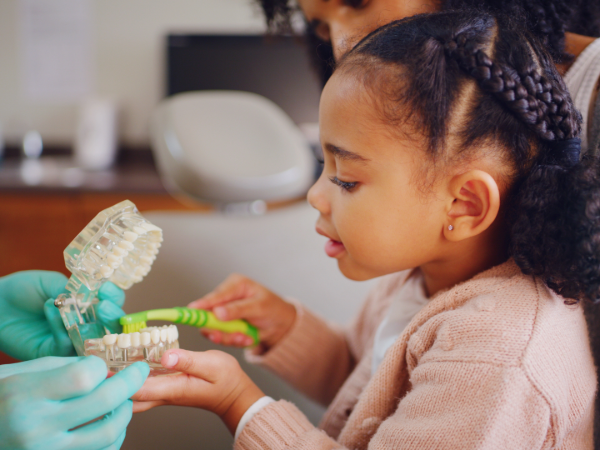
Parents can help build familiarity at home. Brushing and flossing not only keep teeth healthy but also give a child repeated experiences with having someone touch around their mouth and place something inside it. Even if those routines are difficult at first, continuing to practice can help make oral care more familiar over time.
Make prevention a priority
Preventing dental problems is important for every child, but it can take on additional importance when dental treatment may be more difficult for a child to tolerate.
Along with brushing and flossing, Mitchell encourages parents to pay attention to how frequently children are exposed to sugary foods and drinks.
“Even 100% fruit juice contains natural sugar that the bacteria in our mouths can use,” Mitchell said. “We’re not saying a child shouldn’t have birthday cake or enjoy candy on Halloween. What we really want families to think about is those frequent, day-to-day exposures.”
For children who may have a harder time undergoing dental procedures, preventing tooth decay can help reduce the need for more involved treatment later.
Share what you know about your child
Parents can also help the dental team prepare by sharing information about their child before the appointment. That may include previous dental or medical experiences, situations that may be difficult and strategies that have worked well in other settings.
Medication timing may be another consideration. For example, some children with ADHD take medication in the morning so its effects align with the school day. If a parent knows there is a particular time when their child generally does better, Mitchell recommends mentioning that when scheduling.
Parents should not change a child’s medication schedule on their own to accommodate a dental appointment. Any potential adjustment should first be discussed with the child’s medical provider.
Give progress time
A successful dental visit does not always mean completing everything in one appointment.
A child may be comfortable sitting in the dental chair but not yet ready to lie back. At another visit, turning on the overhead light may be the next step. Eventually, the child may feel comfortable allowing the dentist to look inside their mouth.
“Your child does not have to accomplish the entire appointment on the first trip,” Mitchell said. “Be patient and give the relationship time to develop. If we make a few steps in the right direction, we can continue building from there.”
Finding the right provider can be part of that process.
“Children connect with different people, and that’s okay,” Mitchell said. “A child may be hesitant with one provider and connect with someone else. Parents should feel comfortable looking for a practice and provider whose approach is a good fit for their child.”
When a child already has significant dental problems, has had difficult experiences receiving care or needs more support during treatment, Mitchell recommends seeking a dentist with appropriate additional experience. Depending on the child and the care needed, some treatment may require additional options, including hospital-based care or general anesthesia.
Did you know?
Your child doesn’t have to wait for a toothache to visit the dentist. Coming in just to explore the clinic and get to know the dental team can make all the difference when it’s time for treatment.
About the UAB Civitan-Sparks Dental Clinic
The UAB Civitan-Sparks Dental Clinic provides preventive and restorative dental care for children and adults with developmental and other disabilities, including autism, intellectual disabilities and sensory integration concerns. Co-directed by Mitchell, who has more than two decades of experience caring for patients with special health needs, the clinic provides individualized care that considers each patient’s health, communication, sensory and behavioral needs.
Article Attribution
Written by: Edlyn Olmos
Medically Reviewed by: Stephen Mitchell, D.M.D., M.S.
More Patient Education
Healthy Teeth for Kids: Oral Health Tips by Age
Why Age 7? UAB Dentistry Experts Explain the Importance of Early Orthodontic Visits