Biru Dudhabhate, PhD, from the UAB Department of Psychology, has been named a 2026–2027 Emerging Scholar by the Civitan International Research Center, receiving a $30,000 award to advance research into the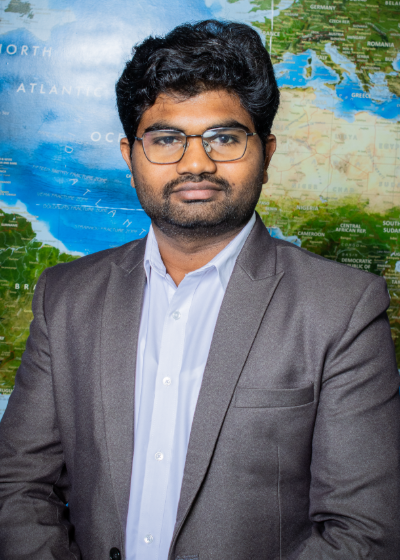 neural basis of cognitive variability in autism spectrum disorder.
As a J-1 international scholar from India, Dudhabhate has found a research environment that provides both the expertise and resources needed to pursue his work while supporting his transition to a new country and academic community.
“Coming to UAB as an international scholar has been a genuinely positive experience,” Dudhabhate said. “I chose UAB specifically because it hosts all the expertise and resources I need - not just to run the basic neuroscience research I'm doing, but to eventually help translate what we discover toward the clinic. Just as important, UAB has been genuinely supportive of international scholars, which made the transition into a new research environment and a new country much smoother.”
The UAB Civitan International Research Center’s Emerging Scholar Award provides research funding for clinical or basic science research related to brain development for trainees at the graduate student and postdoctoral fellow levels. Winning this award will help Dudhabhate investigate whether different genetic causes of autism may lead to similar underlying brain mechanisms.
“Receiving this award is an incredible honor, and it means a lot to have this project recognized at this stage,” Dudhabhate said. “Practically, the funding will let me build out a full comparative pipeline - running genetically distinct rat models of autism side by side, using the same behavioral task and the same neural recording setup for each one.”
Understanding the variability of autism
Dudhabhate's research focuses on a fundamental question: Why does cognitive ability vary so widely among individuals with autism?
“I'm using rat models of autism that arise from different genetic causes, and looking at two neurotransmitters, dopamine and acetylcholine, that help the brain combine past experiences with new information - something we think underlies a lot of the learning differences seen in autism,” Dudhabhate noted. “What I hope to learn is whether these very different genetic paths to autism all funnel into the same underlying brain mechanism, and whether that mechanism tracks with how severe someone's symptoms are.”
Dudhabhate hopes the research will contribute to a better understanding of why autism can look so different from one individual to another. Rather than focusing only on an “average” profile, his work seeks to identify biological mechanisms that may help explain differences in cognitive ability and symptom severity.
“If different genetic causes of autism really do converge on a shared brain mechanism, that would be a meaningful step toward understanding autism's variability, not just its ‘average’ profile,” Dudhabhate said.
“Ultimately, I want to close that gap down to the level of specific brain circuits, so that support can eventually be built around where someone actually is, rather than a one-size-fits-all model of the condition. That kind of understanding could shape more individualized approaches for both individuals with autism and their families.”
Dudhabhate's research is supported by UAB’s collaborative environment that spans multiple departments.
"UAB scientists are working to solve the puzzle that ASD presents using approaches that span single cells, animal models, human participant research, clinical trials, and clinical practice," said Director of UAB's Civitan International Research Center Dr. Craig M. Powell, MD, PhD. "These resources and UAB’s many Core Facilities allow our scientists to move smoothly across technical approaches through collaboration across disciplines."