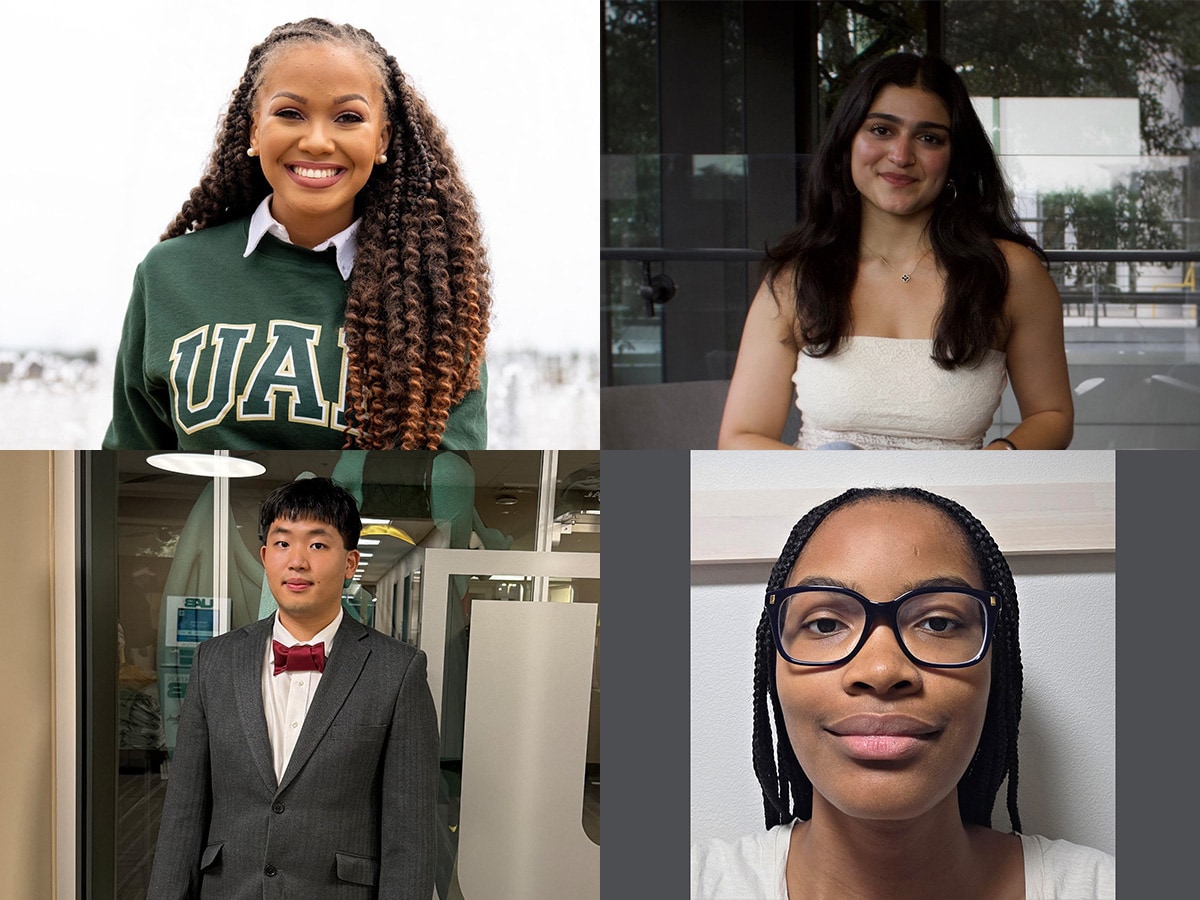
Twenty-eight honors students were selected for the UAB Honors College’s annual and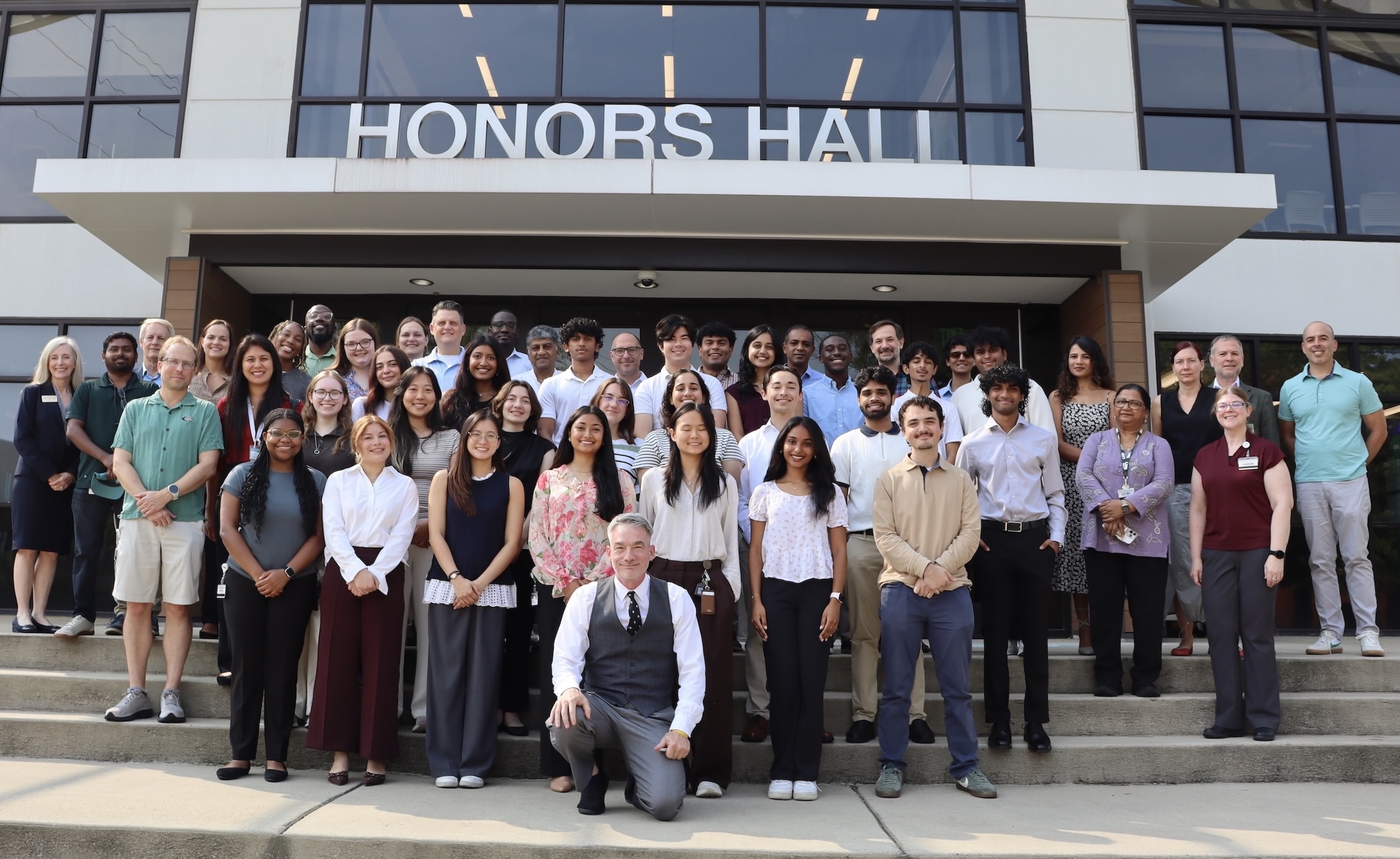 2026 Presidential Honors Fellowship cohort with mentors and UAB leadership competitive Presidential Honors Fellowship (PHF) program to help promote undergraduate research, creative activity, and community engagement.
“It was a delight to coordinate the 2026 Presidential Honors Fellowship,” said Kevin Fontaine, Ph.D., assistant dean of the UAB Honors College. “I enjoyed getting to know our amazing Honors College students and marvel at their motivation, persistence, and willingness to take on new challenges.”
Summer enrichment through experience
Presidential Honors fellows were provided funding to develop scholarly research in a variety of disciplines that included the arts and humanities, social and behavioral sciences, and STEM fields. Each student was paired with a UAB faculty mentor who supervised their project. Students dedicated at least 20 hours a week for a 10-week period to the successful completion of their project.
Fellows participated in a series of honors workshops designed to develop their skills and advance their projects that included Happiness: The Good, The Bad, and The Ugly by Assistant Dean Kevin Fontaine, Ph.D.; Breaking Down Your Project! You’re Studying What? by Cristin Gavin, Ph.D.; Interviewing Skills by Nikki Sarabat; Study Strategies by Associate Dean Mark Bevensee, Ph.D.; You Should Absolutely Apply for Nationally Competitive Awards! by Michelle Cook, Ph.D.; Self-Care Isn’t Selfish: It’s Neurobiological by Angela Stowe, Ph.D.; Giving a Proper Poster Presentation by Ian Miranda; and Money Basics for Students by Stephanie Yates, Ph.D.
To culminate the summer research experience, students and their mentors convened together to discuss their research for a special celebratory brunch that featured remarks from Jason Nichols, Ph.D., interim vice president for research; Shannon L. Blanton, Ph.D., dean of the UAB Honors College; and Dr. Fontaine. They also presented their fellowship work-product at the UAB Summer Expo.
“As one of many creative and scholarly opportunities offered in the UAB Honors College, the Presidential Honors Fellowship gives students the flexibility to develop and share their love of research with like-minded students while gaining fundamental insights from UAB faculty and leadership,” Dr. Blanton said. “This programming positioned students to become engaged members of our scholarly community who will continue their own journey of exploration and innovation.”
Partnerships that advance research
As an extension of the Presidential Honors Fellowship, three additional students were selected for the American Heart Association (AHA) Summer Undergraduate Research Fellowship (SURF) Program, a partnership between the Honors College and Heersink School of Medicine Department of Medicine— Cardiovascular Disease. Through the program, honors students received funding to learn and develop research about cutting-edge science and medicine in the field of cardiovascular disease over a 10-week period where they dedicated 40 hours a week. Students presented their research results at the AHA Basic Cardiovascular Science Council (BCVS) meeting in Boston, MA. They are slated to present their findings at the Cardiovascular Center (CCVC) Annual Symposium in October.
From the classroom to student researchers
For many honors students, the Presidential Honors Fellowship was their first introduction into learning and practicing various forms of research and scholarly activity. By combining their classroom knowledge and research experiences, they worked on passion projects that enabled them to create a path of purpose in alignment with their major.
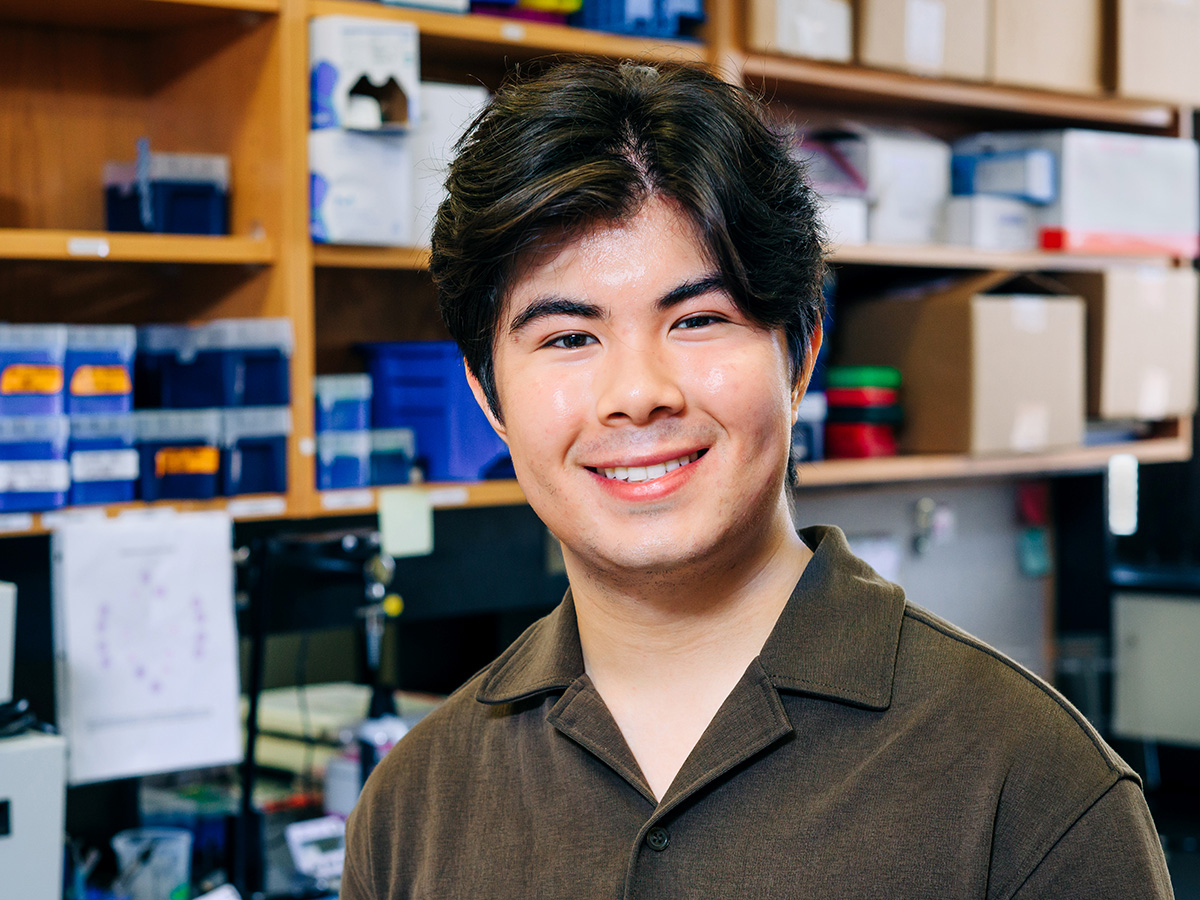
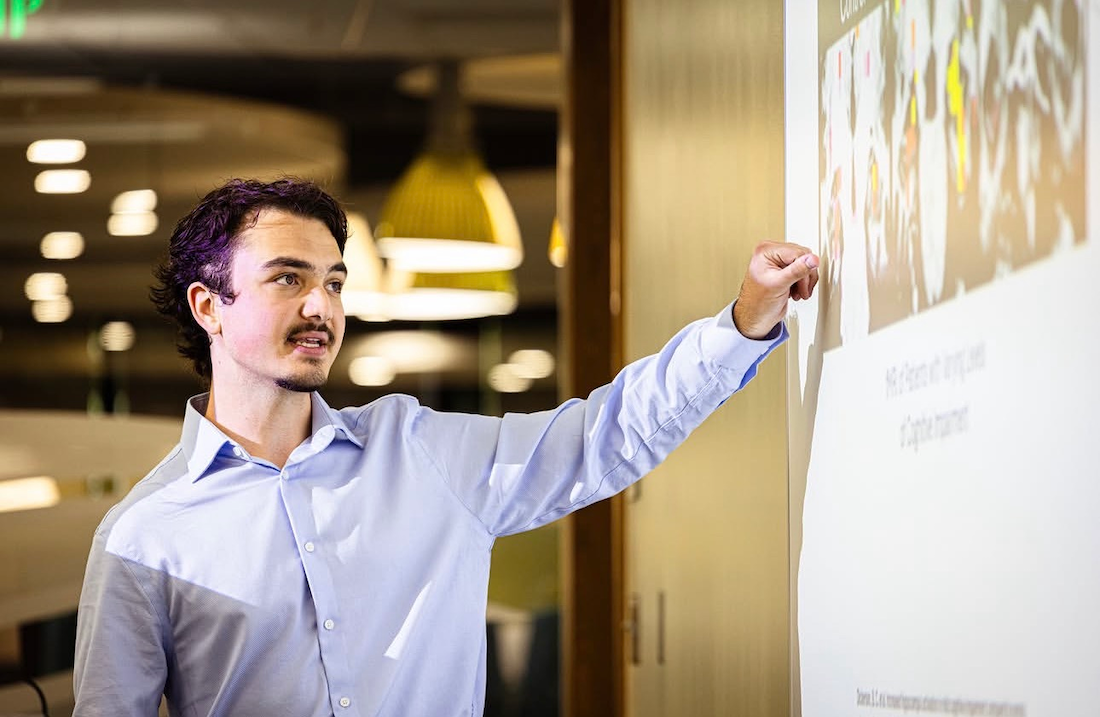 Ibrahim Hamo presenting his research at the UAB Summer Expo
First-year honors student Ibrahim Hamo credits the fellowship in helping hone his skills in electrophysiology. “In the Presidential Honors Fellowship program, I was able to build a meaningful role in my lab, while receiving training on mouse surgeries, vibrating microtome slicing, and electrophysiological recording on mouse brain slices,” Hamo said. “This role will allow me to make real contributions to my lab's work moving forward.” Throughout the process, he learned new study and retention skills that will aid future coursework. “Challenging concepts in my lab forced me to adopt a new learning strategy involving concept maps that greatly increased my information retention and studying efficiency,” Hamo said. “I plan on using this method of processing information in my future classes as a genetics major.”
The Presidential Honors Fellowship was also an enlightening 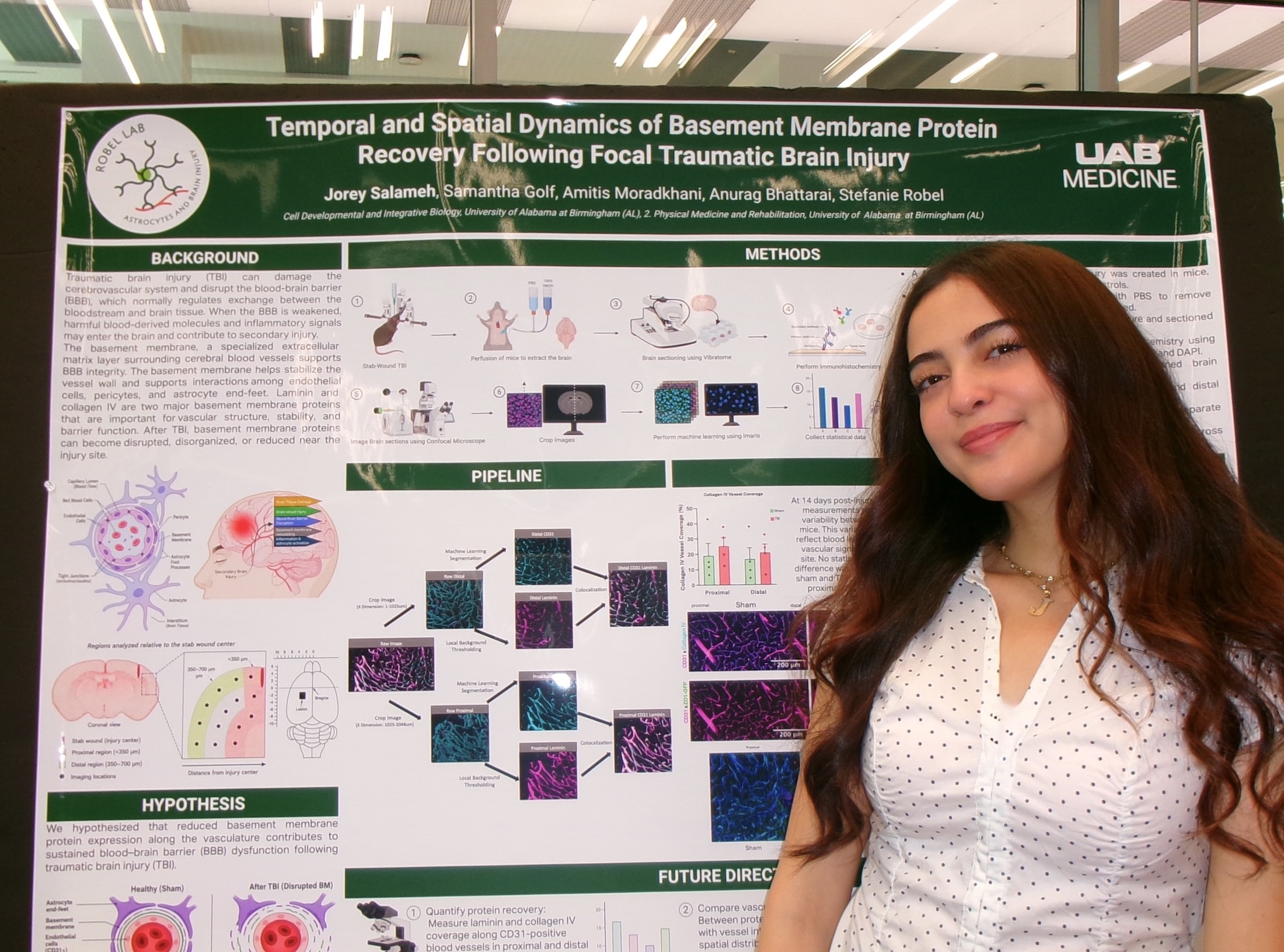 Jorey Amer Salameh presenting her research at the UAB Summer Expoexperience for Jorey Salameh, third-year honors student, because it allowed her to get involved, while learning more about herself. “The Honors College Presidential Honors Fellowship was a very meaningful experience because it encouraged me to challenge myself, explore new opportunities, grow both personally and academically, and become more engaged within the Honors College,” Salameh said. Additionally, she learned valuable lessons in making connections with people who share similar and opposing viewpoints. “I learned that growth often comes from stepping outside my comfort zone and being willing to take on new challenges, especially while building connections with other students,” Salameh said. “To me, growth is the value of connecting with people who have different goals, experiences, and perspectives, and how much we can learn from one another.”
The 2026 Honors College Presidential Honors Fellowship participants included:
Ala'a Al-Najjar
“Evaluating Safety and Efficacy of Atherosclerosis Drugs on Invitro Blood Vessel Models”
Mentor: Ho-Wook Jun, Ph.D.; School of Engineering and Heersink School of Medicine, Department of Biomedical Engineering
Anshuman Amraotikar
“Insulin and Insulin-like Growth Factor 1 Signaling Pathway (IIS) in Caenorhabditis Elegans”
Mentor: Liou Sun, M.D., Ph.D.; College of Arts and Sciences, Department of Biology
Aditya Anandakumar
“Recoloring Our Understanding of Melanocyte Biology: A Comparative Analysis of Marker Expression in Pheomelanocytes and Eumelanocytes”
Mentor: Melissa Harris, Ph.D.; College of Arts and Sciences, Department of Biology
Caylee Barnes
“Role of Neuro-specific Splicing Dysregulation in Alzheimer's Disease Progression”
Mentor: HaoSheng Sun, Ph.D.; Heersink School of Medicine, Department of Cell, Developmental and Integrative Biology
Aanchal Behara
“Modeling Hyperexcitability: Investigating the Role of Tau-SH3 Interactions on Tau’s Secretion”
Mentor: Erik Roberson, M.D., Ph.D.; Heersink School of Medicine, Department of Neurology
Katie Brubaker
“Usability of 3D Printed Adaptive Equipment Among Occupational Therapy Practitioners in Alabama”
Mentor: Deek Cunnigham, Ph.D.; School of Health Professions, Department of Occupational Therapy
Jahan Fatima
“Mitochondrial Regulation of Neural Maturation and Cognitive Function in C. Elegans”
Mentor: HaoSheng Sun, Ph.D.; Heersink School of Medicine, Department of Cell, Developmental and Integrative Biology
Nabeeha Fatima
“Characterizing The Role of Damage Associated Molecular Pattern (DAMP) Molecules in Mediating Acute Lung Injury Caused by Chlorine”
Mentor: Shama Ahmad, Ph.D.; Heersink School of Medicine, Department of Anesthesiology and Perioperative Medicine
Tahzjayee Gaymon
“Spectroscopic and Kinetic Studies of f-block Complexes for Targeted Alpha Therapy”
Mentor: Mikaela Pyrch, Ph.D.; College of Arts and Sciences, Department of Chemistry
Ibrahim Hamo
“Determining The Role of Small Molecule Inhibition of Tau-SH3 Interactions on Hippocampal Hyperexcitability”
Mentor: Erik Roberson, M.D., Ph.D.; Heersink School of Medicine, Department of Neurology
Sri Hari
“Identifying Patient-Reported Cognitive Task Priorities in Stroke Rehabilitation”
Mentor: Gitendra Uswatte, Ph.D.; College of Arts and Sciences, Department of Psychology
Jenna Hooper
“Self-Paced Reading Pauses Tied to Phase Boundaries During Sentence Comprehension”
Mentor: Matthew Nelson, Ph.D.; Heersink School of Medicine, Department of Neurosurgery
John Kicklighter
“AI-Guided Therapeutic Testing for ZC4H2”
Mentor: Camerron Crowder, Ph.D.; Heersink School of Medicine, Department of Neurobiology
Eshika Kudaravalli
“Tumor-Intrinsic Suppression of Phagocytosis by Epithelial Membrane Protein 2 (Emp2) in Glioblastoma”
Mentor: Erin Ahn, Ph.D.; Heersink School of Medicine, Division of Molecular and Cellular Pathology
Jamie Lo
“Evaluation Of the Role Of PU.1 In Cancer-Associated Fibroblasts in Breast Cancer Progression”
Mentor: Rob Welner, Ph.D.; Heersink School of Medicine, Division of Hematology and Oncology
Grace Lu
“Understanding The Role of Streptococcus Pneumoniae Virulence in Cardiac Dysfunction”
Mentor: Carlos Orihuela, Ph.D.; Heersink School of Medicine, Department of Microbiology
Maribel Marrero
“Mass Spectrometric Characterization of the Mitochondrial N-glycan Profile of In Vitro Neuroinflammation Models”
Mentor: Juhi Samal, Ph.D.; School of Engineering and Heersink School of Medicine, Department of Biomedical Engineering
Neha Masani
“Identifying Flow rates that minimize pathologic shear – dependent elongation of von Willebrand Factor (vWF) under LVAD-associated continuous flow”
Mentor: Palaniappan Sethu, Ph.D.; School of Engineering and Heersink School of Medicine, Department of Biomedical Engineering
Abdul Mohammed
“Implementation of Early Intervention Education on Bedside Manner to Improve the Perceptions and Behaviors of Healthcare Professionals”
Mentor: Bobby Jones, Ph.D.; School of Health Professions, Department of Clinical and Diagnostic Sciences
Talal Musaed
“Prelimbic Somatostatin Interneurons Role in Adaptive and Maladaptive Behaviors”
Mentor: Kristie Cummings, Ph.D.; Heersink School of Medicine, Department of Neurobiology
Connor Nguyen
“Biomechanical Profiling of Murine Fibroblasts in Triple-Negative Breast Cancer”
Mentor: MK Sewell-Loftin, Ph.D.; School of Engineering and Heersink School of Medicine, Department of Biomedical Engineering
Sasank Padarti
“Evaluating the Impact of TAU-SH3 Inhibition on the Seeding Potency of Toxic Tau Protein”
Mentor: Erik Roberson, M.D., Ph.D.; Heersink School of Medicine, Department of Neurology
Amelia Petit
“14-3-30 Protein Phosphorylation on A Α-Synuclein Spread in Mice Brain Tissue”
Mentor: Talene Yacoubian, M.D., Ph.D.; Heersink School of Medicine, Department of Neurology
Jorey Amer Salameh
“Characterizing Laminin and Collagen IV Dynamics in the Cerebrovascular Basement Membrane After Focal Traumatic Brain Injury”
Mentor: Stefanie Robel, Ph.D.; Heersink School of Medicine, Department of Physical Medicine & Rehabilitation
Robert Munive Suarez
“Sequential Immunofluorescence (SeqIF) for High-dimensional Spatial Immunoglycome Analysis in Stroke Brains”
Mentor: Juhi Samal, Ph.D.; School of Engineering and Heersink School of Medicine, Department of Biomedical Engineering
Sathiya Thiagarajan
“Measuring The Effects of Urban Design on Non-Exercise Activity Thermogenesis and the Substitution of Conventional Exercise”
Mentor: Hugo Sant'Anna, Ph.D.; Collat School of Business, Department of Marketing, Industrial Distribution, and Economics
Jackie Wells
“Synths And Saturn: Synthesizers as a Personification of Afrofuturism in the Music of Sun Ra”
Mentor: Steven Roberts, D.M.A.; College of Arts and Sciences, Department of Music
Participants for the 2026 American Heart Association (AHA) Summer Undergraduate Research Fellowship (SURF) Program included:
Jari Chen
“Investigating The Link Between Glycemic Stress And O-Glcnac Protein Modifications in Cardiac Dysfunction”
Mentor: Adam Wende, Ph.D.; Heersink School of Medicine, Division of Molecular and Cellular Pathology
Jaleigha Doolittle
“Investigating The Role of GRK2 In Mitochondrial Regulation of Cardiac Function Post-Myocardial Infarction”
Mentor: Priscila Sato, Ph.D.; Heersink School of Medicine, Division of Cardiovascular Disease
MeKayla McKoy
“PGC-1β and PRC Double Knockout Reduces Mitochondrial Gene Expression Without Impairing Endurance Capacity”
Mentor: Glenn Rowe, Ph.D.; Heersink School of Medicine, Division of Cardiovascular Disease