
Jo Prince
The following article discusses topics of self-harm. It may not be appropriate for some audiences. If you or someone you know is struggling or in crisis, help is available. You can call or text 988 or chat at 988lifeline.org opens a new website in the United States and Canada.
Introduction
If confronted by the chance to save a friend’s life, most people would act without hesitation (Aldrich, 2016). When it comes to mental health, the issue is not willingness, but implementation. Even as early as nine-years-old, kids are taught about things like CPR (cardiopulmonary resuscitation) or the Heimlich maneuver for physical health emergencies (American Heart Association, n.d). Still, very few are trained on how to respond to mental health crises appropriately. Without intervention, these dangers can lead to the most preventable cause of death: suicide (de Agrela Gonçalves Jardim et al., 2017).
Over the past decade, there has been an increase in studies and attention about the topics of suicide and mental health, particularly in adolescents (Tam et al., 2024). A 2016 article reported a 200% increase in suicide rates in girls ages 10-14 and a 53% increase in girls ages 15-24 (Curtin et al., 2016). Then, according to the Centers for Disease Control and Prevention (CDC), death by suicide was the third leading cause of U.S. deaths among high school students in 2021 (Verlenden et al., 2024). Moreover, the CDC reported in 2024 that suicide attempts and thoughts of suicide among adolescents greatly exceeded the deaths themselves. Despite the influx of open conversation about mental health support, the younger generation could meaningfully benefit from more familiarity with prevention resources.
Recently, I had the opportunity to do a quick and easy QPR Gatekeeper certification. The Question, Persuade, Refer training is a respected suicide prevention course that emphasizes early intervention in two 75-minute lectures. To summarize, the program teaches Gatekeepers to ask for more information, explore reasons to stay alive, and refer them to resources once out of immediate danger. Similar to CPR, QPR is a great tool for non-professionals to guide those who are hurting back in a safe direction (Sullivan et al., 2024). According to the QPR Institute, “both CPR and QPR are systems designed to increase the chance of survival in the event of a crisis” (QPR Institute, n.d.). The QPR experience inspired an idea that would benefit all of America’s adolescents. This paper synthesizes existing literature and empirical data to present reasons why high schools must include mandatory QPR Gatekeeper training in their curricula to normalize conversations about suicide, thus equipping students with critical skills that last a lifetime.
Social Stratification: Target Audiences & Prevention Access
To little surprise, suicide is not evenly distributed across teenage demographics in America. Certain youth groups are disproportionately affected. Gender identity, sexual orientation, race, and socioeconomic status are predictors of the risk of suicide attempts. Being able to identify and analyze these patterns highlights how suicide clusters can appear in close-knit groups (Abrutyn et al., 2019)—making prevention efforts from schools more critical.
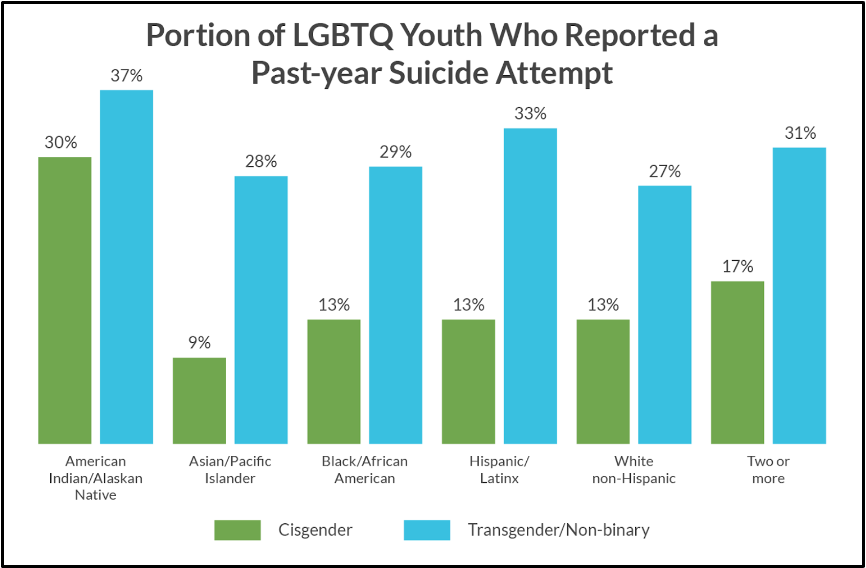
According to The Trevor Project (2021), LGBTQ+ youth face significantly higher suicide risk—not because of their identities, but because of the stigma created by society or their environment. They calculated that more than 1.8 million American LGBTQ+ people between the ages of 13 and 24 seriously contemplate suicide each year, and at least one attempt occurs every 45 seconds. American Indian or Alaskan Native teenagers who identify as transgender and/or non-binary reported the highest rates of suicide attempts compared to other racial and gender identity groups in 2019 (See Figure 1 in the Appendix).
Familial pieces such as socioeconomic status and household cultural factors also play a significant part in adolescent suicide risk. Due to factors such as monetary stress, lack of mental health resources, and social disparities, high schoolers from lower-income or unemployed households have a higher threat of death by suicide than those who are more “well off” (Stack, 2021). On the other end of the spectrum, teenagers from affluent areas face overwhelming pressures of perfection, competition, and social exclusion, all of which also strain mental health (Peterson & Smith-Morris, 2024). Additionally, research from 2010 found that more secure family dynamics (married and connected parents) lower the suicide risk in contrast to more divided households (Denney, 2010). That safety—while out of the teenagers’ control—plays a role in openness and in the courage to seek support from their parents. If that trust is compromised, then sharing the “shame-filled” secret (Knapp, 2023) of suicidal thoughts can become an overwhelming emotional hurdle. Recognizing the types of adolescents most at risk shines a light on why prevention is so necessary. The prevalence of the topic is highlighted when we acknowledge that almost every community in America will have at least one person who is LGBTQ+, non-white, from a different economic background, or whose family is not sitcom-ready all the time.
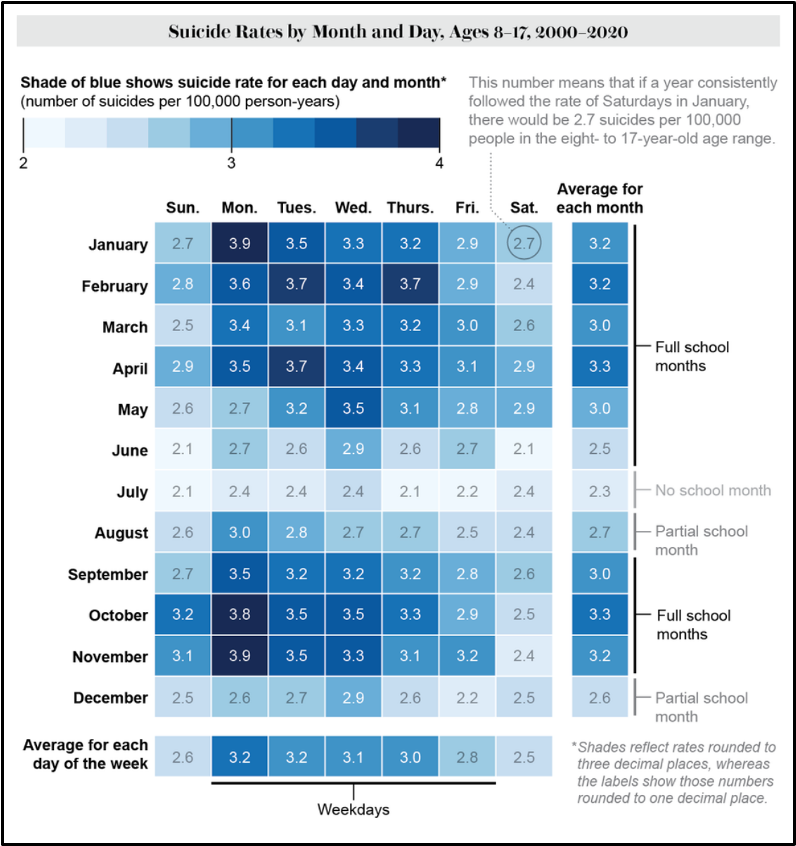
Experiments show that teenage suicide rates climb during active school months, suggesting that school-related stress is a significant contributor (Black, 2022; see Figure 2 in the Appendix). Further, teens talk to teens. Evidence presents that most young people often disclose or display signs to their friends about their plan to harm themselves rather than an authority figure (Nevada Division of Public and Behavioral Health Office of Suicide Prevention, 2021) or even a mental health professional out of fear that what they say will not remain confidential (McGillivray et al., 2022). The National Library of Medicine also corroborates this statement, saying that “peers are often the first, and sometimes only, people to know about youth suicidality” (Gleason et al., 2021). These patterns suggest that administration and parents are seemingly unapproachable to students regarding their mental health battles. Holding space for this knowledge, teaching suicide prevention strategies—such as QPR—from an early age should be considered essential.
An article in Education Week discusses how many schools prefer to opt out of teaching students about mental health crisis prevention, either out of ignorance or to ‘avoid legal liability’ (Portner, 2000). Oftentimes, state legislature prefers to leave suicide awareness conversations to churches or individual families (Watson, 2021). Additionally, a study by White & Morris (2010) found that some communities discourage the discussion about mental health (typically emerging from stigma or lack of understanding), which makes it harder for struggling teens to seek help. The states that do require youth suicide awareness and prevention in schools typically mandate that educators—rather than students—receive such training through legislation, such as the Jason Flatt Act (The Jason Foundation, Inc., n.d.). When faced with critical examples of uneven resource allocation, change is justified. A solution that minimizes complexity and limits litigation risk is in order.
This is where simple training, such as the QPR Gatekeeper training, comes in. However, barriers to accessibility exist and are worth considering. The Gatekeeper course can be taught to anyone, and the Institute encourages at least one person per family to complete the training (QPR Institute, n.d.). At present, QPR is primarily taught and advertised to healthcare professionals, first responders, and educators—less so to students. Meta-analyses show that teaching suicide prevention and awareness to students is associated with great benefits when done correctly (Brann et al., 2021). Unfortunately, most adolescents never receive any formal suicide prevention education (White & Morris, 2010).
Ideally, a high school would have a QPR specialist spend a week teaching QPR during a mandatory health class or physical education period. For schools with fewer resources to keep a specialist there for a week, the QPR Gatekeeper training could take place during two long school assemblies. Both options allow students in any year of high school to acquire life-saving skills when needed. It is worth noting that privileged schools are more likely to provide mental health resources, while lower-income schools may lack the same funding (Heinrich et al., 2023). Given that only one certified QPR instructor is required to obtain licensed access to the trademarked materials, the program is relatively affordable. This lowers implementation barriers once a staff member is trained, because they can teach students at no additional cost. Although this initiative offers no traditional monetary return on investment, it would prioritize student health and well-being.
When implementing this QPR training into a school’s mandatory curriculum, there are some important considerations contingent upon further research. Significant results from longitudinal studies focusing on the effects, retention, and reception of the training would greatly benefit policymakers. While teenagers do benefit from learning mental health crisis intervention strategies, they are still in their developmental stage, which may influence long-term results (Ciccia et al., 2009). Empirical examination should assess instructional quality and student engagement, skill retention years after the training, and whether the QPR training is associated with sustained preparedness for intervention or help-seeking. Additionally, research is needed to determine if and how often refresher courses are necessary to enhance retention while maintaining student interest.
Universities or non-profits such as The Trevor Project would likely be the most successful in conducting these necessary longitudinal studies. These trials would take time, but adolescent public health considerations outweigh strict financial concerns.
Institutions & Stratification: Insufficient Policies and Budget Cuts
To understand why teaching suicide prevention to high school students is not already mandated; attention must be shifted to the government’s role in educating teachers and students. As previously mentioned, the Jason Flatt Act was the pioneer for inclusive and mandatory training teachers to learn how to address suicide with their students (The Jason Foundation, Inc., n.d.). The original legislature was passed in 2007 in Tennessee, requiring educators to complete two hours of suicide awareness and prevention training annually to keep their license. In subsequent years, twenty-one states (including Alabama) passed the Jasson Flatt Act. America has slowly developed federal laws in most every state regarding this type of education; however, there are many discrepancies (Suicide Prevention Resource Center, n.d.). Like Alabama, some states mandate training annually; others mandate it but do not specify annual training, while the rest simply “encourage” this training for educators (Navigate360, 2021). In comparison, very few states mandate suicide awareness and prevention training for any high school student (Randi & Gould, 2022). Many provide resources to the schools, but to my knowledge, only Kentucky, Ohio, Rhode Island, and Illinois, have intentional legislature for student education on suicide awareness and prevention (Rafa, 2018; Ohio Department of Education and Workforce, 2023; Randi & Gould, 2022). Even then, those laws do not specify any particular training, such as QPR.
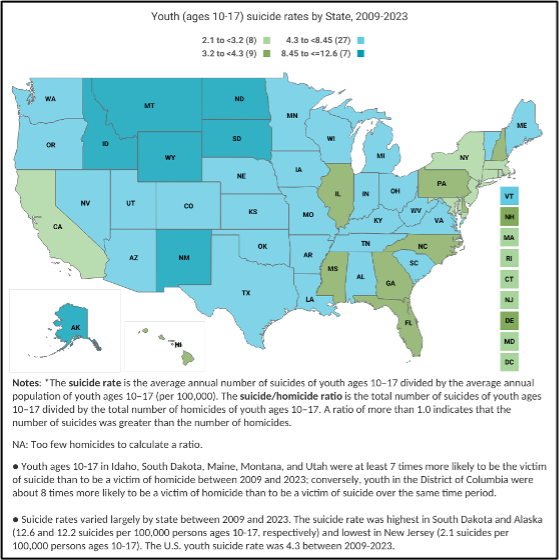
By allowing state autonomy in the situation and offering optional programs, the U.S. government creates an inconsistent system that leaves young lives unsupported (American Foundation for Suicide Prevention, 2017). Data from the Office of Juvenile Justice and Delinquency Prevention corroborates this idea in Figure 3 in the Appendix. This figure shows that the youth suicide rates by state from 2009-2023 vary drastically by state (Office of Juvenile Justice and Delinquency Prevention, 2025). The data also indicates that the states that offer students suicide prevention education (Kentucky, Ohio, Rhode Island, and Illinois) do not have a consistently lower rate. Such variability highlights a discrepant federal perspective for protecting America’s youth, in which the availability of life-saving resources heavily depend on geographic and political context. Universal mandates would likely reduce these disparities and promote more consistent care and protection for students nationwide.
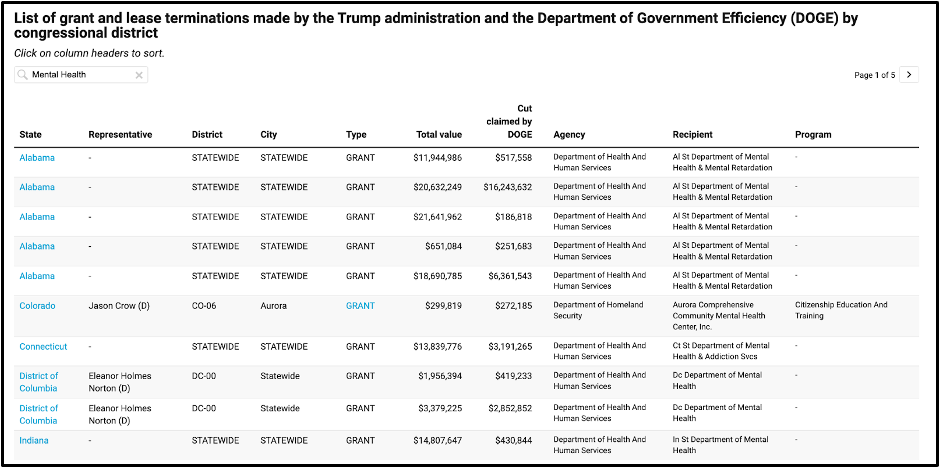
Aside from policy structure, the allocation of resources also contributes to this institutional stratification. Preferably, suicide prevention efforts would be mandated and funded by the government. However, 2025 U.S. government staffing reductions have reduced government-funded mental health resources, further limiting access. These complications may limit the capacity of schools and communities to implement or sustain viable prevention initiatives (Tin, 2025). As seen in Figure 4 (Appendix), approximately $11.4 billion in federal mental health funds have been axed in the spirit of “increased efficiency” (Tong, 2025). Mental health services that adolescents utilize the most, such as telehealth services, community-based initiatives, crisis support hotlines, and trained professionals, are all struggling from these funding restrictions (Gentry, 2025). Many Americans speculate that resources, such as the free 988 Lifeline, will struggle to recover from this significant impact (Leaver, 2025). It is challenging to predict what the next several years may hold for mental health resources and their public accessibility. Future research analyzing the impact of these current events will undoubtedly require long-term analysis.
Regarding impact, policy and funds make up only part of the overall equation. Even when suicide prevention is taught and financed, it is the meanings attached to suicide that truly shape how adolescents view suicide and mental health. Cultural narratives shape whether conversations about suicide are encouraged, avoided, or stigmatized.
Social Meanings: The How and Why We Talk About Suicide
Debates surrounding suicide prevention are not only built around intervention and access, but also how society chooses to engage with the topic itself. One common idea is the concept of a “good death,” which offers a framework to better understand why suicide is treated differently than other forms of death. The meaning of the term has varied across time and global culture (Walters, 2004).
The idea of a “good death” is highly subjective and based on cultural and personal beliefs (Cain, 2025). Here in the United States, the “good death” consensus is tied to an expected, peaceful, dignified old-age death where loved ones surround you (Cottrell & Duggleby, 2016). In contrast, suicide is generally perceived as tragic, preventable, and taboo (World Health Organization, 2025). Suicide can also challenge the idea of the “good death” when it is framed as irrational, shameful, or a failure (Knapp, 2023). Although some philosophers can look at suicide and rule it a “good death” upon meeting various conditions (Lester, 2006), the average person likely sees suicide—especially among adolescents—as a tragedy (Barry, 2025).
Teenage suicide seems to be a subject that many authority figures and school boards avoid. The common misconception floating around is that talking about suicide urges kids to follow suit. In reality, open discussions about suicide encourage teens and adults alike to find reasons to stay alive—ultimately decreasing suicide rates (Sharma, 2021). Despite substantial research supporting this, many schools still circumvent the topic out of stigma, fear, and unfamiliarity (White & Morris, 2010). In fairness, concern about suicide contagion is not fully unwarranted. Studies show that schools can host highly influential social bubbles where suicide clusters form (Abrutyn et al., 2019). Suicide clusters are when a community sees multiple suicide attempts or lives lost to suicide occurring close in time or space—more than what would typically be observed (Ivey-Stephenson et al., 2024). These clusters often appear when adolescents lose a peer to suicide. Combining grief with a population already susceptible to peer influence presents a notable risk (Martínez et al., 2023). Although the CDC has released guides for community response to a suicide cluster (Ivey-Stephenson et al., 2024), it can still be complex and emotionally demanding for all involved.
The mourning for teenage suicides is unlike the typical bereavement process. Most people connected to the teen tend to feel overwhelming guilt, they blame themselves, and they obsessively question what went wrong (Bartik et al., 2020). Sometimes, the family chooses to keep the cause of death under wraps, feeling shame for “allowing” the death to happen. In those cases, the long-term memorialization of the teen is cut significantly short in the effort to divert eyes away from the situation. They may fear judgment, not knowing how their community may react.
While teenage suicide can be challenging to address, ignoring the topic is not viable (Sharma, 2021). Yes, the risk of suicide clusters spreading should be taken seriously, but equipping adolescents with intervention skills is worth the discomfort if it means that teens can learn to help one another.
QPR Gatekeeper training disrupts the silence around suicide and equips regular people to recognize the signs and intervene early. It normalizes these conversations and makes it simple to refer people to professional resources. American colleges such as the University of Alabama at Birmingham agree that QPR is an easy training, and they have started listing it as a free seminar to their students (UAB Campus Calendar, 2025). Seeing as upper-level education is opening the door to these resources; society can recognize that there are incredible benefits to extending the offer to the younger generation. During the 21st century, many experiments have proven the effectiveness of teaching suicide prevention skills to people in all stages of life. Even as early as 2008, a study on veterans found that after completing the training, 97% of participants felt more prepared to talk about suicide, and 85% felt more confident intervening should they need to (Matthieu et al., 2008). Another study published by the Journal of Clinical Psychology found similar results when training college students (Rallis et al., 2018). As recently as 2024, the Journal of School Health published a study wherein the researchers found amazing results when implementing a gatekeeper training similar to QPR for high school personnel, parents, and students (Walsh et al., 2024).
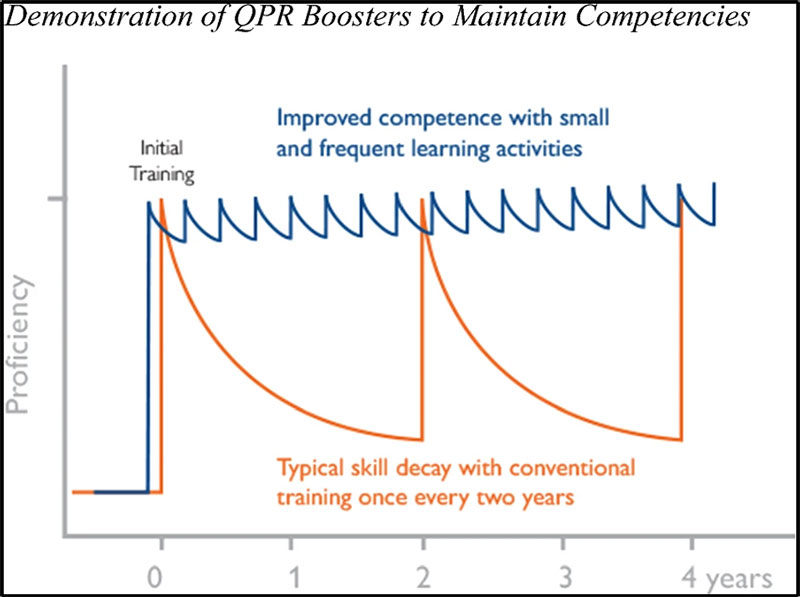
Further, if schools provide refresher courses (coined: “QPR Boosters”), students are far more likely to retain the information over time (Quinnett, 2023; see Figure 5 in the Appendix). Schools that add QPR as an asset have the opportunity to shift their institutional response from reactive to proactive.
Research suggests that adolescents naturally seek and offer support to one another (Newport Academy, 2024). This means that if students are going to be approached by those needing help, they must be appropriately equipped. When suicides occur at a school, many teenagers feel guilt and shame, wishing they had known how or when to interfere (Marshall et al., 2018). Teaching the students QPR can reframe suicide as a situation where they can take action rather than sit helplessly on the sidelines.
Additional research can also be done to ensure the implementation strategy is done mindfully. Relevant studies should ensure that QPR training indeed reduces stigma and increases awareness about intervention when taught to high schoolers. Passionate teachers who have mastered communication with their students would ensure effective training that the students take seriously, thus helping achieve this goal of improved peer support. Further, to actively fight suicide cluster chances, researchers can work on finding what systems work best to effectively acknowledge loss without increasing risk.
Institutions & Meanings: Schools Scared of Suicide?
Most kids are taught how to stop, drop, and roll before they are taught how to ask someone if they are suicidal. This is not just a system oversight—it is a snapshot of today’s culture. Society is just about as apprehensive about suicide as it is about teaching safe sex (Astle et al., 2020). It is in the government’s and every community’s best interest to promote a positive narrative around suicide prevention in schools, considering that schools shape future generations. Educators play a crucial role in preventing teenage suicide (Álvarez, 2023)—so, allowing them to put their best foot forward through universal expectations, appropriate funding, and open dialogue is key. Should the nation continue to avoid formal intervention, Generation Alpha and those following learn that ignoring public health issues is simply the norm.
Adopting an “out of sight, out of mind” mentality is an ineffective stategy to prevent suicide (Sharma, 2021). Once suicide is made into a taboo topic, stigma overrides any past positive momentum. Institutional silence and failure to acknowledge suicide as an issue worsens the stigma and discourages students from seeking help from the start (Goldsmith et al., 2011). Particularly following the COVID-19 pandemic, the conversation around mental health has seen illustrious improvements (Mance, 2022). Be that as it may, some circles still view suicide as morally or spiritually incorrect, cowardly, and shameful, which can lead to silence rather than prevention efforts (Boyd & Chung, 2012). Research suggests that when suicide is framed as an individual’s shortcoming rather than a preventable crisis, people are less likely to find support on their own (Abrutyn et al., 2019). This further suggests that QPR has the potential to shift the meaning and big picture of America’s view of mental health treatment.
Discussion
Evidence strongly suggests that suicide awareness should be an essential part of our teens’ studies. Suicide among adolescents is a public health crisis, but proactive education can prevent unnecessary loss of life (CDC, 2024). Since high schoolers are more likely to confide in their peers than authority figures and mental health professionals (Abrutyn et al., 2019; McGillivray et al., 2022), peer intervention training should be mandated and adequately funded in America. Given that schools already teach physical emergency procedures (such as CPR), adding training for mental health crises is a logical next step to protect the country’s future.
Future research to accommodate QPR should concentrate on effectiveness, expansion, and education. Studies focusing on students trained in QPR should dive into whether the adolescents have an increased likelihood of intervening, as well as if suicide rates in the area decrease over time. Regarding expanding access, government officials and school boards should prioritize making QPR available in all schools, regardless of location or socioeconomic status (The Trevor Project, 2021). Integrating suicide awareness and prevention education into health classes would ensure all students are exposed to adequate prevention measures and show that the country’s authority figures care about the topic. Finally, society would need to address any hesitation and educate remaining resistant policymakers, parents, and teachers. Many people fear that discussing suicide around teenagers could “give them ideas,” but research has debunked this idea (Brann et al., 2021). When proposing, advocates for the project should emphasize that QPR is a structured, heavily researched way to discuss suicide safely and productively (QPR Institute. n.d.).
Overall, there are few evidence-based reasons to deny adolescents the opportunity to save their peers' lives with evidence-based training. Suicide prevention should never be an afterthought, and schools integrating QPR is a worthwhile preventative initiative. By teaching America’s teens how to intervene, we empower and encourage them to take action when their friends need it most.
References
- Abrutyn, S., Mueller, A. S., & Osborne, M. (2019). Rekeying cultural scripts for youth suicide: How social networks facilitate suicide diffusion and suicide clusters following exposure to suicide opens a new website. Society and Mental Health, 10(2), 112–135.
- Aldrich, R. S. (2016). Suicide prevention: College students’ intention to intervene opens a new website. Archives of Suicide Research, 21(3), 403–412.
- Álvarez, B. (2023). Educators can play a role in preventing student suicide opens a new website. National Education Association.
- American Foundation for Suicide Prevention. (2017). State laws: Suicide prevention in schools (K-12) opens a new website. AFSP Public Policy Office.
- Astle, S., McAllister, P., Emanuels, S., Rogers, J., Toews, M., & Yazedjian, A. (2020). College students’ suggestions for improving sex education in schools beyond “blah blah blah condoms and STDs.” opens a new website Sex Education, 21(1), 1–15.
- Barry, R. J. (2025). Teenage Suicide - An American Tragedy opens a new website. Office of Justice Programs; U.S. Department of Justice.
- Bartik, W. J., Maple, M., & McKay, K. (2020). Youth suicide bereavement and the continuum of risk opens a new website. The Journal of Crisis Intervention and Suicide Prevention, 41 (6).
- Black, T. (2022). Children’s risk of suicide increases on school days opens a new website. Scientific American.
- Boyd, K. A., & Chung, H. (2012). Opinions toward suicide: Cross-national evaluation of cultural and religious effects on individuals opens a new website. Social Science Research, 41(6), 1565–1580.
- Brann, K. L., Baker, D., Smith-Millman, M. K., Watt, S. J., & DiOrio, C. (2021). A meta-analysis of suicide prevention programs for school-aged youth opens a new website. Children and Youth Services Review, 121, 105826.
- Cain, C. (2025). Mini lecture #5 - Good death opens a new website. SOC456: The Sociology of Death and Dying, University of Alabama at Birmingham.
- Centers for Disease Control and Prevention. (2024). YRBS data summary & trends report opens a new website. Centers for Disease Control and Prevention.
- Ciccia, A. H., Meulenbroek, P., & Turkstra, L. S. (2009). Adolescent brain and cognitive developments opens a new website. Topics in Language Disorders, 29(3), 249–265.
- Cottrell, L., & Duggleby, W. (2016). The “good death”: An integrative literature review opens a new website. Palliative and Supportive Care, 14(6), 686–712.
- Curtin, S. C., M. Warner, and H. Hedegaard. (2016). Increase in suicide in the United States, 1999–2014 opens a new website. U.S. Department of Health and Human Services, CDC, National Center for Health Statistics. NCHS Data Brief No. 241.
- de Agrela Gonçalves Jardim, M. H., Silva, R. B., da Silva Junior, G. B., Caldas, J. P., Santos, Z., & Silva, I. B. (2017). Suicide: A preventable phenomenon in adolescents opens a new website. Psychology, 08(07), 1008–1018.
- Denney, J.T. (2010), Family and household formations and suicide in the United States opens a new website. Journal of Marriage and Family, 72: 202-213.
- Gentry, D. (2025). DOGE cuts mental health funding for homeless children, youth in Nevada, officials say opens a new website. Nevada Current.
- Gleason, L. L., Bender, A. M., Chen, J. I., Bozzay, M., Hangartner, R., Romero, G., Labouliere, C. D., Elzy, M., Gryglewicz, K., & Karver, M. S. (2021). Under the surface: The role of covert cues in peer suicide risk referrals opens a new website. National Library of Medicine, 14(1), 125–135.
- Goldsmith, S., Pellmar, T., Kleinman, A., & Bunney, W. (2011). Reducing suicide: A national imperative: Society and culture opens a new website. National Academies Press.
- Heinrich, C. J., Colomer, A., & Hieronimus, M. (2023). Minding the gap: Evidence, implementation and funding gaps in mental health services delivery for school-aged children opens a new website. Children and Youth Services Review, 150(107023), 107023–107023.
- Ivey-Stephenson, A. Z., Ballesteros, M. F., Trinh, E., Stone, D. M., & Crosby, A. E. (2024). CDC guidance for community response to suicide clusters, United States, 2024 opens a new website. Morbidity and Mortality Weekly Report. Supplement/MMWR Supplements, 73(2), 17–26.
- Knapp, S. (2023). Shame and self-stigma among suicidal patients opens a new website. Society for the Advancement of Psychotherapy.
- Leaver, T. (2025). Federal cuts reduce mental health and addiction funding opens a new website. Recovered.
- Lester, D. (2006). Can suicide be a good death? opens a new website Death Studies, 30(6), 511–527.
- Mance, G. (2022). The growth of mental health awareness opens a new website. Howard Magazine.
- Marshall, D., Moutier, C., Rosenblum, L., Miara, C., & Posner, M. (2018). After a suicide: A toolkit for schools second edition opens a new website. American Foundation for Suicide Prevention (AFSP), Suicide Prevention Resource Center (SPRC), and Education Development Center (EDC).
- Martínez, V., Jiménez-Molina, A., Gerber, M. (2023). Social contagion, violence, and suicide among adolescents opens a new website. Current Opinion in Psychiatry, 36(3), p 237-242.
- Matthieu, M. M., Cross, W., Batres, A. R., Flora, C. M., & Knox, K. L. (2008). Evaluation of gatekeeper training for suicide prevention in veterans opens a new website. Archives of Suicide Research, 12(2), 148-154.
- McGillivray, L., Rheinberger, D., Wang, J., Burnett, A., & Torok, M. (2022). Non-disclosing youth: A cross sectional study to understand why young people do not disclose suicidal thoughts to their mental health professional opens a new website. BMC Psychiatry, 22(1).
- Navigate360. (2021). Suicide prevention training in schools: Which states require it? opens a new websiteNavigate360.
- Nevada Division of Public and Behavioral Health Office of Suicide Prevention. (2021). The myths & facts of youth suicide opens a new website. Suicideprevention.nv.gov.
- Newport Academy. (2024). The importance of teen friendships opens a new website. Newport Academy.
- Office of Juvenile Justice and Delinquency Prevention. (2025). Youth (ages 10-17) suicide rates by state opens a new website. U.S. Department of Justice.
- Ohio Department of Education and Workforce. (2023). Suicide prevention, violence prevention, social inclusion and school safety requirements opens a new website. Ohio.gov.
- Peterson, A., & Smith-Morris, C. (2024). Teen perspectives on suicides and deaths in an affluent community: Perfectionism, protection, and exclusion opens a new website. International Journal of Environmental Research and Public Health, 21(4), 456–456.
- Portner, J. (2000). Suicide: Many schools fall short on prevention opens a new website. Education Week.
- QPR Institute. (n.d.). About QPR opens a new website. QPR Institute: Practical and Proven Suicide Prevention Training.
- Quinnett, P. (2023). The certified QPR pathfinder training program: A description of a novel public health gatekeeper training program to mitigate suicidal ideation and suicide deaths opens a new website. Journal of Prevention, 44(6), 813–824.
- Rafa, A. (2018). Suicide prevention in schools: What are states doing to prevent youth suicide? opens a new website Education Commission of the States.
- Rallis, B. A., Esposito-Smythers, C., Disabato, D. J., Mehlenbeck, R. S., Kaplan, S., Geer, L., Adams, R., & Meehan, B. (2018). A brief peer gatekeeper suicide prevention training: Results of an open pilot trial opens a new website. Journal of Clinical Psychology, 74(7), 1106–1116.
- Randi, O., & Gould, Z. (2022). States take action to address children’s mental health in schools opens a new website. National Academy for State Health Policy.
- Sharma, P. (2021). 8 common myths about suicide opens a new website. Mayo Clinic Health System.
- Stack, S. (2021). Contributing factors to suicide: Political, social, cultural and economic opens a new website. Preventive Medicine, 152(1), 106498.
- Suicide Prevention Resource Center. (n.d.). States and territories opens a new website. The Suicide Prevention Resource Center at the University of Oklahoma.
- Sullivan, A., Montgomery, A. E., Blosnich, J. R., Pavela, G., & Fifolt, M. (2024). A qualitative exploration of question, persuade, refer (QPR) gatekeeper training by the Alabama suicide prevention and resources coalition opens a new website. Mental Health & Prevention, 36, 200375.
- Tam, M. T., Wu, J. M., Zhang, C. C., Pawliuk, C., & Robillard, J. M. (2024). A systematic review of the impacts of media mental health awareness campaigns on young people opens a new website. Health Promotion Practice, 25(5).
- The Jason Foundation, Inc. (n.d.). Jason Flatt Act opens a new website. The Jason Foundation.
- The Trevor Project. (2021). Facts about LGBTQ Youth Suicide opens a new website. TheTrevorProject.org.
- Tin, A. (2025). Mental health agency loses 1 in 10 staffers to DOGE cuts, 988 hotline team impacted opens a new website. CBS News.
- Tong, N. (2025). CDC, DOGE claw back $11 billion in COVID-19 grants nationwide as agency roots out “censorship” contracts opens a new website. Fierce Healthcare.
- UAB Campus Calendar. (2025). QPR suicide prevention training for students opens a new website. The University of Alabama at Birmingham.
- Verlenden, J. V., Fodeman, A., Wilkins, N., et al. (2024). Mental health and suicide risk among high school students and protective factors—Youth Risk Behavior Survey, United States, 2023 opens a new website. Morbidity and Mortality Weekly Report. Supplements, 73(Suppl 4), 79–86.
- Walsh, E., Tapp, Z., Mallonee, E., Hakansson, C., Leigh, A., & Reibel, M. (2024). Implementing LEARN: Comprehensive suicide prevention training for high school students, parents, and school personnel opens a new website. Journal of School Health, 94(11).
- Walters, G. (2004). Is there such a thing as a good death? opens a new website Palliative Medicine, 18(5), 404–408.
- Watson, T. (2021). Reluctance to require suicide prevention education could cost lives opens a new website. The Hechinger Report.
- White, J., & Morris, J. (2010). Precarious spaces: Risk, responsibility and uncertainty in school-based suicide prevention programs opens a new website. Social Science and Medicine 71(12).
- World Health Organization. (2025). Suicide opens a new website. World Health Organization.
Appendix
Note: Text alternative for all following figures can be found at the end of the appendix.
Figure 1: Portion of LGBTQ+ youth who reported a past-year suicide attempt
Source: The Trevor Project. (2019). Portion of LGBTQ+ youth who reported a past-year suicide attempt opens a new website. TheTrevorProject.org.

Figure 2: Children’s risk of suicide increases on school days
Source: Montañez, A. (2022). Children’s risk of suicide increases on school days opens a new website. CDC Wonder, Scientific American.
Figure 3: Youth (Ages 10-17) Suicide Rates by State, 2009-2023.
Source: Office of Juvenile Justice and Delinquency Prevention. (2025). Youth (ages 10-17) suicide rates by state opens a new website. U.S. Department of Justice.
Figure 4: List of Grant and Lease Terminations Made by the Trump Administration and the Department of Government Efficiency (DOGE) by Congressional District
Source: Serbin, B. (2025). DOGE cuts by city, state, and congressional district opens a new website. Center for American Progress.
Figure 5: Demonstrations of QPR Boosters to Maintain Competencies
Source: Quinnett, P. (2023). The certified QPR pathfinder training program: A description of a novel public health gatekeeper training program to mitigate suicidal ideation and suicide deaths opens a new website. Journal of Prevention, 44(6), 813–824.
-
Figure 1: Portion of LGBTQ+ youth who reported a past-year suicide attempt
Ethnicity Cisgender Transgender/Non-binary American Indian/Alaskan Native 30% 37% Asian/Pacific Islander 9% 28% Black/African American 13% 29% Hispanic/Latinx 13% 33% White non-Hispanic 13% 27% Two or more 17% 31% -
Figure 2: Children’s risk of suicide increases on school days
Suicide Rates by Month and Day, Ages 8-17, 2000-2020 (numbers rounded to one decimal place).
If a year consistently followed the rate of Saturdays in January, there would be 2.7 suicides per 100,000 people in the 8-17-year-old age range.
Day Sunday Monday Tuesday Wednesday Thursday Friday Saturday Average for Each Month Part of School Year January 2.7 3.9 3.5 3.3 3.2 2.7 Otto 3.2 Full school month February 2.8 3.6 3.7 3.4 3.7 2.9 2.4 3.2 Full school month March 2.5 3.4 3.1 3.3 3.2 3.0 2.6 3.0 Full school month April 2.9 3.5 3.7 3.4 3.3 3.1 2.9 3.3 Full school month May 2.6 2.7 3.2 3.5 3.1 2.8 2.9 3.0 Full school month June 2.1 2.7 2.6 2.9 2.6 2.7 2.1 2.5 Full school month July 2.1 2.4 2.4 2.4 2.1 2.2 2.4 2.3 No school month August 2.6 3.0 2.8 2.7 2.7 2.5 2.4 2.7 Partial school month September 2.7 3.5 3.2 3.2 3.2 2.8 2.6 3.0 Full school month October 3.2 3.8 3.5 3.5 3.3 2.9 2.5 3.3 Full school month November 3.1 3.9 3.5 3.3 3.1 3.2 2.4 3.2 Full school month December 2.5 2.6 2.7 2.9 2.6 2.2 2.5 2.6 Partial school month Average for each day of the week 2.6 3.2 3.2 3.1 3.0 2.8 2.5 n/a n/a -
Figure 3: Youth (Ages 10-17) Suicide Rates by State, 2009-2023
- 8 states: 2.1 to less than 3.2
- 9 states: 3.2 to less than 4.3
- 27 states: 4.3 to less than 8.45
- 7 states: 8.45 to less than/equal to 12.6
States:
- Alabama: 4.3 to less than 8.45
- Alaska: 8.45 to less than/equal to 12.6
- Arizona: 4.3 to less than 8.45
- Arkansas: 4.3 to less than 8.45
- California: 2.1 to less than 3.2
- Colorado: 4.3 to less than 8.45
- Connecticut: 2.1 to less than 3.2
- Deleware: 3.2 to less than 4.3
- District of Columbia: 2.1 to less than 3.2
- Florida: 3.2 to less than 4.3
- Georgia: 3.2 to less than 4.3
- Hawaii: 3.2 to less than 4.3
- Idaho: 8.45 to less than/equal to 12.6
- Illinois: 3.2 to less than 4.3
- Indiana: 4.3 to less than 8.45
- Iowa: 4.3 to less than 8.45
- Kansas: 4.3 to less than 8.45
- Kentucky: 4.3 to less than 8.45
- Louisiana: 4.3 to less than 8.45
- Maine: 4.3 to less than 8.45
- Maryland: 2.1 to less than 3.2
- Massachusetts: 2.1 to less than 3.2
- Michigan: 4.3 to less than 8.45
- Minnesota: 4.3 to less than 8.45
- Mississippi: 3.2 to less than 4.3
- Missouri: 4.3 to less than 8.45
- Montana: 8.45 to less than/equal to 12.6
- Nebraska: 4.3 to less than 8.45
- Nevada: 4.3 to less than 8.45
- New Hampshire: 3.2 to less than 4.3
- New Jersey: 2.1 to less than 3.2
- New Mexico: 8.45 to less than/equal to 12.6
- New York: 2.1 to less than 3.2
- North Carolina: 3.2 to less than 4.3
- North Dakota: 8.45 to less than/equal to 12.6
- Ohio: 4.3 to less than 8.45
- Oklahoma: 4.3 to less than 8.45
- Oregon: 4.3 to less than 8.45
- Pennsylvania: 3.2 to less than 4.3
- Rhode Island: 2.1 to less than 3.2
- South Carolina: 4.3 to less than 8.45
- South Dakota: 8.45 to less than/equal to 12.6
- Tennessee: 4.3 to less than 8.45
- Texas: 4.3 to less than 8.45
- Utah: 4.3 to less than 8.45
- Vermont: 4.3 to less than 8.45
- Virginia: 4.3 to less than 8.45
- Washington: 4.3 to less than 8.45
- West Virginia: 4.3 to less than 8.45
- Wyoming: 8.45 to less than/equal to 12.6
Notes: The suicide rate is the average annual number of suicides of youth ages 10-17 divided by the average annual population of youth ages 10-17 (per 10,000). The suicide/homicide ratio is the total number of youth suicides of youth ages 10-17 divided by the total number of homicides of youth ages 10-17. A ratio of more than 1.0 indicates that the number of suicides was greater than the number of homicides.
NA: Too few homicides to calculate a ratio.
Youth ages 10-17 in Idaho, South Dakota, Maine, Montana, and Utah were at least 7 times more likely to be the victim of suicide that to be a victim of homicide between 2009 and 2023; conversely, youth in the District of Columbia were about 8 times more likely to be a victim of homicide than to be a victim of suicide over the same time period.
Suicide rates varied largely by state between 2009 and 2023. The suicide rate was highest in South Dakota and Alaska (12.6 and 12.2 suicides per 100,000 persons ages 10-17, respectively) and lowest in New Jersey (2.1 suicides per 100,000 persons ages 10-17). The U.S. youth suicide rate was 4.3 between 2009-2023.
-
Figure 4: List of Grant and Lease Terminations Made by the Trump Administration and the Department of Government Efficiency (DOGE) by Congressional District
(Results from Page 1 of 5 with a filter of Mental Health)
State Representative District City Type Total Value Cut claimed by DOGE Agency Recipient Program Alabama n/a Statewide Statewide Grant $11,944,986 $517,558 Department of Health and Human Services AL St Department of Health and Human Services n/a Alabama n/a Statewide Statewide Grant $20,632,249 $16,243,632 Department of Health and Human Services AL St Department of Health and Human Services n/a Alabama n/a Statewide Statewide Grant $21,641,962 $186,818 Department of Health and Human Services AL St Department of Health and Human Services n/a Alabama n/a Statewide Statewide Grant $651,084 $251,683 Department of Health and Human Services AL St Department of Health and Human Services n/a Alabama n/a Statewide Statewide Grant $18,690,785 $6,361,543 Department of Health and Human Services AL St Department of Health and Human Services n/a Colorado Jason Crow (D) C0-06 Aurora Grant $299,819 $272,185 Department of Homeland Security Aurora Comprehensive Community Mental Health Center, Inc. Citizenship Education and Training Connecticut n/a Statewide Statewide Grant $13,839,776 $3,191,265 Department of Health and Human Services Ct Department of Mental Health n/a District of Columbia Eleanor Holmes Norton (D) DC-00 Statewide Grant $1,956,394 $419,233 Department of Health and Human Services Dc Department of Mental Health n/a District of Columbia Eleanor Holmes Norton (D) DC-00 Statewide Grant $3,379,225 $2,852,852 Department of Health and Human Services Dc Department of Mental Health n/a Indiana n/a Statewide Statewide Grant $14,807,647 $430,844 Department of Health and Human Services In State Department of Mental Health n/a -
Figure 5: Demonstration of QPR Boosters to Maintain Competencies
Line graph comparing the two approaches to maintaining QPR skill proficiency over four years: Booster every two years in orange, and frequent small learning activities in blue. The y-axis shows proficiency, and the x-axis shows time in years.
Both lines start at a low baseline and rise sharply after initial QPR training. The orange line depicts the proficiency declining steadily until the booster session, where it spikes drastically, but then declines again until the next booster. The blue line shows proficiency dipping slightly between activities with quick rebounds, with an overall upward trend over the four years. Overall, frequent and low-intensity learning maintains and improves QPR skills over time, while infrequent booster trainings result in substantial skill decay between sessions.