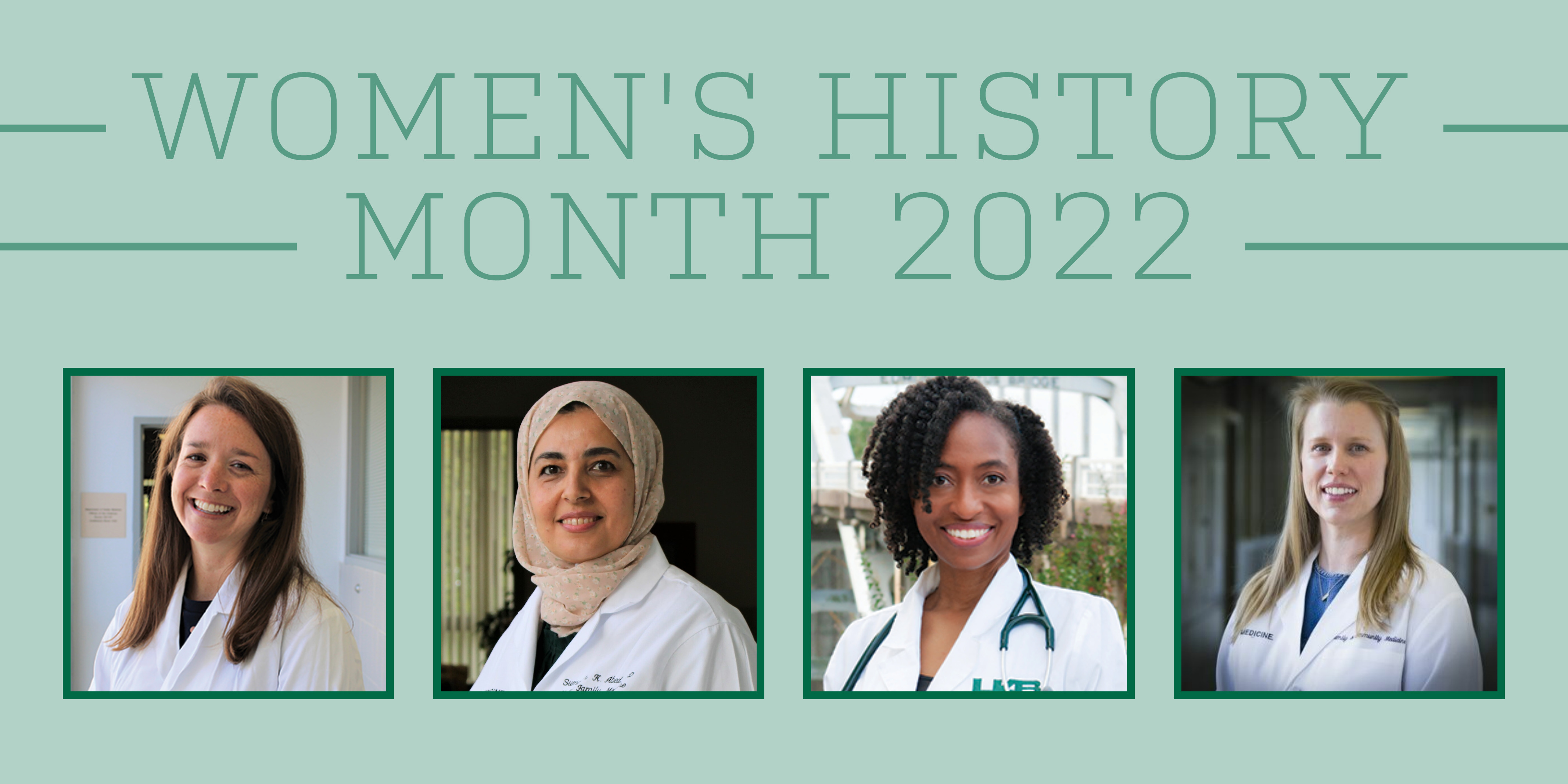
The number of women physicians has risen significantly in the last 15 years, according to a report from the Associate of American Medical Colleges. Since 2007, there has been close to a 10% rise in the number of women physicians. Additionally, numbers now show that half of all medical students are women. With such steady growth in the number of women entering medical careers, several female providers in the Department of Family and Community Medicine came forward to share their thoughts and advice for current and future women in medicine during Women’s History Month.
Of those who shared, half have been practicing medicine for more than seven years and half are early career practitioners (1-3 years of practicing at UAB). We asked each of them to provide a summary of what being a woman in medicine means to them.
What does being a woman in medicine mean to you?
“Although there are a lot of challenges—work-life balance and taking care of kids and my husband—I am proud of being a physician,” said Sumayah Abed, M.D., assistant professor and provider at UAB Hoover Family Medicine.
Erin DeLaney, M.D., assistant professor, vice-chair of clinical affairs and quality and medical director for the UAB Hospital-Highlands Family and Community Medicine Clinic, noted that being a woman in medicine meant sacrifice and building relationships.
Tiffani Maycock, D.O., associate professor and director of the UAB Family Medicine Residency in Selma, said that being a woman in medicine felt like a privilege to her.
“I listen to the radio program ‘Your Story Hour’ with my boys and some of the historic stories about women in medicine in the early years when there were numerous obstacles to women becoming physicians ... I am honored to have the opportunity,” she said.
All agreed, as Kaylee Crockett, Ph.D., assistant professor and clinical scientist, put it, that being a woman in medicine meant providing excellent care to patients by bringing their unique perspectives to their practice.
What barriers do you see to being a woman in medicine? How can we work toward removing these barriers?
Crockett pointed out the intense pressures and high expectations put on women to “do it all” as providers, partners, mothers, educators, scientists and more.
“The primary barrier is the expectation that women ‘do it all’ exceptionally, compassionately and without support... Women very often leave medicine because of these demands and the shame that comes with not meeting them,” she said. “We need women in seats in leadership to design supports to retain women.”
Maycock, as a Black woman and physician, sees and regularly works against the racial disparities that are a barrier to many women of color in medicine.
Both DeLaney and Abed commented on barriers that might keep women from leadership roles, or the impact of having only male predecessors, and expectations, in assuming leadership positions. DeLaney is the first female vice-chair in the department’s history.
What advice would you give to your younger self? What do you hope for yourself as you continue in your career?
Abed encouraged herself, past and future, to be creative and ask for her rights to be considered when growing in a position of leadership.
“We can do hard things and excel at them, but it is ok to ask and accept help along the way,” noted DeLaney when thinking about her younger self. She hopes to give herself grace to make time for what is important to her as she continues in her career.
Crockett expressed hope that younger women would savor the path to achieving their goals instead of always looking to the next step. For her older self, Crockett wants to be a mentor and advocate for other women that want to become leaders in academic medicine.
“Find a career mentor early and set an intentional career path,” said Maycock to her younger self or women just starting out. She wants to set reasonable goals and boundaries in the future to ensure her own personal and professional success.
What inspires you as a woman in medicine?
Nearly all of the providers listed seeing the impact of their care and relationships with patients as inspirational. Some listed the joy of seeing women succeed and becoming advocates for themselves in the medical community.
Abed, in sharing what inspires her, noted a combination of what others shared:
“I can take care of women patients and understand them physically and emotionally because I am one of them.”
The department honors and acknowledges the vital contributions of all of our female providers and staff. For another Women’ History Month story, click here to read about important health tips that two of our female providers share for women to consider.