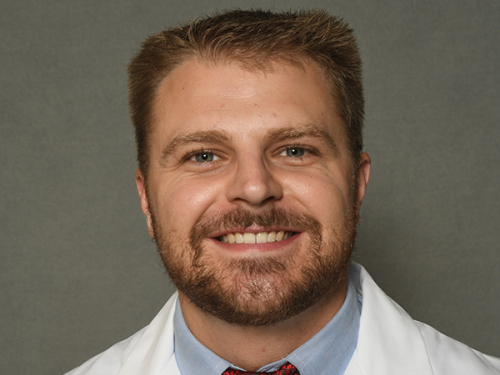
By: Garett Ozmer, PGY-1
I became a physician because my pediatric neurologist inspired me to treat every patient with kindness and respect. Through my experiences in shadowing and medical school, I was exposed to mostly good outcomes. Whether by chance or by design, the residents and attendings shielded me from difficult conversations, code blues, and death, so I arrived as a resident never having experienced these in depth.
In the National Football League, rookie players often describe the first big hit they receive as their “Welcome to the NFL” moment. Picture a running back hitting the B gap on their first handoff, finding a hole in the defense, and then feeling a sudden blow from the side. The world turns black, their body is numb, and it is hard to breathe. As reality returns, the crowd is heard groaning in unison as the jumbotron replays the tackle. My “Welcome to Medicine” came during my first few days in the MICU.
My rotation began with a night shift, which also happened to be my first inpatient shift as a resident. Within the first hour, I was paged to the ED to admit a patient with worsening shortness of breath from advanced lung cancer. The patient quickly failed nasal cannula and was placed in BiPAP, with high risk for further decline. After my evaluation, code status was established and the patient wanted everything done. The rest of the night was quiet, so I spent much of my time with the new patient. By morning, I had stabilized them on BiPAP and built a real rapport. I left that shift believing I would return two days later to find them in similar condition or better yet, off the unit. I was told this was “blissful intern ignorance.”
When I returned, I was shocked to hear the patient would likely die before my shift ended. I was overwhelmed with anxiety, doubt, and discouragement. Had I missed something that first night? On pre-rounds, I hardly recognized the person in the room. They could barely speak as respiration rate was increased, oxygen saturation was reduced, and every breath was labored. Code status was changed to DNR/DNI earlier in the night. What struck me the hardest was the fear in their eyes when I walked into the room. The family arrived that morning and were too stunned to speak to me.
I went in and out of the room all day, and each visit grew more difficult. I quickly began dreading the look on the patient’s face. It felt as if they were hoping for a miracle that I could not provide. On my last few visits, hypercapnia had taken over, leaving a blank stare and gasps for air. I left my last encounter with them feeling broken and empty, found an unoccupied room, and cried. Watching this patient, who I had grown close to in such a short time, decline was the hardest emotional experience of my medical journey.
Did I feel guilty? Yes. Will I always remember that fear in their eyes? Yes. My inability to connect with the family? Yes. After the patient took their last breath that evening, extreme guilt and sadness stayed with me for the ensuing weeks—even writing this now, I remember the feeling. Just like those NFL rookies, I felt blindsided. I leaned on my senior residents in the days following. They understood what I was feeling without having to explain it. I reflected heavily on this experience, why I chose this profession, and whether I could endure it again.
What helped me most was something one of my senior residents told me before the rotation: roughly 15 percent of ICU patients are on a path we can change, while the other 85 percent are already on their own path that we cannot alter. My patient’s advanced lung cancer left little healthy tissue for effective oxygenation, and I could not cure them. But what I could do, and ultimately did, was provide the right medications, oxygen support, and offer every reassurance I had to give them comfort and strength in their final days. This patient and how they changed me will stay in my memory for the rest of my career. My “Welcome to Medicine” moment taught me that although we focus heavily on medicinal therapies, our most important work is providing comfort and strength to those who need it most.