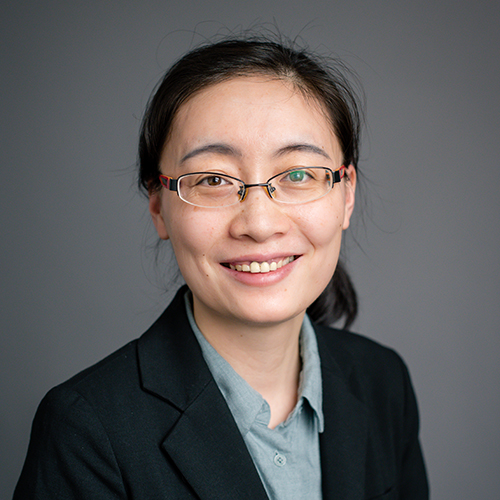
 Yang Zhou, Ph.D., an assistant professor in the Department of Biomedical Engineering, has received a renewal of her NIH R01 grant, extending her lab’s research into research into direct cardiac reprogramming, an emerging approach to regenerate damaged heart tissue by converting scar-forming cells into new muscle cells.
The five-year renewal builds on years of discovery in Zhou's lab, which studies how new heart cells develop and mature, and how this process can be improved to help repair damaged hearts.
“This renewal is an exciting recognition of our team's work and provides another five years to build on our discoveries,” Zhou said. “It allows us to better understand how new heart muscle cells mature and function and move our research closer to developing regenerative therapies for patients with heart disease.”
Turning scar tissue into living muscle
At the heart of Zhou's research is a longstanding challenge in cardiovascular medicine: when a person suffers a heart attack, the damaged muscle doesn't grow back. Instead, the body replaces it with scar tissue that cannot beat or pump blood, leaving the heart permanently weakened.
"Our research aims to change that by converting scar-forming cells, known as fibroblasts, directly into new, healthy heart muscle cells,” Zhou said.
“We are studying the molecules that help these newly generated cells mature and function more like normal heart muscle cells, Zhou said. “By understanding how this process works, we hope to make cardiac reprogramming more efficient and effective and provide a foundation for future regenerative therapies.”
Building on key discoveries
The renewed funding grew directly out of findings from Zhou's previous R01 grant, which made important advances toward generating human muscle cells through direct cardiac reprogramming.
"Newly generated human heart cells often remain immature and cannot fully restore heart function, which is a major challenge in the field,” Zhou said. “We identified key molecules that promote the maturation of these cells, providing new insights into how heart regeneration can be improved.”
“Building on these discoveries, our renewed project will define the underlying molecular mechanisms and develop more effective strategies to advance this technology toward future therapies.”
What's next for the Zhou Lab
Over the next phase of the project, Zhou's team will dig deeper into the biology that governs how newly formed heart cells mature and function.
"Our next goal is to understand how these key molecules control the maturation of newly generated heart cells,” Zhou said. “The knowledge will help us develop more effective strategies to improve direct cardiac reprogramming.”
Although significant work still lies ahead, Zhou's research offers hope for a future where damaged hearts can be repaired from within instead of merely managed.
"We hope our research will provide new insights into how damaged hearts can be repaired. While there is still much work to be done, these discoveries may help guide the development of future regenerative therapies for heart disease."
Zhou's continued work reflects UAB’s commitment to advancing fundamental science and fostering discoveries that may one day improve the treatment of cardiovascular disease.