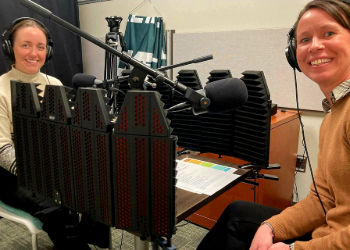
 Assistant professors Kathleen Pridgen, M.D., and Beth Hughes, M.D., record a podcast. In 2025, the UAB Department of Family and Community Medicine launched a transformative redesign of the Family Medicine Clerkship leveraging overhauled content and modern delivery platforms. Now implemented across all four UAB Heersink School of Medicine campuses, the initiative ensures a unified educational experience for every student that is aligned with national best practices.
“Ensuring alignment with students’ learning preferences and maintaining LCME comparability were our primary priorities,” explained Associate Professor Sameera Davuluri, M.D., Family Medicine Clerkship director. “The new curriculum delivery format not only met those goals but also provided students with an additional half day of clinic time during their clerkship.”
Spearheaded by Davuluri, a Family Medicine Clerkship Redesign Task Force was established in 2022 with an ambitious goal of improving training for all Heersink students and increasing the number of graduates who pursued family medicine or primary care specialties. The group committed to building a nationally recognized clerkship curriculum rooted in evidence-based primary care education and leveraging technology, learning science, and a future-forward approach to content delivery.
Each year, the clerkship trains 90–100 MS3 students through a four week, fully ambulatory rotation. Evaluations and focus group discussions to analyze how these students learn best were central to redesigning the clerkship to elevate primary care education. The feedback spotlighted their preference for short, digestible content delivered digitally, interactive and immersive experiences, and self-directed learning.
 The redesign included video lectures on topics like tobacco cessation. In response, the department introduced a variety of dynamic instructional formats delivered asynchronously, including recordings rather than standard lectures, plus handouts, articles, AI-generated videos, podcasts, infographics and gamified learning experiences. These updates allow students to access and move through material at their own pace, creating flexibility for learners rotating through different clinical environments.
“We chose media formats based on the type of information being covered—a topic like contraception benefitted from the conversational back and forth of a podcast, while others were best presented as a well-designed infographic and handout,” said Jon Ezell, Ph.D., MS, MLIS, the Family and Community Medicine instructional designer who oversaw development of the new curriculum. “During the first year, we asked for feedback on almost all of the content to get a sense of what was working for students and what we could incrementally improve or redesign.”
The result is a clerkship that mirrors the habits and expectations of today’s learners while maintaining rigorous academic standards. Student feedback has already highlighted infographics and podcasts as the most favored delivery platforms. Overall, nearly 67% of learners rated the clerkship as, “Sets the standard for a clerkship and rises to the level of a Best Practice.”
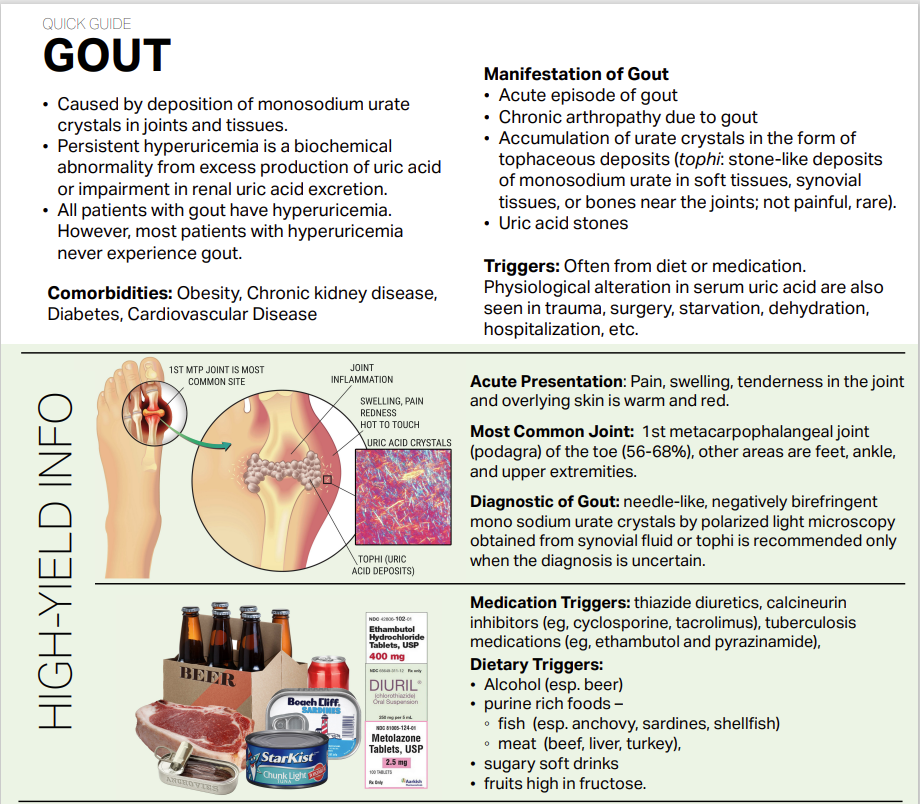 The curriculum team created informational handouts to accompany modules and video lectures. The comprehensive curriculum strengthens training in core aspects of family medicine, spanning general and preventive care, pediatrics, dermatology, musculoskeletal care, and OB/GYN. New or updated modules include hypertension, diabetes, asthma, low back pain, smoking cessation and gout, as well as prenatal care and women’s health.
Since the curriculum is largely asynchronous and digitally accessible, whether students are working with faculty or community preceptors, they now benefit from the same high-quality content, assignments, and expectations. This unified approach also enhances experiences for community preceptors, who now have consistent materials and clearer expectations to support student learning.
By removing geographical constraints and standardizing academic expectations, the clerkship hopes to strengthen key metrics such as shelf exam performance and LCME comparability across campuses.
Faculty leaders anticipate long-term benefits that are more difficult to measure but equally meaningful, including improved clinical readiness, deeper community preceptor engagement, and greater interest in primary care careers.