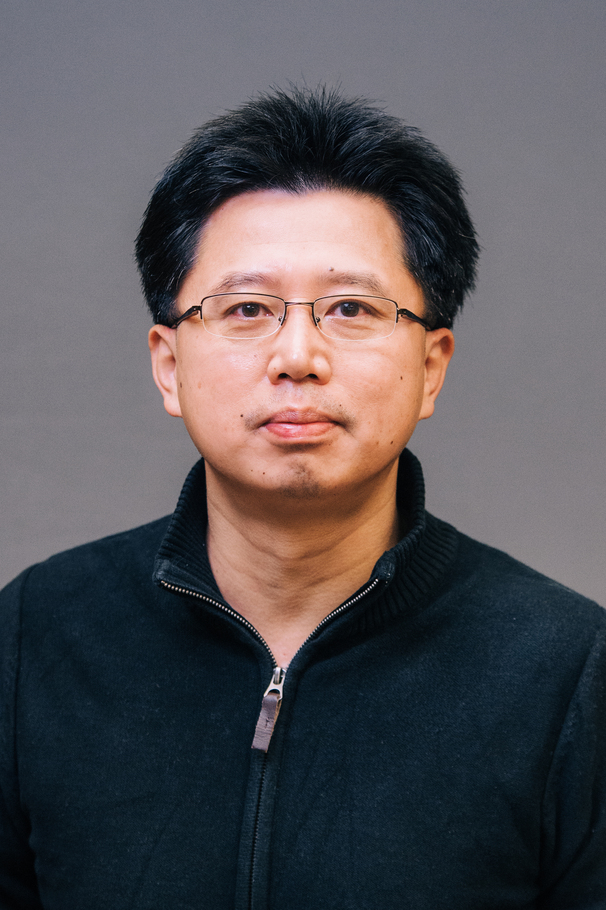
 Hui Hu, Ph.D.Hui Hu, Ph.D., professor in the Department of Microbiology, has been named the latest recipient of the school's Featured Discovery award. This recognition celebrates notable faculty research contributions and highlights the impact of their scientific advancements.
His study, “Bidirectional regulation by BACH2 coordinates systemic CXCR5− vs. CXCR5+ CD4+ T cell differentiation,” was published in JEM.
Hu and his team studied infection and disease, seeking to understand how the immune system decides whether to produce antibodies to recognize and neutralize threats, or activate immune cells to directly attack infected or abnormal cells. Through their research, they uncovered a previously unrecognized step that impacts the decision-making process.
“When newly activated CD4+ T lymphocytes first encounter a foreign antigen, they undergo rapid expansion before developing into specialized cells with different functions,” said Hu. “We discovered that, during this early expansion phase, a bidirectional regulatory mechanism serves as a critical step in guiding these cells toward distinct developmental paths. This process is influenced by how the cells encounter the antigen, including the route of exposure, the location where activation takes place, and the amount of antigen they encounter.”
According to Hu, this discovery could help physicians guide immune responses to more effectively combat conditions such as infections, autoimmune diseases, and cancer.
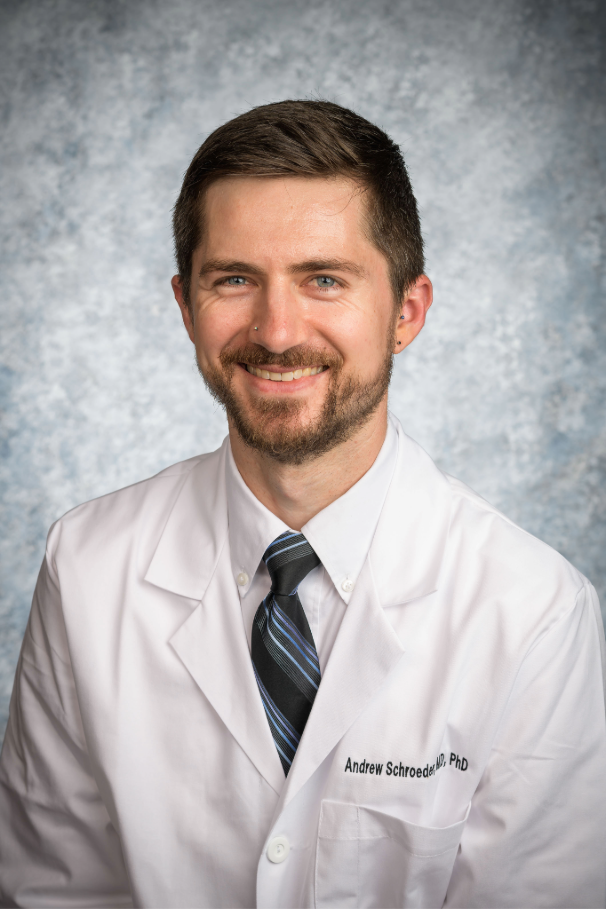 Andrew Schroeder, M.D., Ph.D."This study, like many, stemmed from an unexpected result in the lab, and it ended up demonstrating the delicate balance between the humoral and cellular arms of the immune system,” said Andrew Schroeder, M.D., Ph.D., first author of the study. “We hope the findings can be of benefit as researchers and clinicians consider strategies for future interventions, including vaccination and new therapies. "
The Heersink communications team met with Hu to gain insights into the study and help raise awareness about both the research and the Heersink School of Medicine.
What compelled you to pursue this research?
One of my lab’s major research interests is understanding T follicular helper (Tfh) cell differentiation and humoral immunity. Tfh cells, a specialized subset of CD4+ T lymphocytes, were identified about 20 years ago for their essential role in helping B cells form germinal centers and produce high-affinity antibodies. In our earlier work, we established how some Tfh cells enter B-cell follicles and support germinal center formation, while others follow a different path and contribute to the generation of memory T cells. Despite decades of research, however, a fundamental question remained unanswered: how do newly activated CD4+ T cells decide whether to become Tfh cells or take the alternative developmental path? The opportunity to address this long-standing question and uncover a fundamental principle governing how immune responses are shaped is what compelled us to pursue this research.
What was your most unexpected finding?
In our intraperitoneal immunization model, we found that transcription factor BACH2 acts as a negative regulator of Tfh cell differentiation and germinal center antibody responses. Surprisingly, in an intranasal immunization model, using the same antigen and the same amount, we found that BACH2 instead acts as a positive regulator of Tfh cell differentiation and germinal center antibody responses. This unexpected finding opened the door for us to uncover a broader mechanism through which BACH2 exerts bidirectional regulation on Tfh versus non-Tfh cell differentiation throughout the body, depending on the route and location of antigen exposure and the amount of antigen encountered.
How do you feel your research will impact the science community?
We believe our study has revealed a fundamental principle governing CD4+ T-cell responses. In particular, we provide a definitive answer to a paradox that has puzzled the field for more than a decade: how can the CD25/STAT5 pathway, regulated by BACH2, suppress Tfh cell differentiation while STAT5 is also essential for supporting the metabolism and proliferation of newly activated CD4+ T cells, including Tfh cells?
Our findings resolve this paradox and establish a new conceptual framework for understanding how the magnitude of a CD4+ T-cell response is linked to the divergence of these cells into distinct developmental paths. We believe this represents a critical second step (Step 2) in CD4+ T-cell activation, following the initial T-cell receptor signaling and co-stimulation (Step 1). The bidirectional regulatory mechanism we identified establishes a fundamental principle for understanding how the magnitude and direction of immune responses are coordinated. Beyond advancing our understanding of basic immunology, this discovery may have important implications for vaccine development, particularly for designing strategies to generate stronger, more effective antibody responses.
What is your research’s relevance to human disease (if applicable)?
Our findings may also help explain the seemingly paradoxical clinical features of patients with BACH2 deficiency. Although these patients develop autoimmune conditions characterized by the production of autoantibodies, they can simultaneously exhibit inadequate antibody responses to many pathogens and vaccinations. We propose that dysregulated BACH2-mediated control of the balance between Tfh and non-Tfh cell differentiation may contribute to these seemingly opposing immune outcomes.
When did you know you had an important discovery?
We immediately realized that we might have uncovered something important when we saw that the results of intranasal immunization were completely opposite to those of intraperitoneal immunization. This was a completely unexpected finding–something we simply could not explain based on our existing understanding of CD4+ T-cell biology. We knew there had to be a much more fundamental regulatory mechanism at work, although at that point, we had no idea what it was or how it operated. I think this is one of the most exciting aspects of scientific research: an unexpected result challenges what we thought we understood, raises questions we never anticipated, and opens the door to an entirely new discovery.