Every cell in the b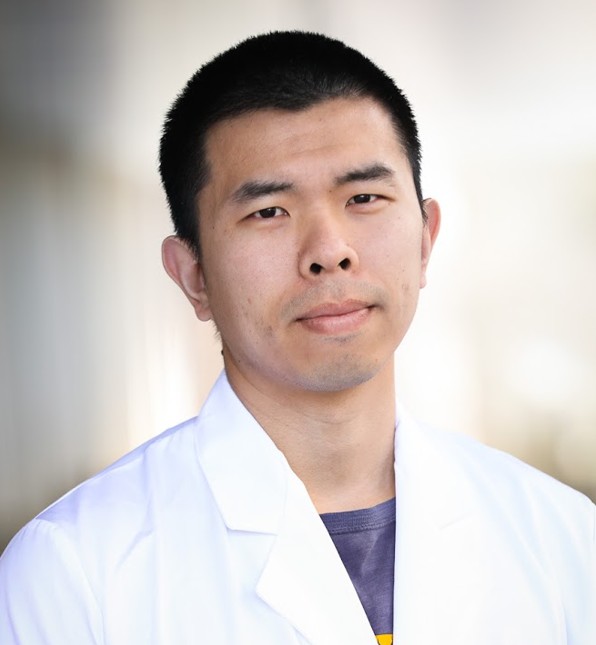 ody has a built-in recycling and waste disposal system that helps keep it healthy. Due to aging, genetic mutations, or environmental stress, that system can start to fail. When it does, damaged proteins and other cellular waste can accumulate—a process increasingly linked to neurodegenerative diseases such as Alzheimer’s and Parkinson’s.
In the Department of Cell, Developmental, and Integrative Biology, Zhiyong Liu, Ph.D., assistant professor, is investigating one of the molecular control systems that keeps this cellular cleanup running.
“Our work is trying to understand the basic control system behind that process: essentially, how cells know when, where, and what to clear,” said Liu. If we can understand those rules, we may eventually be able to help cells restore their own cleanup machinery in diseases such as Alzheimer’s and Parkinson’s.”
A new research direction
Building on previous work on endolysosomal dysfunction and tau pathology, Liu’s current research—funded by an R35 award from the National Institute of General Medical Sciences—is uncovering a connection between calcium signaling and Rab GTPases, proteins that help direct the movement and recycling of materials inside cells.
“My previous research has focused on endolysosomal dysfunction in neurodegenerative diseases,” said Liu. “My current study grew directly out of my NIA-funded K99/R00 project investigating the role of Rab10, a small GTPase genetically linked to both Parkinson’s and Alzheimer’s disease, in tau pathology.”
It was during that study that Liu’s team identified a previously underappreciated family of regulatory proteins that connect calcium signaling to Rab GTPases and membrane trafficking.
“This discovery opened a new direction for my laboratory: understanding how calcium signals regulate intracellular trafficking and how disruption of these mechanisms may contribute to neurodegenerative disease,” he said.
Connecting calcium signaling to cellular cleanup
By combining structural biology, biochemistry, advanced imaging, neuroscience and other approaches, the current project aims to understand how these signals control cellular trafficking. Their research asks if this new knowledge could reveal new ways to restore cells’ ability to clear harmful material.
“Endolysosomal dysfunction is a major feature of many diseases, particularly neurodegenerative diseases,” said Liu. “Rab GTPases are master regulators of these pathways, so by understanding the upstream mechanisms that control Rab activity, we hope to identify new ways to restore endolysosomal function when it begins to fail.”
Liu says the major impact of the R35 project is its identification of a new connection between calcium signaling and Rab-regulated membrane trafficking.
“In the long term, this could open new therapeutic directions by targeting calcium channels or calcium-regulated signaling pathways to correct defects in cellular trafficking and clearance.”
Molecular mechanisms impact brain function
Liu’s project and long-term research program are highly interdisciplinary.
His lab studies biological questions across very different scales. From molecular mechanisms at near-atomic resolution to cellular dysfunction, neurodegeneration, cognitive decline, and behavioral changes, Liu’s lab covers it all and investigates connections.
“We integrate structural biology, biochemistry, cell biology, neuroscience, advanced imaging, proteomics, and genomics,” said Liu. “I think this combination is particularly powerful because we are not limited to looking at one small piece of the problem.”
“We can ask how a molecular event changes the behavior of a protein, how that affects a cellular trafficking pathway, and ultimately how those changes influence brain function and disease,” said Liu.
This approach allows Liu and his collaborators to move from understanding the behavior of individual molecules to asking how those molecular changes impact cells, the brain and, ultimately, disease.
The power of campus collaboration
UAB’s collaborative research environment has played an important role in the development of Liu’s research program.
Liu completed his Ph.D. at UAB with Lawrence J. DeLucas, Ph.D., a structural biologist and former NASA astronaut. During his doctoral training, he also collaborated with Andrew West, Ph.D., who was then a professor in the Department of Neurology at UAB.
“So, from very early in my career, my research has been built around collaboration between basic molecular science and experts studying human disease,” said Liu.
He says this collaborative culture is one of UAB’s major strengths.
“At UAB, I can work closely with investigators and core facilities with expertise in structural biology, cryo-EM, proteomics, advanced imaging, genomics, neuroscience, and animal behavior,” said Liu. “That allows us to take a discovery at the molecular level and quickly ask what it means in cells, in the brain, and ultimately in disease.”
Liu also credits the supportive environment within CDIB, noting the guidance and scientific insight of senior faculty members, including Bradley Yoder, Ph.D., and Elizabeth Sztul, Ph.D., among many others.
“That combination of strong mentorship, collaboration, and shared expertise has been extremely important for the development of my research program,” he said.