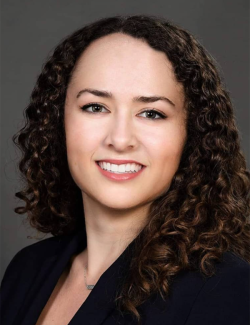
 Roxanne Lockhart, M.D., recently joined the UAB Department of Neurology as an assistant professor in the Division of Epilepsy, bringing a rich history of connection and dedication to the institution.
A true UAB lifer, Lockhart’s journey at UAB began in high school, when she had the opportunity to participate in neuroscience research focused on traumatic brain injury. She went on to complete her undergraduate degree through the UAB Honors Program, followed by a master's in biotechnology and her medical degree at UAB. Her entire medical training has been at UAB, where she completed her neurology residency followed by fellowship training in Neuro-Oncology and Epilepsy/Tuberous Sclerosis Complex. Throughout her training, she has worked with patients with complex neurologic conditions while actively participating in clinical research, teaching, and multidisciplinary care. It has been deeply meaningful for her to return as faculty to the institution that shaped her career.
Learn more about her journey, her clinical focus, and what inspires her work.
What inspired you to pursue a career in neurology?
Lockhart: I grew up in a non-traditional household and spent much of my childhood helping care for my great-aunt, who was left paralyzed after a car accident. Caring for her sparked my fascination with the nervous system and how profoundly neurologic disease can affect a person's life. In high school, I had the opportunity to work in a neuroscience research laboratory, where I quickly fell in love with the brain and the process of understanding how it works. I really can't imagine myself doing anything else!
What is your primary area of expertise within your field, and what sparked your passion for it?
Lockhart: My clinical expertise spans Neuro-Oncology, Epilepsy, and neurocutaneous disorders, particularly Tuberous Sclerosis Complex and Neurofibromatosis. One of the things that makes UAB so special is the incredible depth of expertise here and the number of pioneers who have made an impact on patient care both nationally and internationally.
My connection to Tuberous Sclerosis Complex is particularly special. As a medical student, the first neurologist I ever asked to follow was Dr. Martina Bebin, who directs our Tuberous Sclerosis Clinic. Years later, I have come full circle and now have the opportunity to work alongside her and continue caring for these patients. It is a wonderful reminder of how the mentors we encounter can shape our paths in ways we never anticipate.
What aspects of your role here are you most excited about?
Lockhart: I am most excited about taking care of patients and building meaningful relationships with them and their families. Neurology allows us to care for patients through some of the most challenging moments of their lives, and I am excited to bring what I have learned throughout my training to provide compassionate and comprehensive care. I am also excited to continue learning from my colleagues and contributing to the next generation of neurologists.
What are your goals for making an impact through both your teaching and patient care in this role?
Lockhart: My goal is to provide exceptional, compassionate care while helping patients and their families feel informed, supported, and empowered throughout their neurologic journey. I also hope to make a meaningful impact through teaching by sharing my enthusiasm for neurology with medical students, residents, and fellows and helping them develop both the clinical skills and curiosity that make a great neurologist.
Ultimately, I want to contribute to the culture that drew me to UAB in the first place, which values excellence in patient care, innovation, and mentorship. I hope to be the kind of physician and mentor who makes a lasting difference in both my patients' lives and the careers of the trainees I work with.