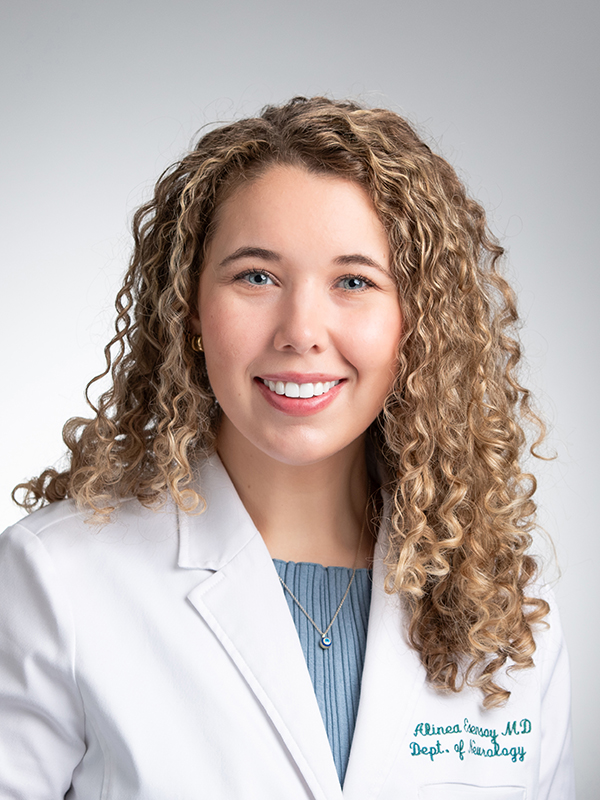
 T. Alinea Esensoy, M.D., joined the UAB Department of Neurology as an assistant professor in the Division of Cardiovascular Disease in July 2026. She earned her Bachelor of Science in biomedical engineering from UAB in 2017 and her medical degree from the UAB Heersink School of Medicine in 2021. She then completed her neurology residency at UAB in 2025, followed by a vascular neurology fellowship in 2026.
Before and throughout medical school, Esensoy worked as a freelance graphic designer, creating logos, branding, and websites for individuals and small businesses. As an undergraduate, she was a marketing intern for the UAB Office of Student Involvement and served on the Undergraduate Student Government executive council. She later joined the medical school's Student Senate. That design background has carried into her clinical career. During residency, she created patient education and discharge handouts when other materials were not available, produced a residency recruitment booklet, and helped manage the program's social media. She now serves on the UAB Stroke Marketing Task Force, which develops patient-facing education.
This year, Esensoy is also an NIH StrokeNet fellow working with the UAB Telestroke Program. She received the Medical Student Teaching Award upon her graduation from residency in 2025.
Learn more about her journey and what inspires her work.
What inspired you to pursue a career in this field?
Esensoy: I've wanted to be a doctor for as long as I can remember. My younger sister and I are only 18 months apart, and she was born with a genetic tumor condition that required more than 23 surgeries by the time she turned 18. We spent much of our childhood in hospitals and doctors' offices, so the hospital felt like a second home. I watched her doctors care for her, and for our whole family, and I wanted to be able to do that for someone else.
Patient advocacy pulled me even further toward medicine. I'm a first-generation college student and the first person in my family to work in healthcare in any role, and growing up I often translated medical information for my parents. Being on the family side of the room, trying to make sense of what's happening and what to ask, shapes how I practice today. I want patients and families to leave understanding what's going on, not just being told.
I chose neurology because the brain is fascinating and because we meet patients at some of the most vulnerable moments of their lives, often on the worst day they've ever had. Stroke in particular shows how much where you live and what resources you have can affect your outcome, especially here in the Stroke Belt, and that's something I care about deeply.
What is your primary area of expertise within your field, and what sparked your passion for it?
Esensoy: My area of expertise is vascular neurology, which covers stroke and other conditions affecting the brain's blood vessels. Stroke happens suddenly, and the decisions we make in the first minutes and hours can change the course of someone's life. I love being able to step into that moment, act quickly, and help a family understand what's happening. The work doesn't stop once the emergency is over, either. There is so much we can do afterward to help prevent another stroke, which is where education and follow-up really matter.
Stroke also doesn't affect everyone equally. Risk factors, access to care, and how quickly someone can get to a hospital vary a lot across Alabama, so this is a field where working to close those gaps can make a real difference.
What aspects of your new role here are you most excited about?
Esensoy: Honestly, the people. I started with UAB Neurology as a medical student not that many years ago, and the people I trained with and under have become family. Getting to keep working alongside people I've looked up to for years, and now call colleagues, still feels a little surreal. I also get to keep teaching residents and medical students, which has always been one of the most rewarding parts of my job.
This first year, I'm also an NIH StrokeNet fellow working with our Telestroke Program, which connects UAB's stroke team with 39 hospitals across Alabama, many of them rural. Every hospital is different, with its own staffing, resources, and challenges, so I've been visiting sites and getting to know their teams. My goal is to understand what each hospital really needs, so we can be a better partner and help patients get great stroke care close to home.
What are your goals for making an impact through both your teaching and patient care in this role?
Esensoy: In teaching, I want neurology to feel approachable. A lot of learners come in intimidated by the brain (I did too), and some of my favorite moments are watching it finally click for a student at the bedside. I want to be the kind of attending people feel comfortable asking questions of, and I especially want to support students who, like me, might be the first in their families to go into medicine and don't always feel like they belong in the room at first.
In patient care, my goal is for every patient and family to understand their diagnosis and their plan. The best treatment plan doesn't help much if someone leaves the hospital without understanding it. I also believe the time we spend connecting with patients and families matters just as much as the medicines we prescribe. Through telestroke, I want to help make sure that level of care reaches patients in smaller and rural communities, not just those close to Birmingham.