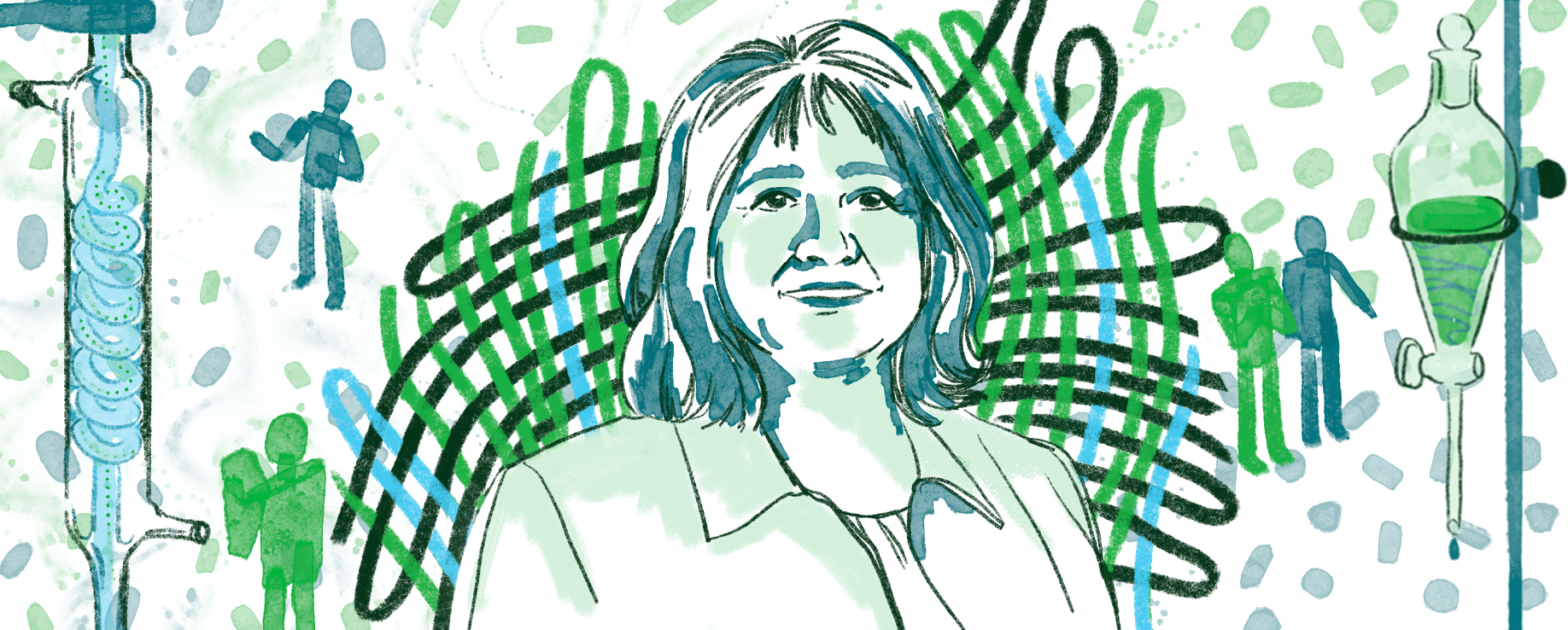
Augelli-Szafran brings industry insight to Heersink
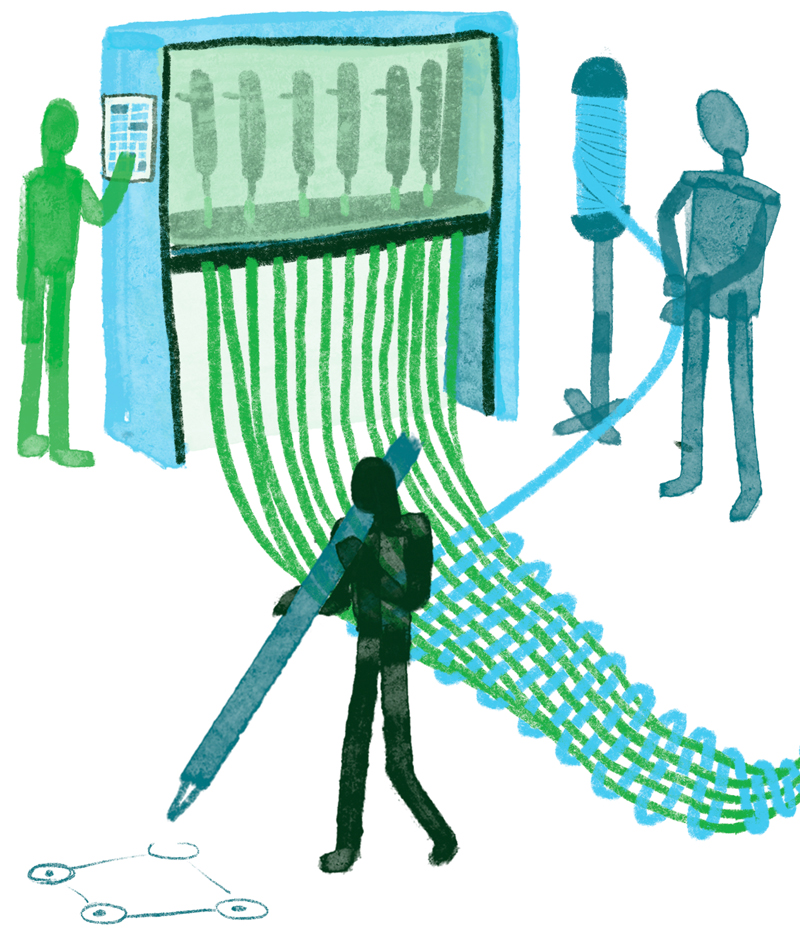
Drug discovery is a vital part of healthcare, but it can be a painfully slow process. Corinne Augelli-Szafran, Ph.D., professor in the UAB Department of Biochemistry and Molecular Genetics, is all too familiar with the difficulties of this process.
Augelli-Szafran is also no stranger to UAB. As an expert in drug discovery and development, she’s crossed paths with the university many times. Starting out in Big Pharma at Parke-Davis and Pfizer for almost two decades, Augelli-Szafran then transitioned to academia at Harvard Medical School where she built a drug discovery program in the Alzheimer’s field.
In 2014, she moved south to work for Southern Research in Birmingham. When she arrived, she knew she wanted to bring her skills in drug discovery to the forefront of her new role. In order to do that, she would need to seek out experts in biology to work with. According to her, most of her collaborators were and are still from UAB. As a result, she found herself working on various projects in collaboration with UAB investigators. One of these projects was the Cystic Fibrosis Program, where she would meet David Bedwell, Ph.D., chair of the Department of Biochemistry and Molecular Genetics. After a few years of working with Augelli-Szafran, Bedwell saw what her skills could bring to his department and Heersink School of Medicine as a whole. She officially joined the department in June 2025 as a UAB Presidential Faculty Scholar.
“To be familiar with so many people while now also being physically here, it makes it a lot easier for me to find new opportunities to collaborate with wonderful scientists,” said Augelli-Szafran.
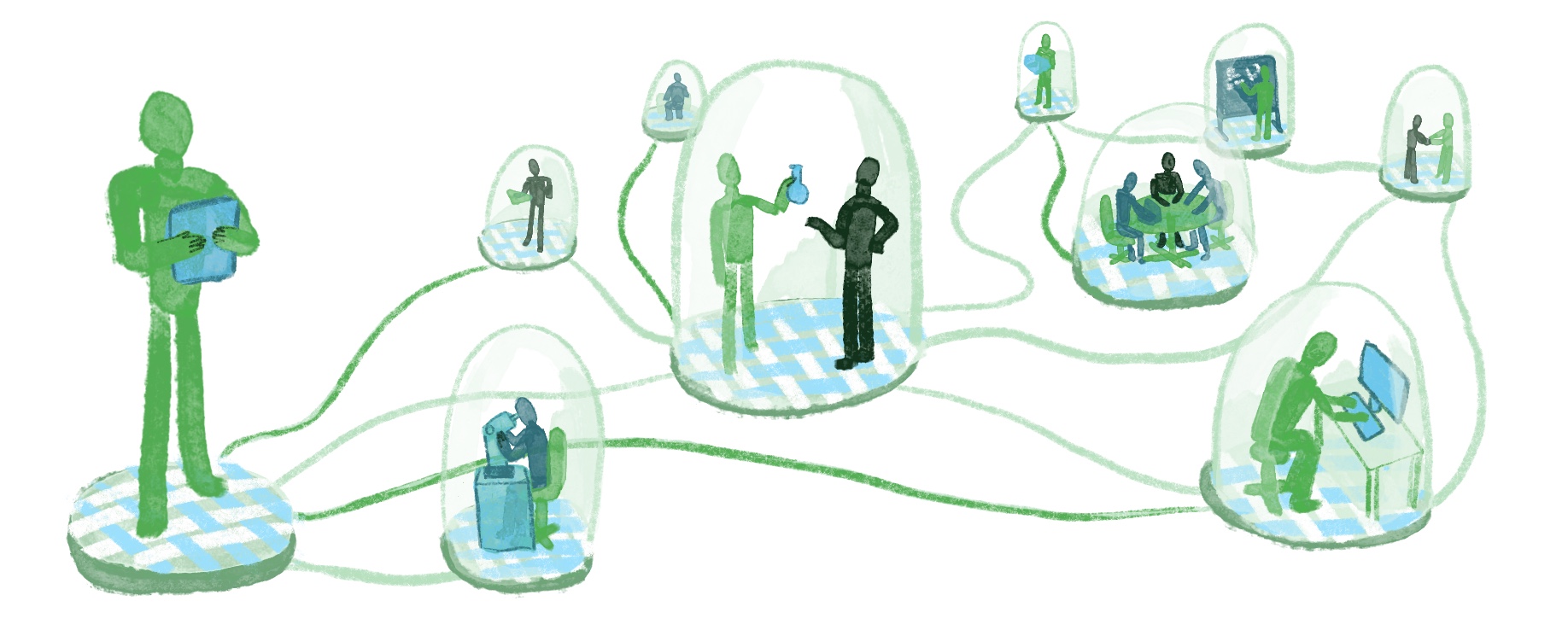
The strength of her collaborators wasn’t the only deciding factor in moving to UAB. Augelli-Szafran also relished the opportunity to mentor scientists. As a faculty member at Harvard, she won awards for her mentorship of undergraduate and graduate students as well as postdoctoral fellows. Additionally, in Big Pharma and at Southern Research, she supervised and mentored all levels of scientists. To give students the opportunity to experience a drug discovery environment, Augelli-Szafran also started an internship program at Southern Research in collaboration with the UAB College of Arts and Sciences’ Department of Chemistry. Now, as a member of the Heersink faculty, Augelli-Szafran will continue her role as a mentor of postdoctoral fellows, staff scientists, and potential graduate students.
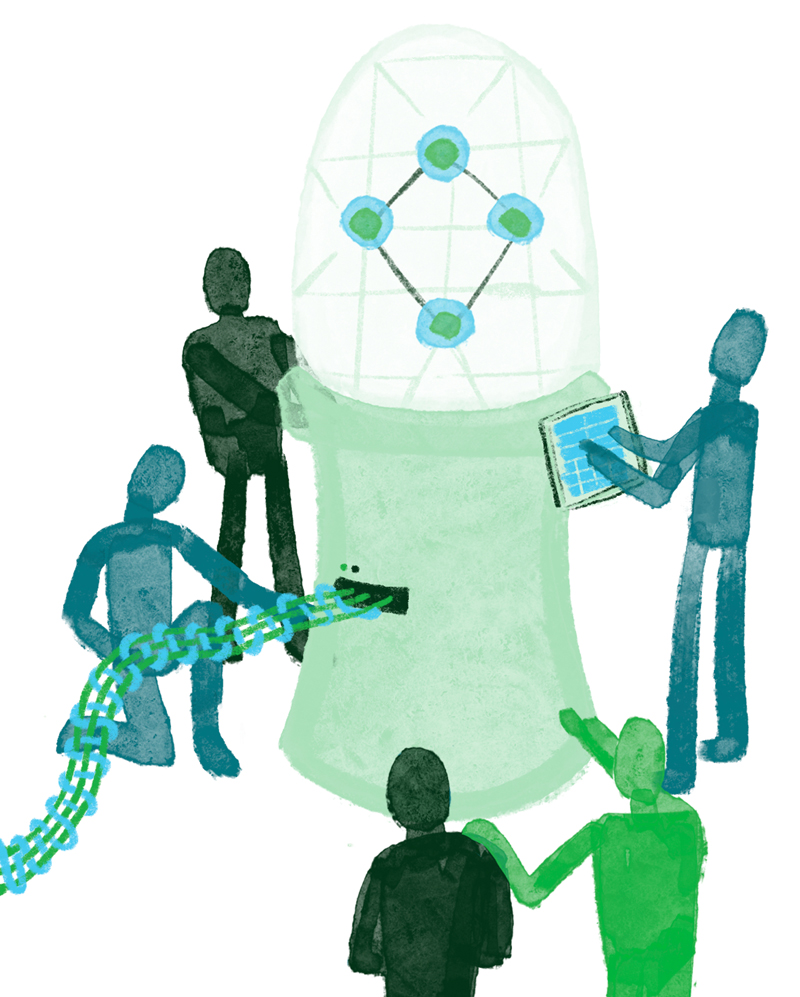
In her research, Augelli-Szafran develops drugs for a wide range of conditions including cancer, cystic fibrosis, Alzheimer's disease, kidney disease, and inflammation. She discovered her passion for this work right after graduate school. Interested in the pharmaceutical industry, she got her first job at Parke Davis, which was later bought by Pfizer. It was there that she fell in love with drug discovery, experiencing the design, synthesis, and optimization of novel chemical matter into lead candidates that could be brought into clinical trials as novel therapeutics.
“The success rate in getting a drug on the market is such a long shot,” said Augelli-Szafran. “I think the challenge and the drive makes you want to try even harder, even when it's not successful. Most of the time, it's not successful. If you have that passion and determination, and don’t take no for an answer, it just builds up in you like a fire.”
Having been here over a year now, the thing that impressed Augelli-Szafran most about UAB is the opportunity. “There is an enormous amount of excellent science that is done by so many faculty,” she said. “I think it just provides a lot of opportunity for whatever field anybody is in. Whether you're a biologist or a computational chemist, there are so many ways to collaborate here and move science forward.”
Looking ahead, Augelli-Szafran is eager to bring drug development to the forefront at Heersink. “I’m going to really grow the vision that I have of bringing drug discovery in-house to the medical school, such that every step of the way can be executed on our own turf,” she said. “That’s ultimately what I would love to help the school accomplish.”
Read more stories from UAB Medicine Magazine.