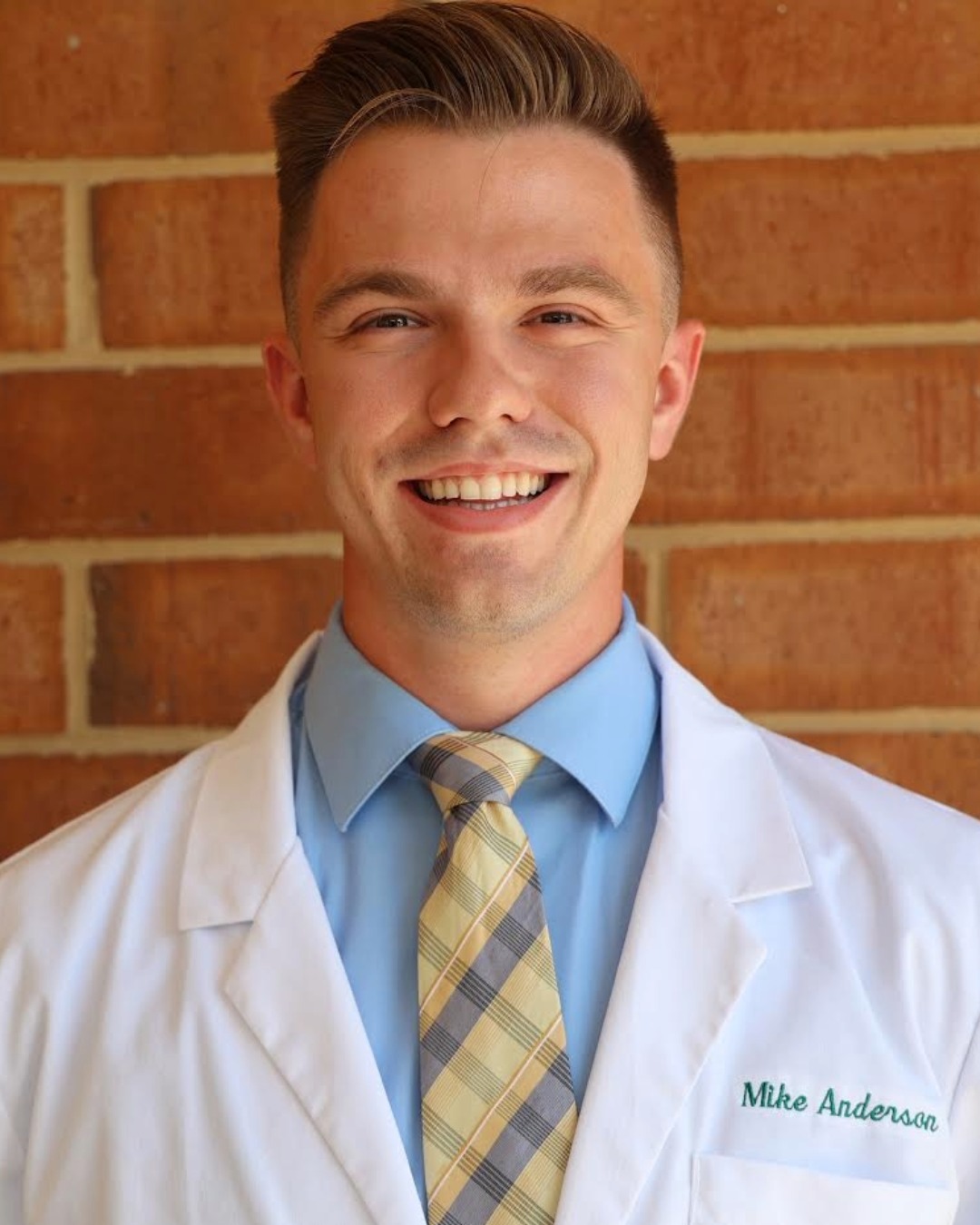
 In every medical school class, many students rise not only through achievement but through their ability to connect with others and lead with intention. For the UAB Heersink School of Medicine Class of 2026, Mike Anderson is one of those individuals. A four-time Class President and future dermatologist, Anderson has shaped his class’s culture while navigating an unconventional path to medicine with purpose and perspective.
Anderson’s journey began in a small town in Wisconsin, where he grew up in a close-knit family with no direct ties to medicine. His father worked as an accountant, and his mother served as a school secretary. He attended the University of Wisconsin–Oshkosh, earning a degree in finance before stepping into the corporate world.
After graduation, Anderson worked for several large companies and relocated to Birmingham for a treasury position. Though successful, he realized something was missing in his career. Everyday conversations with his roommate, a radiology resident, sparked a growing interest in science and patient care, planting the seed for a career change. After experiencing a personal hospitalization, Anderson solidified his decision to see if medicine was the path for him.
In 2019, he enrolled in postbaccalaureate coursework at UAB, starting with foundational science classes. What began as a trial period quickly became a calling. He matriculated into the Heersink School of Medicine in 2022, bringing with him a level of real-world experience that would shape his approach to both learning and leadership.
From the first day of medical school, Anderson engaged with his classmates and embraced leadership roles, being elected as MS1 Class President and being re-elected each year. “It’s not about being the loudest voice in the room,” he notes, “it’s about listening and making sure people feel heard.” Acting as a bridge between students and administration, he navigated challenges with humility, addressing concerns thoughtfully and ensuring classmates felt respected. This approach shaped his view of teamwork, emphasizing collaboration and shared success over individual recognition. By fostering open dialogue and listening carefully, Anderson helped build trust and strengthen the class, creating a culture where every voice mattered.
Like many students, Anderson faced challenges during medical school, both academically and personally. While he describes himself as someone who had to work diligently to keep pace, the greater difficulty came from balancing the many demands required to build a strong residency application. “There’s more to it than just studying,” Anderson said. “You’re balancing research, leadership, service, and everything else that comes with it.” At times, that meant making difficult decisions about how to spend his time. Certain interests and activities had to take a back seat as clinical responsibilities increased, particularly during third year. Anderson explained that third year pushes you but also prepares you in a positive way that builds confidence going into residency. He credits Heersink’s rigorous clinical training and diverse patient population for sharpening both his clinical reasoning and adaptability.
Although Anderson began medical school interested in primary care, his experiences at Heersink led him to dermatology. He says that the specialty allows him to treat a wide range of conditions while building long-term connections with patients.
Mentorship also played a critical role for Anderson. He credits Tiffany Mayo, M.D., associate professor in the Department of Dermatology and director of the Clinical Research Unit, as a key influence. Her dedication to patient care, mentorship, and community engagement provided a clear example of what it means to be a physician who invests deeply in both patients and students. Mayo’s example is one Anderson looks up to and hopes to emulate in his own career.
Reflecting on his time at Heersink, Anderson points first to the relationships he has built. The friendships formed during medical school, he says, are what made the most demanding moments manageable. “This is not something you can do alone,” he said. “Having a strong support system makes all the difference.” That perspective has shaped how he approaches both medicine and leadership. Whether working with classmates, mentors, or patients, Anderson emphasizes the importance of showing up and providing mutual support, which are qualities that carried him through the most difficult days.
For those considering a path to medicine, particularly from a different career, Anderson notes that success comes from genuine curiosity and a commitment to patient care. Drawing from his own experience, he encourages prospective students to embrace the journey fully, knowing that while it requires dedication and careful planning, the personal and professional rewards make it worthwhile.
As graduation approaches, Anderson reflects on his classmates with appreciation and optimism. “It’s been a privilege to get to know so many people and hear their stories,” he said. “I’m looking forward to seeing the impact they’ll make.” Anderson urges his peers to embrace challenges as opportunities for growth and to stay actively engaged with their communities.
As he prepares to enter residency at the University of Oklahoma, Anderson does so with a clear sense of excitement and responsibility, viewing the transition as a natural next step. He hopes to remain involved in medical education, contribute to advancements in dermatology, and help shape the future of healthcare.