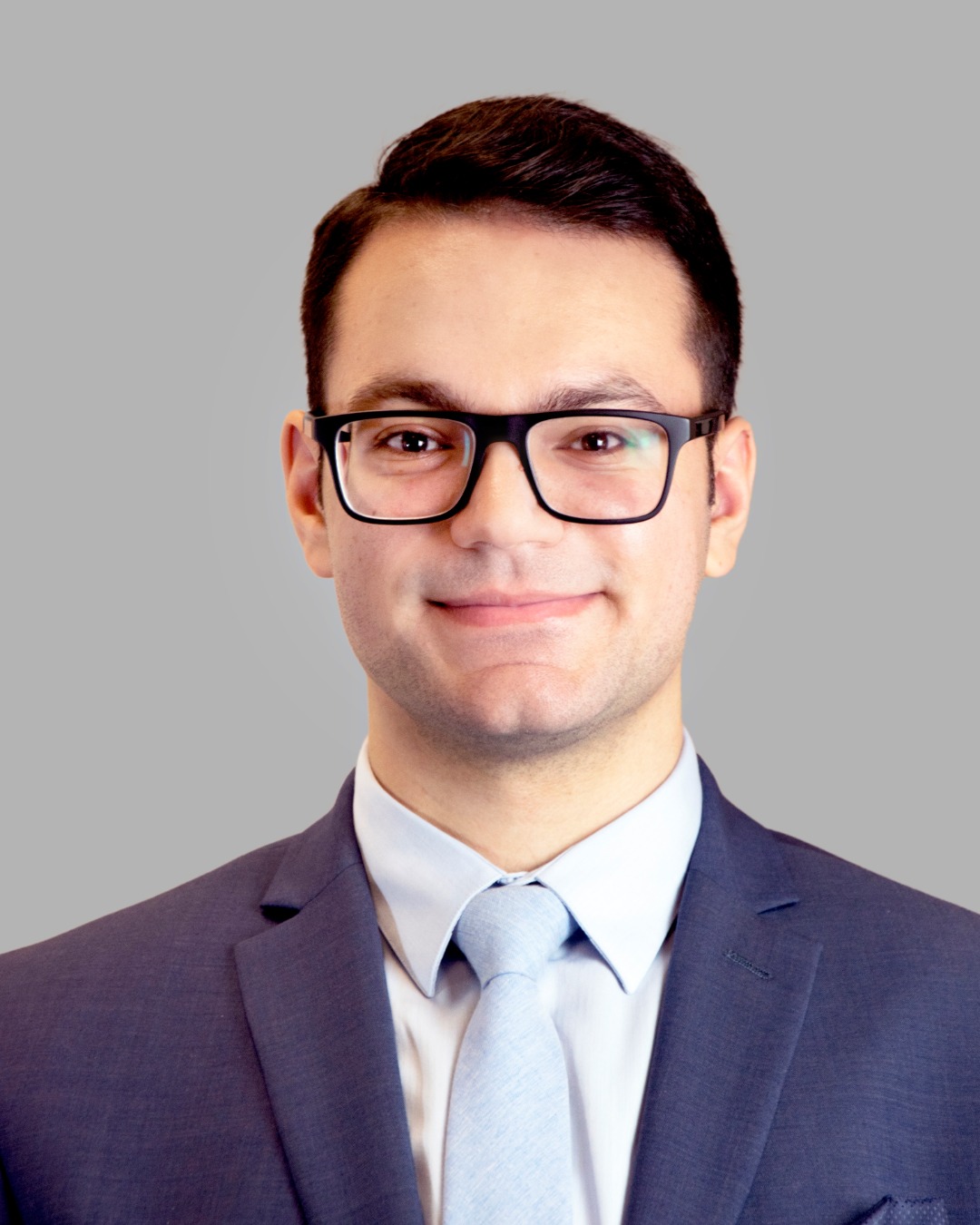
 For Abdulraheem Kaimari, research is an opportunity to help improve the lives of children and families facing cancer. As a fourth-year M.D.-Ph.D. student at the UAB Heersink School of Medicine, he is working toward a career that combines patient care and research to develop new therapies that can lead to better outcomes for patients.
Originally from Atlanta, Georgia, Kaimari received his bachelor’s degree in neuroscience with a chemistry minor from Mercer University before entering UAB Heersink in 2023. As an undergraduate, he worked with Linda Hensel, Ph.D., and David Goode, Ph.D., developing and testing potential therapeutics for bacterial infections. Through that experience, he discovered that the M.D.-Ph.D. program would allow him to combine his passions for research and patient care. Now, as a second-year neuroengineering graduate student at UAB, Kaimari’s goal is to become a physician-scientist.
Working in the laboratory of Elizabeth Beierle, M.D., professor, vice chair for faculty development, surgical director of the Hepatobiliary Clinic at Children's of Alabama, and holder of the Charles D. McCrary Endowed Chair in Pediatric Surgery, Kaimari studies neuroblastoma, the most common extracranial solid tumor in children. His research focuses on understanding why these tumors are often able to avoid the body's immune system and identify ways that researchers can make them more responsive to treatment. “I investigate the therapeutic potential of a novel activator of the tumor suppressor phosphatase PP2A and study how it influences tumor growth, immune signaling and the tumor microenvironment,” Kaimari said. By identifying the molecular pathways regulated by PP2A, he hopes to uncover new strategies that could benefit children with neuroblastoma.
Kaimari is also developing a 3D bioprinted co-culture model that combines neuroblastoma cell lines and patient-derived xenograft tumors with immune cells. The model is designed to accurately replicate the tumor microenvironment, providing a platform for studying the interaction between tumor and immune cells. Once established, the model will help researchers evaluate novel therapeutic approaches and better understand how to enhance anti-tumor immune responses in pediatric cancers.
Kaimari’s pediatric research has also been recognized through several competitive training programs and awards. This year, through UAB’s Interdisciplinary Training in Pathobiology and Rehabilitation Medicine program, he was selected for a predoctoral traineeship supported by the National Institutes of Health T32 training grant from the Eunice Kennedy Shriver National Institute of Child Health and Human Development. The program supports his research to understand the biology of neuroblastoma and identify mechanisms that may lead to new therapeutic approaches, while also preparing him for a career as an independent investigator.
He received the Emerging Scientist Grant from the Kids Beating Cancer Foundation, which supports students and researchers conducting pediatric cancer studies that contribute to broader scientific investigations. Kaimari was also awarded the Launch Neurotech Grant through the UAB Center for Nanoengineering and Brain-Computer Interfaces’ Innovate and Launch Neurotech Entrepreneurship program, where his team developed Project NeuroBridge, an initiative focused on improving stroke care in rural communities through the development of a novel blood-based biomarker kit.
Working in cancer research has given Kaimari a new perspective on the complexity of the disease and the research process itself. "One of the most important lessons I have learned is that cancer is far more complex than any single pathway or treatment target," he said. "Research has also taught me the value of persistence, adaptability, and curiosity. Experiments often raise more questions than answers, and progress rarely follows a straight path."
Those lessons have been reinforced through the mentorship of Beierle, who Kaimari says has played a significant role in his growth as both a scientist and future physician. “One of the most valuable lessons she has taught me is the importance of maintaining a patient-centered perspective in research,” he said. Kaimari says this mindset reminds him that every experiment has the potential to impact the lives of children and families who are affected by cancer. Through opportunities to shadow Beierle in the operating room and clinic, he has also witnessed how discoveries made in the laboratory can directly influence patient care.
Kaimari plans to continue conducting research throughout his medical career. He hopes to become a physician-scientist specializing in oncology and use his research to improve how pediatric cancer is understood and treated.