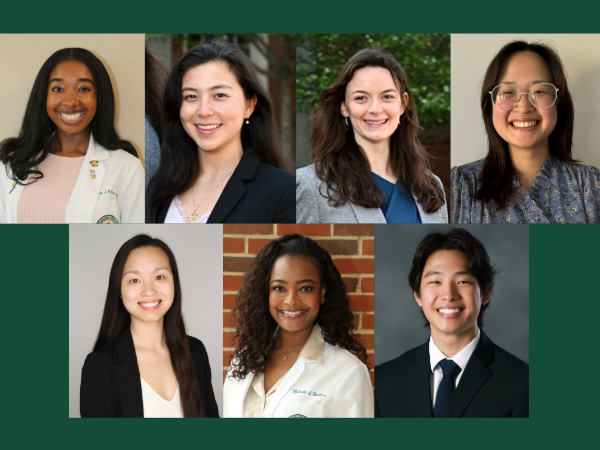
As the 2025–2026 Alabama Albert Schweitzer Fellowship concludes, seven UAB Heersink School of Medicine students— Sophia Fox, Britney Le, Grace-Anna Perry, Mykayla Walker, Li’an Williams, Lexi Witherspoon, and Dan Zhang—are recognized for completing a year of service supporting communities across Alabama. Their projects focused on education, outreach, and access to care while helping them build valuable skills in leadership and community engagement.
The fellowship provides graduate health students with opportunities to develop practical, community-based approaches to health needs. With support from mentors and community partners, these students contributed to efforts that promote improved health and well-being.
Making Physical Activity More Accessible
Li'an Williams worked alongside Live HealthSmart Alabama during her project to assist in making physical activity education more accessible to adults in the Birmingham community. Through her collaboration with community members, she and her co-fellow developed practical home-based exercise resources that required no equipment, including educational materials tailored to individuals with health literacy and health conditions. To ensure they addressed the barriers that community members faced, they gathered feedback that shaped the final resources. "Our goal was to meet people where they were by co-creating home-based, zero-equipment exercise routines," Williams said.
To evaluate the impact of the project, they adjusted their feedback strategy after clinic logistics required short-form formal surveys to more conversational feedback. With the support from her mentors, they adapted to the shift by gathering immediate feedback through direct conversations with participants during their clinic visits. Throughout the fellowship, Williams connected with more than 130 community members. "This experience solidified my commitment to community-centered care by teaching me that meaningful service is rooted in a continuous process of listening deeply and responding flexibly to community needs," Williams said.
Building Community Through Movement
Sophia Fox and Grace-Anna Perry partnered with Cahaba Medical Care West End to provide the West End community participants with a free weekly Zumba class designed to make exercise more accessible while fostering connections with the community. They created the program to address participants' barriers to physical activity due to chronic health conditions, cost, transportation, or unfamiliarity with traditional fitness settings.
Alongside exercise, the fellows discovered that the social aspect for the participants was just as important as the exercise itself. "There was a point when I realized people weren't just showing up for exercise anymore; they were showing up because they felt connected," Fox said. One participant even celebrated losing 60 pounds over the course of the year, a milestone the fellows were honored to celebrate alongside her.
Through the success of the program, they also faced the challenge of sustainability. Maintaining the same momentum for recruiting participants and volunteers throughout the program can sometimes be as difficult as creating the program itself. With the guidance of their mentors, the fellows learned how to create measurable plans and became more comfortable with uncertainty. They were taught that community projects are not always linear and that maintaining flexibility throughout the process is essential. To attract participants, they created flyers to distribute to other clinics. They also focused on long-term success of the program, "We have coordinated a new wave of residents to help us this next year in continuing the project," Perry said.
Using Storytelling to Strengthen Patient Advocacy
Lexi Witherspoon and Mykalya Walker developed a six-week Narrative Medicine curriculum at The Lovelady Center by using storytelling and other creative forms of expression to help women strengthen their voices and advocate for themselves in healthcare settings. Later in the program, they expanded to provide workshops with third-year medical students, high school students, and explored opportunities to incorporate narrative medicine into the UAB Heersink School of Medicine curriculum.
Throughout the process, they discovered the importance of creating a safe environment where participants felt comfortable sharing deeply personal experiences. The fellows participated in the activities themselves and modeled vulnerability and fostered meaningful conversations with the participants about self-advocacy, bias, and stigma. "A patient will take what they need from an encounter, and because it is what they need, that is impact," she said. They saw that building trust with the participants was the greatest reward. "Watching their confidence grow over the course of the program and hearing them describe how they were applying the skills we discussed in their daily lives was incredibly meaningful," Witherspoon said.
Expanding Cultural Curiosity in the Classroom
Britney Le and Dan Zhang engaged fifth- and sixth-grade students at the YMCA Youth Center in Birmingham with hands-on lessons showcasing six cultures, focusing on traditions and languages among other aspects. The fellows dedicated a month per culture, allowing students to build a deeper understanding through local community partnerships and interactive activities.
Through the program, the fellows were able to watch the students' confidence and curiosity grow. "Our goal with this program was not to have them memorize random facts about different cultures, but to develop and strengthen their sense of cultural sensitivity and curiosity," Le said. By designing interactive activities for the students to engage with, the fellows were able to overcome the challenge of addressing varying interests and learning styles. Their mentors assisted in providing guidance throughout the program's planning and implementation process. For Zhang, the project centered on helping students embrace differences with respect. "We repeated our motto, 'Be curious, not critical. Ask, listen, and learn,' every single session to emphasize the importance of appreciating each other's differences," Zhang said.
Opening Doors to College and Career Opportunities
Divya Annamalai's collaboration with the Alabama Interfaith Refugee Partnership (ALIRP) was developed after discovering that many families navigating the U.S. educational system face barriers. Through the partnership, Annamalai worked to expand access to higher education and workforce opportunities for refugee and immigrant families. Working closely with community members to understand their needs, Annamalai made sure that the program remained culturally responsive and accessible. She developed bilingual resources and collaborated with community organizations to create educational outreach, college and career readiness events, and strengthened partnership connections between local organizations.
Shaping Future Careers in Medicine
The fellowship provided the fellows with valuable experiences that extended far beyond their individual projects. Many fellows found that the program reinforced the importance of understanding patient needs and building genuine relationships within the communities they hope to serve. These lessons strengthened their commitment to providing compassionate care and helped shape their vision for the kind of physicians they aspire to become.
Advice for future Schweitzer Fellows
Reflecting on their fellowship experience, students emphasized the importance of listening to the communities they serve and community perspectives to guide the project’s direction. Fellows noted that some of the most valuable lessons are learned through unexpected challenges and the need to adapt along the way. They also encouraged future cohorts to celebrate successes big or small and remain flexible and willing to adapt when circumstances change.
Posters describing the fellowship projects can be seen here: Li'an Williams: project 1; Sophia Fox and Grace-Anna Perry: project 2; Mykala Walker & Lexi Witherspoon: project 3; Britney Le and Dan Zhang: Project 4; and Divya Annamalai: project 5.