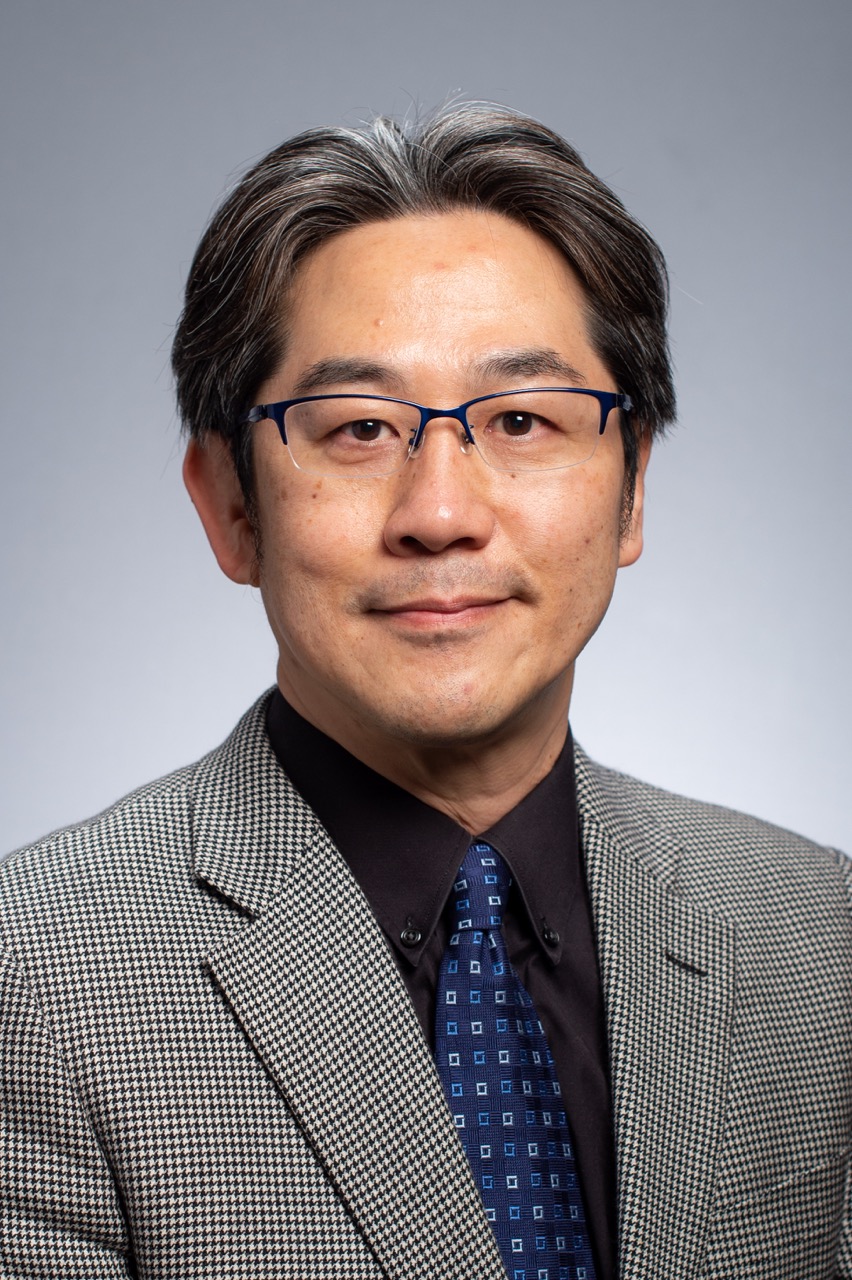
 Masakazu Kamata, Ph.D.Masakazu Kamata, Ph.D., has been promoted from associate professor to professor in the UAB Department of Microbiology, effective Oct. 1, 2026.
“Since joining UAB, Dr. Kamata has made outstanding contributions to our department through innovative and highly collaborative research in immunotherapy, sustained success in extramural funding, and substantial service to UAB and the broader scientific community,” said J. Victor Garcia-Martinez, Ph.D., professor and chair, Charles H. McCauley Endowed Chair in Microbiology. “Dr. Kamata’s accomplishments and growing national and international recognition make this promotion especially well deserved.”
Since joining UAB in 2019, Kamata has focused his research on developing novel therapies for HIV and cancer and bridging laboratory discoveries with clinical applications. His work incorporates immunotherapy, nanomedicine, gene therapy, and humanized mouse models, with a broader focus on understanding how viruses and malignant cells establish and maintain prolonged infections or uncontrolled cell division.
“My lab works at the intersection of polymer bioengineering, antibody engineering, and immunology, and the question that drives all of it is how to get a therapy to the cells that matter. UAB has given me the collaborators to pursue that across HIV and cancer. As founder and CTO of NanoBridge Therapeutics, I'm now working to carry those platforms toward the clinic — that translation is what I most hope to accomplish in this new role,” said Kamata.
One major area of his work is the development of strategies to eliminate latent HIV reservoirs. Using immunotherapeutic approaches and humanized mouse models, he studies HIV infection and persistence and explores potential strategies for an HIV cure. Earlier research also examined the molecular mechanisms underlying HIV replication, including the role of the HIV-1 Vpr protein.
His work in cancer immunotherapy includes therapeutic approaches and technologies for delivering treatments to tumors and the brain. In 2025, he received funding through the Heersink School of Medicine’s 1R01 program for his study, “Novel nanotherapy directing brain metastatic breast cancer.”
More recently, his research has contributed to collaborative studies examining the tumor immune environment in brain cancer. In 2026, he was among UAB researchers who contributed to a study published in Neuro-Oncology that developed a next-generation humanized mouse model to investigate recurrent glioblastoma and support the development of new immunotherapies. The project was conducted in collaboration between his laboratory and the laboratory of Satoru Osuka, M.D., Ph.D., an assistant professor in the UAB Department of Neurosurgery.
Beyond his research, Kamata contributes to the UAB research community through leadership, service, and mentorship. He serves as Associate Program Leader of the Experimental Therapeutics Research Program at the O'Neal Comprehensive Cancer Center, a role in which he helps guide the program's strategic direction and foster collaborations that move laboratory discoveries toward clinical application. He is also co-chair of the Department of Microbiology's Shared Equipment Committee and a laboratory representative on the IBC and IACUC. He also mentors students at various levels, including undergraduate, master's, and doctoral candidates.