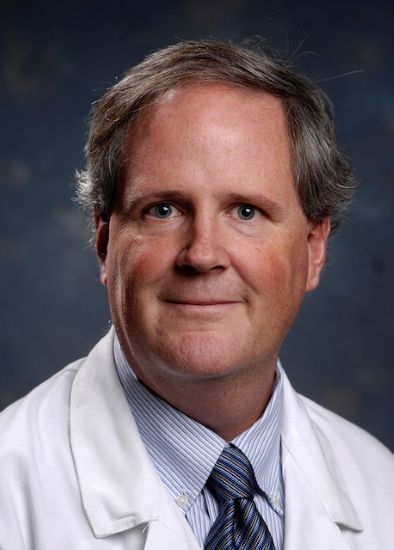
 David Standaert, M.D., Ph.D. (2008)When David Standaert, M.D., Ph.D., flew to Birmingham from Boston to present a Grand Rounds at UAB in the fall of 2005, he did not know at the time that it would mark the beginning of a 21-year-long career trajectory defined by growth, innovation, and an enduring investment in the people and programs that would shape the future of neurology at UAB.
“Personally, this has been a really amazing period of my life to be able to come and have the opportunity to lead this department,” said Standaert, who has served for the past 16 years in the UAB Department of Neurology’s highest leadership role as chair. “The chair has roles that until you do it, you don't quite appreciate how important some of them are.”
Ray L. Watts, M.D., current UAB President who was chair of the Department of Neurology in fall 2005, had invited Standaert to deliver the Grand Rounds; however, the visit evolved into something much more.
“We had this famous conversation where he said, ‘I have this vision to build this new research center, and I need someone to be the director. Do you know anyone who can help me?’” Standaert recalled.
The research center Watts alluded to would eventually become the Killion Center for Neurodegeneration and Experimental Therapeutics, which, to this day boasts an impressive research program made up of a multidisciplinary team spanning major neurodegenerative disease categories such as Alzheimer’s, Parkinson’s, Huntington’s, ALS, and more. After considering Watts’ offer, Standaert accepted the role not only to lead the center but also to establish it from the ground up.
“It was a grand idea, but it really didn't have much reality to it when I got here,” Standaert said.
Building a world-class research center
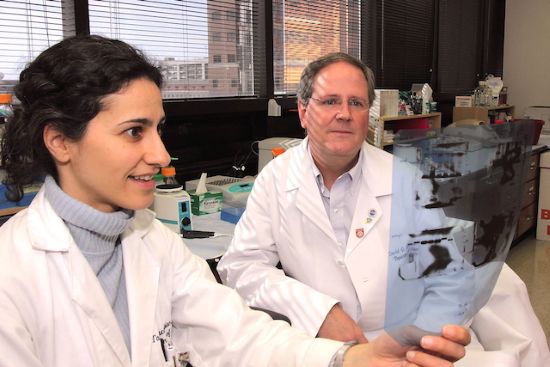 Talene Yacoubian, M.D., Ph.D., and David Standaert, M.D., Ph.D. (2009)Starting out with just himself and a program manager, Standaert worked to build the Killion Center for Neurodegeneration and Experimental Therapeutics, which was then located on the fifth floor of the Civitan International Research Center. He was joined early on by Talene Yacoubian, M.D., Ph.D., now a professor in the Department of Neurology, whom Standaert had met during her residency at Massachusetts General Hospital.
“Dr. Watts and I had a lot of discussions about how to recruit and who to bring in and what we were trying to build,” Standaert recalled. “And we were trying to build something special. I think we really were building a group that was translational, meaning people who really wanted to move the research towards new treatments for neurodegenerative disease.”
Strategic recruitment by Standaert and Watts for the Killion Center led it to grow into what it is today. Now led by Erik Roberson, M.D., Ph.D., professor in the Department of Neurology, the Killion Center boasts 19 principal investigators and more than 100 staff and students. 73 students have earned their Ph.D.’s while training in the Center’s labs.
“It was a big success, and a lot of fun to do,” Standaert said of his time developing and leading the center.
Continuing the legacy of leadership
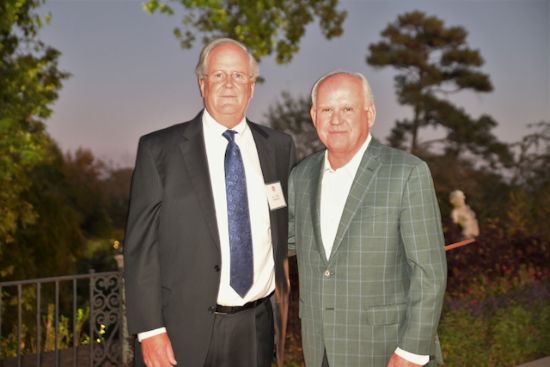 David Standaert, M.D., Ph.D., and Ray L. Watts, M.D. (2022)In 2010, a leadership shift led Standaert to a role that would define the next 16 years of his career. At that time, Watts was selected as the next dean of the Heersink School of Medicine, and Standaert was immediately appointed as interim chair of the Department of Neurology.
A national search began for a permanent chair, and it was not a role Standaert had originally considered for himself.
“I didn't really come to UAB to be a chair,” Standaert said. “That was not my plan. I was focused on the center director role, and I was having a lot of fun building this enterprise that was going well.”
After much reflection, Standaert decided to apply for the chair position in the UAB Department of Neurology, while also exploring other chair opportunities across the country.
“I came back after that experience thinking that UAB was the place to be,” Standaert said. “We had the ability to do the things I wanted to do, which was to grow both the research and clinical components of the department. We were one of the best universities in the country for this”
When asked why UAB was categorized as one of the best, in his opinion, Standaert spoke to the close connection between the university and the health system.
“There is a unity of purpose that we have at UAB, where the School of Medicine, the university as a whole, and the Health System as a whole are committed to very similar ideals and goals,” he explained. “And this is really not common.”
Shaping a department: highlights throughout the years
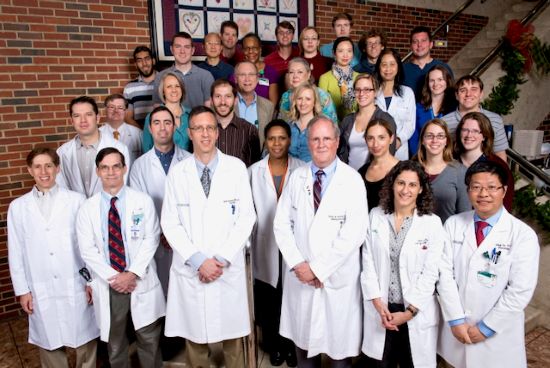 The Killion Center for Neurodegeneration and Experimental Therapeutics (2014)In August 2011, Standaert was officially named chair of the Department of Neurology. At the time, the department boasted about 35 faculty members and had specialties primarily informally organized rather than the division-led structure of today.
In addition to approaching the Board of Trustees to establish formal divisions, Standaert focused heavily on faculty recruitment during the early years of his tenure as chair. He estimates he recruited more than 70 faculty in the 16 years he spent as interim chair and then chair.
“Overall, the number of people who've left in the 16 years I've been doing this is quite small,” Standaert said, estimating the number to be approximately 10. “We have seen a very low turnover rate in neurology.”
In addition to faculty growth, Standaert considers efforts in clinical expansion among the highlights from his time as chair.
“One of the early ones was a big expansion of the neurosciences ICU (NICU),” he said. “When I started, that was probably 18 or 20 beds, and it was mostly a neurosurgical ICU. If neurology could get one or two patients in those beds, that was a lot.”
“We expanded to what's now 36 beds of NICU, which is much larger,” he continued. “It's often half neurology patients.”
Standaert named other milestones in terms of clinical expansion, such as an expansion and renovation of neurology’s clinical space in The Kirklin Clinic, the establishment of the Brain Aging and Memory Hub in Callahan Eye Hospital, the expansion of UAB’s telestroke system, and the opening of the new Epilepsy Monitoring Unit in the UAB Rehab Pavilion last year.
The trend of expansion being among Standaert’s milestones as chair also extends to the department’s residency and fellowship programs. When Standaert started in the chair role, the program hosted roughly 20 residents total per year. Now, the program has recently been approved for 44 residents per year. As for fellowships, the department has the highest number of fellows it has ever had, at 13 currently.
“So 44 residents and 13 fellows—that's a lot,” Standaert said. “And that's really important because there's such a shortage of neurologists, and we need to drive that change.”
In research, Standaert points to significant advancements in the neurodegeneration space, but says the biggest growth during his tenure as chair has been in clinical trial volume.
“While the laboratory research is very focused in what's now the Killion Center, the clinical research is all across the board,” Standaert said. “Every division has clinical research. At last count, we’re doing over 140 active clinical research protocols, which is second only to the cancer center in terms of scale.”
Looking forward to what’s ahead—and reflecting on what’s behind
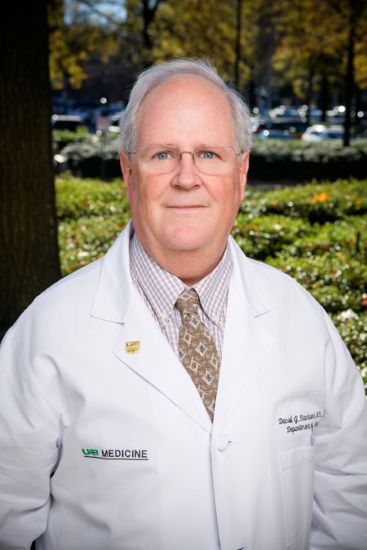 David Standaert, M.D., Ph.D. (2023)As Standaert steps into his new role ahead, research will be a primary focus—extending his reach beyond just the Department of Neurology to UAB as a whole.
“I think we have a huge opportunity to grow research across the campus, and that's what's exciting about that job,” Standaert said of his new role as the Vice President for Research for UAB.
Looking back on 16 years of departmental leadership, Standaert values the opportunity to invest in people—and the lifelong relationships he has built along the way.
“The most critical thing that a chair does is that the chair is the person who builds and supports the faculty,” Standaert said. “And it's been incredible to do this and to see the faculty grow, Overall that our faculty have stayed with us. They've had successful careers, and watching them do that has been amazing.”
“I'm really grateful I got to do this for 16 years,” he continued. “It's something that I will carry with me for life.”