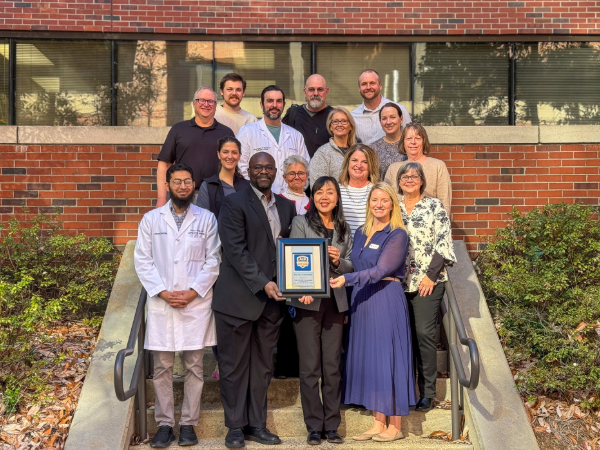
 The UAB ALS Clinic, led by Nan Jiang, M.D., Ph.D., has reached several major milestones over the past year, reflecting its expanding leadership in ALS care, research, and innovation. From participating in groundbreaking national studies to expanding access to emerging therapies and receiving prestigious recognition, the clinic continues to advance its mission to improve the lives of individuals with ALS and their families.
Driving national research through the ALL ALS Consortium
In fall 2024, the clinic was selected as one of just 36 sites nationwide to participate in the NIH funded ALL ALS Consortium, a landmark initiative designed to better understand ALS progression, identify biomarkers, and advance the development of new therapies. As part of this effort, UAB has been actively recruiting participants for both the ASSESS and PREVENT sub-studies, underscoring its critical role in helping shape the future of ALS research.
Additionally, UAB contributed to another important component of the consortium—the DIGITIZE ALL ALS sub-study. One of only 14 participating sites, the clinic successfully enrolled its first participant earlier this year, making it the second site in the nation to do so, following Massachusetts General Hospital. This early momentum demonstrates the clinic’s commitment to accelerating ALS research and ensuring diverse patient participation in cutting-edge studies.
Expanding access to emerging therapies
Beyond research, UAB has also played a vital role in ensuring that eligible patients have access to new treatment options. The clinic recently joined the SPG302 Expanded Access Program (EAP), which is authorized by the FDA to make investigational therapies available to patients outside clinical trials. SPG302 is the first synaptic regenerative therapy under investigation for ALS. By participating in the EAP, the UAB ALS Clinic is helping patients gain access to promising new therapeutic avenues that may support improved ALS management.
In addition, the clinic has continued to expand access to Qalsody (tofersen), an intrathecal therapy that targets the SOD1 gene mutation. Through strong collaboration with Salei Aliaksei, M.D., and his colleagues in the UAB Division of Interventional Radiology, as well as medication services at The Kirklin Clinic directed by Meagan Fowler, Pharm. D., eligible patients have received this advanced treatment. Qalsody is known to reduce CSF SOD1 concentrations, slow functional decline, and potentially prolong survival—representing a major advancement in precision medicine for ALS.
Recognized as an ALS Association Center of Excellence
In 2025, the UAB ALS Clinic was honored with the ALS Association Center of Excellence Award, a distinction reserved for clinics that demonstrate exceptional multidisciplinary care, strong research contributions, and unwavering commitment to individuals living with ALS. The clinic recently received its official plaque, symbolizing this ongoing dedication to excellence.
Improving access to specialized care
Looking ahead, the clinic is planning to further enhance patient access to care. Beginning in April 2026, UAB will open an additional second-opinion ALS clinic at The Kirklin Clinic. This expansion will help reduce wait times, support earlier diagnoses, and allow more patients to initiate treatment sooner—an essential step in improving long-term outcomes and quality of life.