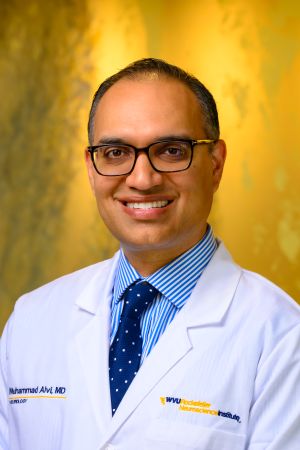
 Muhammad Alvi, M.D.Muhammad Alvi, M.D., alumnus of the UAB Neurology residency program, has gone on to pursue not only a successful career as a neurologist, but also as a mentor to trainees in the field, helping to invest back into the specialty that shaped him into the leader he is today.
Alvi, who graduated from the UAB Neurology residency class of 2014, recalls his interview for a residency position at UAB in January 2010.
“From the very beginning, I was deeply impressed by the program—it stood out as one of the most well-balanced and supportive training environments I encountered,” Alvi said. “The people, the culture, and the commitment to both clinical excellence and education made a lasting impression on me. UAB quickly became my top choice, and I felt incredibly fortunate to match there and begin my training.”
Today, Alvi is a professor of Neurology at West Virginia University, where he also serves as vice chair for Faculty Affairs in the Department of Neurology and director of stroke at West Virginia University Medicine Hospital.
“My work remains deeply rooted in clinical care, resident and fellow education, and research,” Alvi said. “I am grateful to be in a role where I can contribute to patient care while also supporting the growth and development of trainees and faculty—something that was so meaningfully emphasized during my time at UAB.”
Learn more about Alvi’s trajectory with the UAB Department of Neurology and his reflections on his time spent at UAB.
What initially drew you to UAB for your training and/or career?
Alvi: What initially drew me to UAB was the combination of the people and the well-balanced nature of the program. During my interview, I was struck by the sense of community, collaboration, and genuine investment in trainee development. I was particularly impressed by the commitment of the department’s leadership—especially Drs. Standaert and Bashir—to resident education and mentorship. It was clear that they were deeply engaged in shaping not just strong clinicians, but well-rounded neurologists, and that made UAB stand out as a place where I could truly grow.
How would you describe the culture of the UAB Department of Neurology during your time there, and what made it unique compared to other institutions?
Alvi: I would describe the culture of the UAB Department of Neurology as one rooted in camaraderie, connection, and genuine care. There was a strong sense of teamwork and mutual support among residents, faculty, and staff, making it a truly special place to train. From a patient care perspective, there was a clear and shared commitment to excellence. At the same time, the learning environment fostered curiosity, growth, and continuous improvement—we were all striving to become the best versions of ourselves. That combination of high standards and a deeply supportive culture is what made UAB truly unique.
 Can you share a favorite memory or defining moment from your time at UAB Neurology that still stands out to you today?
Alvi: One of my most memorable experiences at UAB was caring for a stroke patient during an acute code stroke. The patient was being transferred from an outside hospital, and I remember going up to the helipad to meet them and initiate treatment with tPA. It was a powerful moment—both intense and incredibly meaningful—as it brought together everything we were trained for: teamwork, urgency, and clinical decision-making under pressure.
What made it especially impactful was the support and guidance from the faculty in that moment, reinforcing the confidence and skills we were developing as trainees. Experiences like that not only shaped my clinical approach but also left a lasting impression on the kind of physician I aspired to become.
What lessons or skills gained at UAB have proven most valuable in your career since leaving the department?
Alvi: Some of the most valuable lessons I gained at UAB were the pursuit of excellence in everything we do and a deep commitment to lifelong learning. Those principles were consistently modeled by the faculty and became ingrained in how I approach both patient care and professional growth. UAB fostered an environment where continuous improvement was expected and supported, and that mindset has stayed with me throughout my career. I remain grateful for that foundation, as it continues to shape how I strive to grow, adapt, and contribute as a physician and leader.
Looking back, what do you think UAB Neurology did especially well in training neurologists and advancing the field?
Alvi: From a training perspective, UAB Neurology excelled in delivering a truly outstanding educational experience. The curriculum was comprehensive and thoughtfully designed, and the exposure to a diverse patient population provided us with a well-rounded and rigorous clinical foundation.
Equally impactful was the strong culture of research within the department. Faculty were deeply engaged in advancing the field, and their enthusiasm naturally drew trainees into scholarly work. That environment sparked my own interest in research and provided opportunities to get involved in meaningful projects.
Overall, UAB did an exceptional job of training neurologists who are not only clinically strong, but also intellectually curious and committed to advancing the field.
Anything else you would like to add?
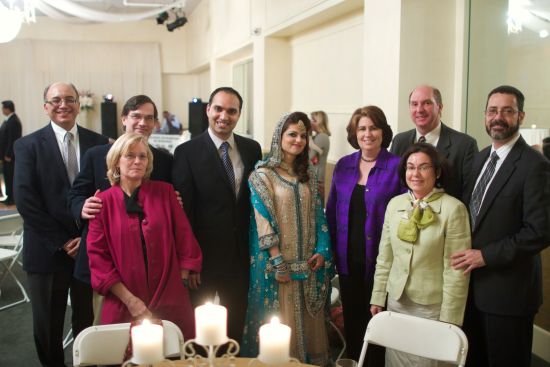
Alvi: I feel truly grateful to have trained at UAB. The experience shaped me not only professionally, but personally as well. I formed lifelong friendships during my time there, and it’s always special to reconnect with colleagues at national meetings and see how far everyone has come.
I also remain deeply appreciative of the mentorship I received—particularly from Drs. Standaert and Bashir—whom I continue to turn to for guidance and advice. The relationships I built at UAB have endured well beyond my training and remain one of the most meaningful aspects of my experience there.