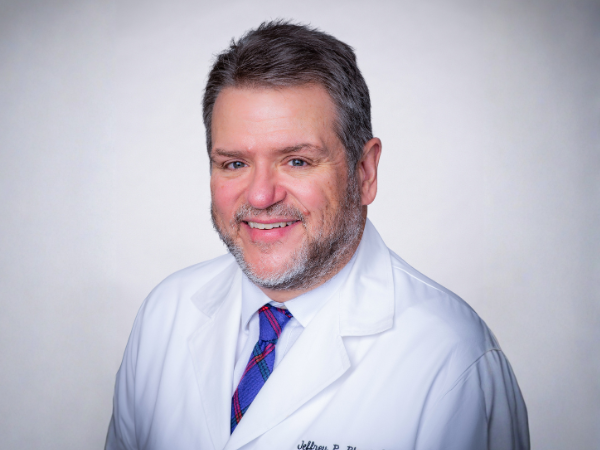
 Jeffrey Blount, M.D., MPH, professor at the University of Alabama at Birmingham Department of Neurosurgery, presented on the evolution of transitional care for patients with spina bifida and the development of the UAB and Children’s of Alabama (COA) transition clinic model at the Society of Neurological Surgeons 2026 Annual Meeting.
During his presentation, “Transition Clinic: The UAB/COA Model,” Blount discussed the challenges patients with spina bifida often face when transitioning from pediatric to adult care. He explained that advances in treatment have resulted in more adults living with spina bifida than children, creating a growing need for structured transition programs.
Blount explained how the transition process historically lacked consistency, with varying criteria between providers and limited dedicated adult care resources for patients with complex medical needs.
To address those challenges, Blount, among others at UAB and COA, built upon an adult physical medicine and rehabilitation spinal cord injury clinic to establish a dedicated adult spina bifida program. Over the past 15 years, the clinic has served more than 500 patients overall and is currently following nearly 400 adult patients.
Blount also highlighted how clinical observations within the program led to research initiatives, observational studies and operational improvements.
The program later expanded into an individualized transition planning model inspired by individualized education plans used in schools. According to Blount, the transition framework helped improve patient readiness tracking and family engagement while expanding the clinic’s ability to care for patients with medical complexity.
Blount said support from UAB leadership helped establish the STEP Clinic, a multidisciplinary medical home for patients with complex medical conditions, including spina bifida, cerebral palsy, autism and neuromuscular disorders. In its first several years, the clinic has served more than 800 patients and expanded to include an inpatient consult service.
Blount concluded by emphasizing that the transition clinic model grew from a commitment to improving continuity of care for patients and families navigating the shift from pediatric to adult medicine.