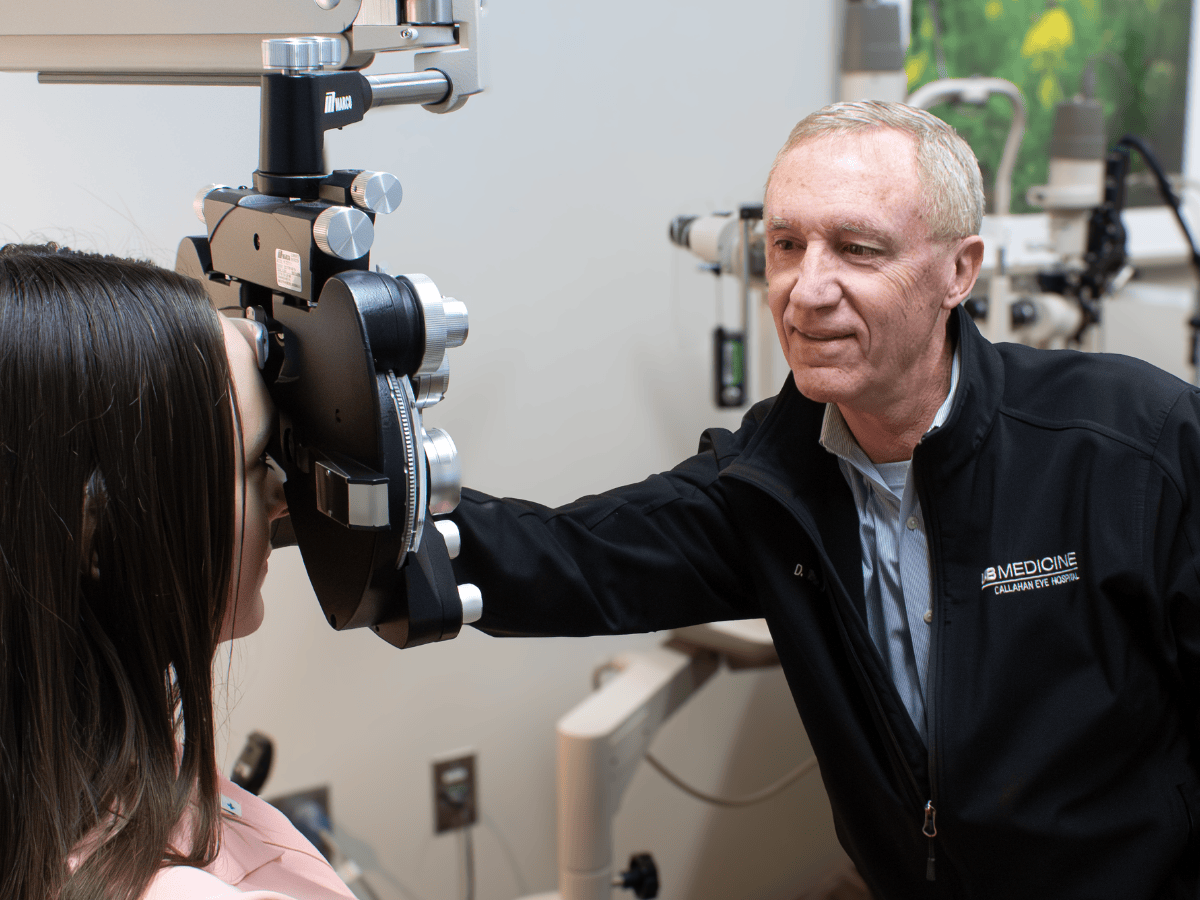
 Glaucoma is a condition that damages the eye’s optic nerve, most often due to a gradual increase in fluid pressure inside the eye over time. Despite being a leading cause of blindness in the United States, many people don’t realize they have glaucoma until vision loss has already begun.
We met with Wade Joiner, M.D., a glaucoma specialist at UAB Callahan Eye, to discuss what patients should know about the disease, its symptoms and the importance of early detection.
What are some common symptoms of glaucoma?
“Most patients with glaucoma have no symptoms until the later stages of the disease,” Joiner said. “As it progresses, patients may experience gradual vision loss that typically starts with their peripheral, or side, vision. If left untreated, this can eventually lead to complete vision loss.”
Some patients may also notice difficulty seeing at night in more advanced stages. “Because glaucoma progresses slowly, it can take several years before patients notice changes that affect their daily life,” he said.
UAB Callahan Eye is here for your eye needs. To schedule an appointment with Dr. Joiner or any of our providers, call or text 844-UAB-EYES or visit uabcallahaneye.org.
How is glaucoma diagnosed and treated?
“Glaucoma can often be diagnosed at very early stages, sometimes even before any optic nerve damage has occurred,” Joiner said. “In many cases, patients are first found to have elevated eye pressure, and with appropriate management, vision loss can be prevented.”
Early detection relies on regular eye exams, which can identify elevated eye pressure or early signs of visual field loss. Newer imaging technologies that measure the retinal nerve fiber layer can also help detect subtle changes sooner.
“Patients who are at higher risk—especially those with a family history of glaucoma or individuals age 60 and older—should be screened regularly,” he said.
Treatment depends on the stage and severity of the disease. Early glaucoma is often managed with prescription eye drops that lower eye pressure. Laser treatments may also be effective and can sometimes reduce or eliminate the need for daily medications. In more advanced or uncontrolled cases, surgery may be recommended to further reduce eye pressure.
What should patients keep in mind?
“Early detection is critical,” Joiner said. “With proper treatment, many patients can preserve their vision and continue to see well for a lifetime.”
 Wade Joiner, M.D.About Dr. Wade Joiner
Dr. Wade Joiner is an ophthalmologist and a member of the UAB Glaucoma Service. He specializes in the treatment of complex glaucoma cases and is actively involved in teaching residents and fellows.
He sees patients at UAB Hospital–Callahan Eye and at clinics in Pelham, Tuscaloosa and Vestavia.
Before joining UAB in 2013, Joiner practiced glaucoma care in the Birmingham area for more than 20 years. He is a member of both the Alabama Academy of Ophthalmology and the American Academy of Ophthalmology.
Joiner earned his medical degree from the University of South Alabama College of Medicine. He completed his internship at Carraway Methodist Medical Center in Birmingham, his ophthalmology residency at UAB and a glaucoma fellowship at the New York Eye and Ear Infirmary.