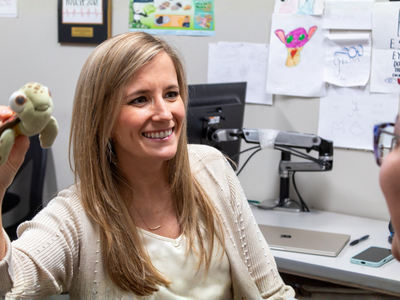
Has your child been struggling to read the board, avoiding reading or complaining of headaches since school started? Vision problems can affect how children learn and participate in the classroom, but children may not realize they are having trouble seeing.
Our eyes change naturally as we get older. Some changes are a normal part of aging, while others may signal an eye condition that needs attention.
We spoke with Rachel Spurrier, D.O., a pediatric ophthalmologist at UAB Callahan Eye, about signs parents and teachers should watch for and when a child may need an eye exam.
Signs your child may be struggling with their vision
Children don't always know that their vision is different from everyone else's, particularly when one eye sees better than the other. Parents and teachers may notice signs such as:
- Squinting or closing one eye
- Getting unusually close to books, screens or other objects
- Tilting or turning their head to see
- Frequent headaches or eye rubbing
- Difficulty reading or avoiding visually demanding activities
- A change in school performance
- An eye that wanders
“Children will not always tell you they are having a problem with their vision,” said Spurrier. “They often don't know any different or have adapted to the way they see."
Can a child pass a vision screening and still need an eye exam?
Yes. A school vision screening can identify children at risk for certain vision problems, but it is not a comprehensive eye exam. Screenings may identify:
- Nearsightedness, farsightedness or astigmatism
- Amblyopia, commonly called “lazy eye”
- Strabismus, or eye misalignment
“While passing a vision screening is reassuring, it should not override any concern regarding how a child is seeing or functioning,” said Spurrier.
How vision can affect learning
An uncorrected vision problem can make it harder for a child to:
- See the board clearly
- Read comfortably
- Maintain visual attention
- Keep their place while reading
A child may respond by avoiding schoolwork, rubbing their eyes, complaining of headaches, appearing inattentive or becoming frustrated.
These behaviors can have many causes, but an eye exam may be worthwhile for a child struggling at school.
UAB Callahan Eye is here for your eye care needs. To schedule an appointment with Dr. Spurrier or any of our providers, call or text 844-UAB-EYES or visit uabcallahaneye.org.
When should children have eye exams?
Children should have their vision screened regularly from birth through childhood as part of routine pediatric and school health care. The American Association for Pediatric Ophthalmology and Strabismus recommends vision screening every one to two years after age 5.
A comprehensive eye exam is recommended when a child does not pass a screening or when parents or providers have other concerns about the child's eyes or vision.
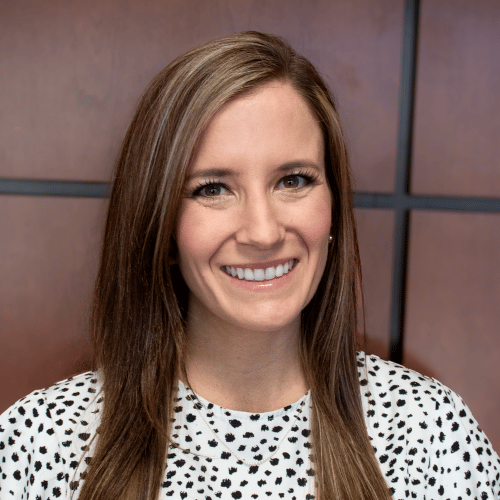 Rachel Spurrier, D.O.About Dr. Rachel Spurrier
Dr. Rachel Spurrier is a pediatric ophthalmologist and strabismus specialist. She earned her medical degree from Edward Via College of Osteopathic Medicine in Auburn, followed by a transitional year at Brookwood Baptist Health. She completed her ophthalmology residency at the Medical College of Georgia, where she served as chief resident, and a fellowship in pediatric ophthalmology and strabismus at the Medical University of South Carolina.
She sees patients downtown as well as our Cahaba River and Children's South clinic locations.