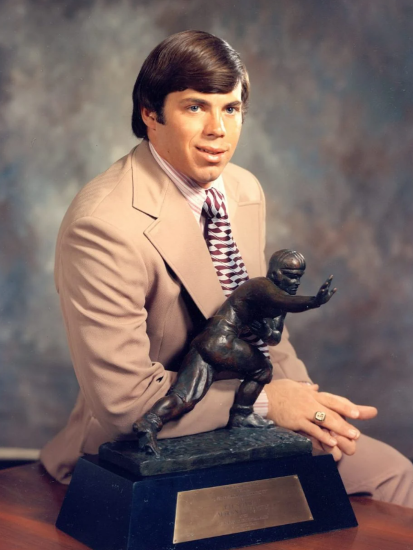
 Pat Sullivan with his Heisman Trophy.Five years ago, UAB launched a program designed to address a critical gap in cancer care: what happens after diagnosis and throughout the long journey of treatment, recovery, and life beyond cancer. Today, the Pat and Jean Sullivan Head and Neck Cancer Survivorship Program stands as a nationally recognized model for comprehensive survivorship care, helping patients and caregivers navigate the challenges of head and neck cancer from the time of diagnosis onward.
As the program celebrates its fifth anniversary, its leaders are reflecting on how a shared vision, philanthropic support, and interdisciplinary collaboration have come together to create a resource that has transformed the patient experience for hundreds of individuals with head and neck cancer.
A vision born from experience
The idea for the survivorship program grew from years of caring for patients with advanced head and neck cancers and witnessing the challenges they continued to face long after treatment ended.
According to William "Bill" Carroll, M.D., professor emeritus in the Department of Otolaryngology-Head and Neck Surgery, UAB is one of the highest-volume medical centers in the country for head and neck cancer patients. He added that head and neck cancer often has consequences that extend far beyond the disease itself.
“When patients are treated with advanced-stage disease, they often have really significant side effects of treatment,” Caroll explained. “And treatment is disabling, it's disfiguring, it's isolating, it's disturbing. And their overall outcome, their overall chance of cure of the disease, is not nearly as good as when it's caught early.”
Patients may experience difficulties with speech, swallowing, breathing, eating, and social interaction, while caregivers often shoulder significant responsibilities throughout recovery. For years, clinicians addressed challenges as they arose, but Carroll and his colleagues recognized the need for a more proactive approach.
“We were somewhat proactive in getting people involved with swallowing exercises and some other things,” Caroll said. “But there was nothing very formal about it. And for the most part, as patients developed problems following their treatment, we tried to react to that appropriately and as quickly as possible, but it was a reactive rather than a proactive response.”
The catalyst for a survivorship program came through the experience of legendary Auburn University football coach Pat Sullivan and his wife, Jean Sullivan. As Pat Sullivan himself navigated treatment for head and neck cancer and its lasting side effects, the family became deeply engaged in conversations about how future patients could be better supported.
“Jean was just meticulous about taking notes about everything that was going on,” Carroll said. “She had wonderful questions to ask about, ‘Well, could we do this differently?’ and those kinds of things. And she was just really, really closely involved with his care, caregiving, and follow-up appointments and that sort of thing.”
Pat Sullivan’s cancer went into remission following treatment led by Carroll and other UAB providers; however, progressive and late side effects are ultimately what led to his passing away in December 2019.
Carroll recalled: “Before he passed, he said, ‘Look, if there's some way that we can organize all of this, so that other people have better resources and all of that in place, I would love that. That would be a wonderful legacy for me.’”
That legacy became reality through philanthropic support from a wide variety of sources, including the Sullivan family, and the collaborative efforts of UAB faculty and staff dedicated to survivorship care.
Building something different
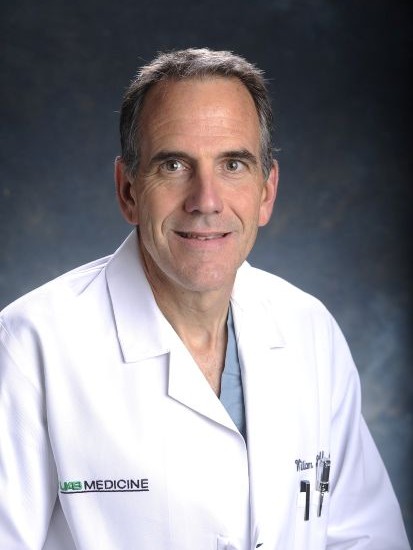 William "Bill" Carroll, M.D.One of the key architects of the program, along with Carroll and a team led by Smita Bhatia, M.D., Distinguished Professor in the Department of Pediatrics, who is internationally known for survivorship research, was Susan McCammon, M.D., Ph.D., professor in the Department of Otolaryngology-Head and Neck Surgery, who currently serves as director of the Pat and Jean Sullivan Head and Neck Cancer Survivorship Program. Prior to returning to UAB in 2018, McCammon and Carroll began discussing what a model survivorship program could look like.
“He said, ‘What would your ideal job look like?’” McCammon recalled. “That's when we started hashing out this hybrid position for me to do head and neck cancer surgery, palliative medicine, and direct the Sullivan Survivorship Program.”
“For me, it really was a dream job,” she added.
Over the next two years, a multidisciplinary team developed clinical pathways, databases, and care algorithms to support patients across a wide range of head and neck cancer diagnoses. Rather than waiting until treatment ended, they intentionally designed survivorship care to begin at the time of diagnosis. That decision helped distinguish the program from many traditional survivorship models.
“I think the idea is that survivorship isn't something that happens after the hard part and when you enter the easier phase of the cancer journey,” McCammon explained, “but that it can actually be just as hard, if not harder, as the treatment phase was. That was sort of a newer way to think about it.”
Supporting the whole patient and family
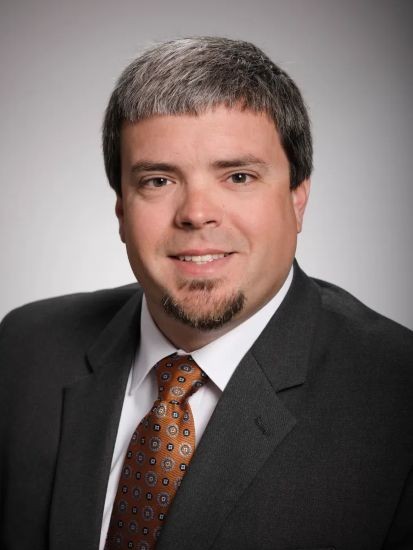 Reid Hale, CRNPStarting at the time of diagnosis, the Pat and Jean Sullivan Head and Neck Cancer Survivorship Program meets patients where they are to assess the full scope of their needs as they navigate not only treatment but also the implications (both physical and mental) that accompany the treatment process and extend beyond it.
“The minute you're diagnosed with cancer, you are aware that you're in a fight for your life and that survival is your goal,” McCammon said. “So survivorship is not focused on giving you the surgery or the drug or the radiation that is going to shrink or cure the cancer. It is providing you that extra layer of support that helps you maintain your dignity, your bodily integrity, and your quality of life as well as you can through the cancer treatment and afterward.”
At the heart of the program is a multidisciplinary model that brings together physicians, advanced practice providers, nutritionists, speech-language pathologists, physical therapists, psycho-oncology specialists, palliative care experts, and other supportive care services.
For many patients, Reid Hale, CRNP, serves as a consistent guide throughout their cancer journey. Hale meets with every patient prior to treatment to set a trajectory for what’s next.
“The way I describe it to patients up front when I'm meeting them for the first time is that my primary focus is less on treating your cancer and more on helping with the management of potential side effects of the cancer treatment on patient quality of life,” Hale said. “I try to do my best up front to help with setting expectations for what those potentials of treatment related side effects and post treatment new normal are.”
In addition to helping set expectations, Hale works closely with patients to address symptoms, coordinate referrals, and ensure that nothing falls through the cracks among the many specialists involved in care.
“Unfortunately, we don't have that crystal ball,” Hale said. “Prior to treatment, I can't fully tell you what life is going to look like three months, six months, one year, two years, five years down the road. At the end of the day, the most important message I try to push forward is, regardless of where the cancer experience leaves us, I'm going to be here with you trying to help improve any negative impacts on quality of life that we can.”
Caregivers are a central focus as well. The program provides education, counseling resources, support groups, and direct access to care team members who can answer questions and offer reassurance.
“The amount of stress that the caregivers carry is intense,” Hale said. “They want to be there for the patients, and a lot of times I feel like they just don't know how to. So, we strive to set them up for success with knowing what's normal, knowing their resources, and knowing when to call, and this knowledge helps them to feel empowered in supporting their loved ones through their journey.”
Five years of growth
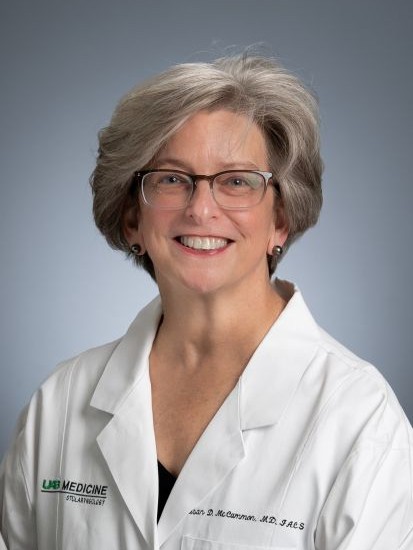 Susan McCammon, M.D., Ph.D.Since its launch, the Sullivan Survivorship Program has expanded significantly in both scope and influence. Thousands of visits have been conducted, and the program continues to grow through increased referrals, expanded clinical pathways, and collaborations throughout Alabama and beyond.
McCammon believes one reason for the program's success is its willingness to adapt to patient needs.
“I think one of our growing points was learning how to meet patients where they are,” McCammon said. “Some patients really want a lot of information up front. They want to meet their survivorship person the same day as they meet their surgeon. Other people are the exact opposite. They get information overload. They don't want to stay in the clinic for another two hours. And we really rolled out the sophisticated use of telehealth to make sure that those patients get the information in the way that they prefer.”
The program has also gained national visibility. UAB leaders frequently present their model at professional meetings, and institutions across the country now look to the Sullivan program as a blueprint for developing survivorship services of their own.
“We're always meeting with people who are saying, ‘We want to start a program like yours,’” McCammon said. “‘Can we meet with you and learn how you did it?’”
For Hale, some of the most meaningful measures of success come directly from patients.
“One of my patients that I've been seeing for almost a year now recently thanked me and explained to me that this clinic felt like the glue that kind of brought everything together,” Hale said. “That's what I want this to be. That has been the goal of this from the beginning. But to hear it out of a patient's mouth is just that reassurance that we are reaching those goals that we've set for ourselves, and we are meeting the needs of the patients that we've set out to meet.”
Looking to the future
Five years after its founding, the Pat and Jean Sullivan Head and Neck Cancer Survivorship Program continues to fulfill the legacy that inspired its creation: ensuring that patients and caregivers never have to navigate the challenges of head and neck cancer alone.
As the program enters its next chapter, its leaders are focused on continuing to expand access for a growing patient population.
“I'm a dreamer,” Hale said. “I could sit here and talk to you about this all day, about where I would like for this to go. From the start our program has been viewed as a leader in survivorship care and I remain hopeful that the work we are doing here locally will not only impact our UAB patients, but will benefit head and neck cancer patients nationally and globally as well.”
Currently, Carroll estimates the program serves approximately 25 percent of UAB's head and neck cancer population, with aspirations to reach many more patients in the coming years.
“The next step we'd like to get to 50 and ultimately to about 75 percent of everybody that comes through that has head and neck cancer would be part of this program,” Carroll said.
McCammon's vision is equally ambitious and deeply patient-centered.
“My dream is that every head and neck cancer patient thinks of their survivorship continuity as really the core of their cancer experience,” she said. “That you don't have to earn survivorship and supportive care, and you never outgrow it, that it's always there for you.”