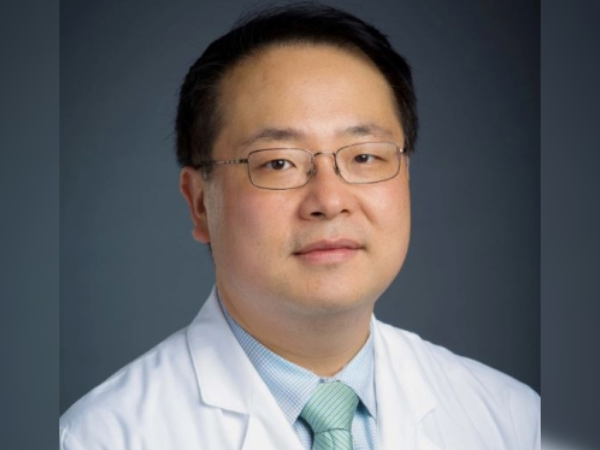
 Do-Yeon Cho, M.D., professor in the UAB Department of Otolaryngology–Head and Neck Surgery and section chief of otolaryngology at the Birmingham VA Health Care System, has received a Path to a Cure Pilot & Feasibility Award from the Cystic Fibrosis Foundation (CFF) to support innovative research focused on regenerating damaged airways in patients with cystic fibrosis (CF).
The funded project, “Evaluating Extracellular Matrix–Based Regeneration for Airway Repair Using CFTR-Targeted Tools in CF,” seeks to address one of the fundamental challenges facing individuals with cystic fibrosis: chronic damage to the airway lining that impairs the body's ability to clear mucus and defend against infection.
Cystic fibrosis is a genetic disease that affects multiple organs, particularly upper and lower airways. Although advances in CFTR-modulator therapies have significantly improved outcomes for many patients, chronic airway inflammation and tissue damage continue to affect quality of life and long-term health.
Cho's research explores a regenerative medicine approach designed to rebuild damaged airway tissue. The project focuses on airway basal cells, specialized stem-like cells that naturally help repair and maintain the airway lining. Researchers will investigate whether these cells can be corrected for CFTR defects and then transplanted back into damaged airways using a biodegradable scaffold to restore normal epithelial function.
“While current CFTR modulators have transformed the care of patients with cystic fibrosis, they cannot fully repair the airway damage that has already occurred," Cho said. "Our goal is to develop regenerative therapies that rebuild healthy airway tissue and restore the airway's natural ability to defend itself against chronic infection."
A unique aspect of the study is the use of cystic fibrosis rabbits, a large-animal model that closely mirrors human sinonasal (and airway) anatomy. This model allows investigators to better evaluate how transplanted cells integrate into tissue, rebuild the airway lining, and restore normal airway function.
The research aims to establish a roadmap for future regenerative therapies in cystic fibrosis by demonstrating how CFTR-corrected cells can be used to repair damaged airways. The findings could lay the groundwork for future clinical strategies that combine gene correction with tissue engineering to restore damaged airways.
"If successful, this work could provide the foundation for a new generation of cell-based regenerative treatments, not only for cystic fibrosis but also for other chronic airway diseases where epithelial injury plays a central role," Cho said.
In addition to advancing cystic fibrosis research, the project may provide a foundation for future airway tissue-grafting approaches and regenerative treatments for non-CF conditions, including chronic rhinosinusitis and other disorders characterized by persistent airway injury.
The Cystic Fibrosis Foundation's Path to a Cure initiative supports innovative research aimed at developing transformative therapies and ultimately finding a cure for cystic fibrosis. Through this award, Dr. Cho and collaborators hope to establish a new paradigm for airway regeneration that could ultimately improve the lives of patients with cystic fibrosis and other chronic airway diseases.