Rural communities face significant barriers to healthcare access, but the UAB Department of Otolaryngology-Head and Neck Surgery is expanding access to cancer screenings in partnership with a local nonprofit organization.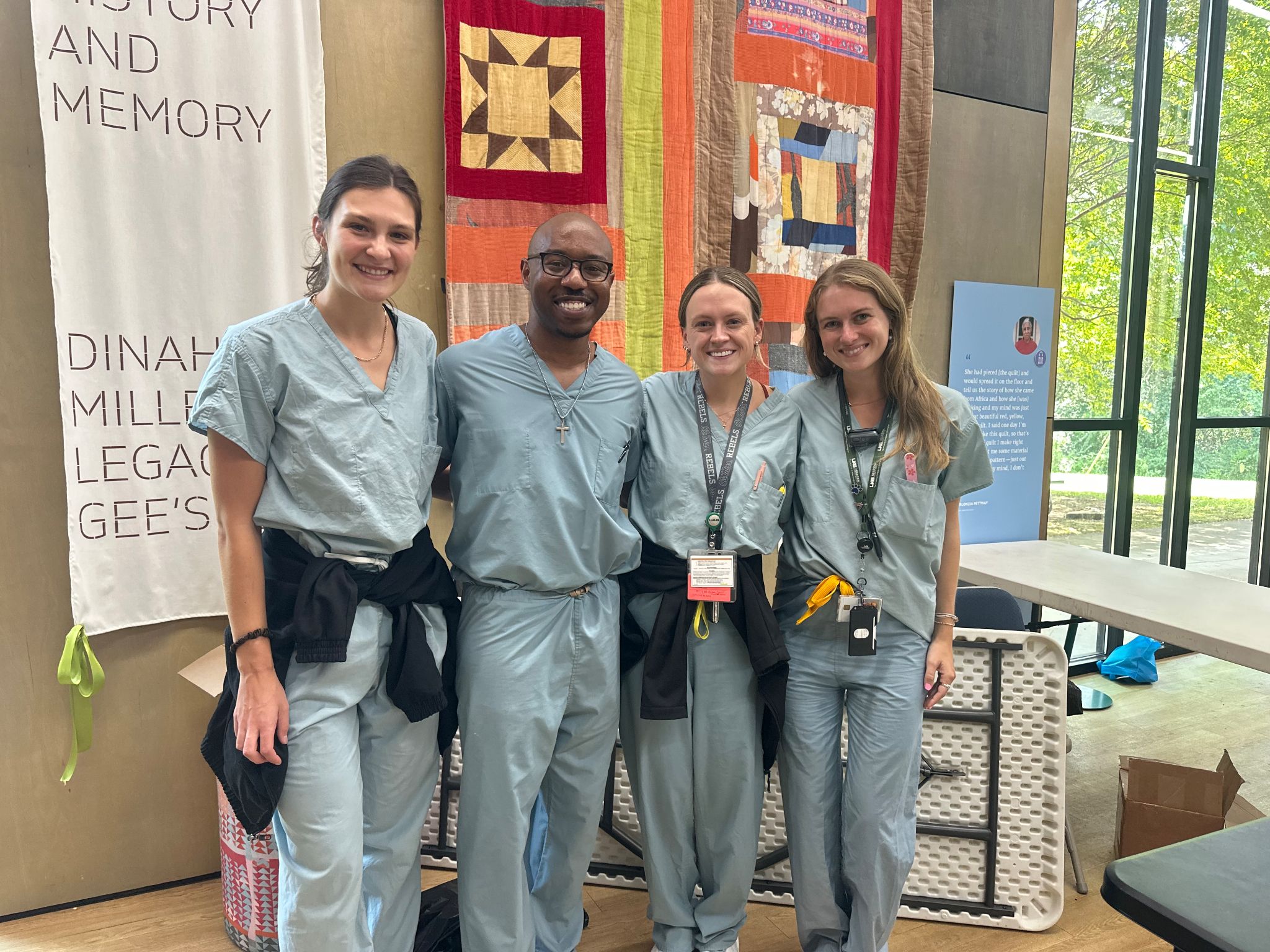
The initiative began with a resident’s vision to transform discussions about health disparity statistics into meaningful action that addresses barriers to healthcare access. Edward Harris, Jr., M.D., PGY-5 in the department, began developing an idea that would ultimately expand access to cancer screenings beyond Birmingham and into rural communities.
In partnership with Spirit of Luke Charitable Foundation/A Promise to Help Missions, a Birmingham-based non-profit, the UAB Department of Otolaryngology-Head and Neck Surgery launched its first completely free head and neck cancer screening in Boykin, Alabama, also known as Gee’s Bend, in August 2025. The partnership has continued, and the department held its second annual screening event this August.
A Promise to Help, led by Sandra Ford, M.D., and her husband, Henry Ford, has been serving Alabama’s Black Belt region for more than 20 years, providing free healthcare screenings to underserved and underinsured populations in partnership with local entities.
The UAB team includes head and neck faculty surgeons, ENT residents, advanced practice providers, case management workers, social workers, tobacco cessation specialists, nurses, and medical students. Harris said one of his favorite things about these events is the interdisciplinary approach.
“Everyone brings something different to the table, and together, we can address more than just the screening itself,” Harris said.
This annual event not only provides cancer screenings to participants but also offers educational opportunities.
“This approach serves as a one-stop shop — participants receive a health screening as well as additional resources to combat health disparities,” Harris said.
Upon arrival, participants complete a brief pre-survey to assess their familiarity with head and neck cancer before undergoing screening. After the screening, physicians use a visual learning aid created by Harris to help participants recognize potential symptoms before a post-survey is conducted.
Harris reported that the data shows a statistically significant improvement in participants’ knowledge of head and neck cancer symptoms, and 100 percent of participants reported that they found the resource helpful.
“Rural communities can face significant barriers to accessing healthcare, and unfortunately, patients in these communities may present with more advanced head and neck cancers,” Harris said. “We want to help change that by bringing education and screening directly to communities.”
Harris said the department plans to continue these screening events for many years to come and expand it to other communities throughout Alabama and beyond.