 The UAB Department of Otolaryngology-Head and Neck Surgery recently welcomed physicians, trainees, and faculty from across the Southeast for its inaugural Facial Plastic and Reconstructive Surgery (FPRS) Course, a two-day continuing medical education event focused on advancing knowledge and surgical skills in facial plastic and reconstructive surgery. The course, held April 10-11, combined expert-led lectures with hands-on cadaver laboratory training, creating a comprehensive educational experience for attendees.
Directed by Natalie Derise, M.D., assistant professor in the UAB Department of Otolaryngology-Head and Neck Surgery, the course brought together nationally recognized lecturers from UAB, Vanderbilt University, Louisiana State University, the University of South Florida, and private practices throughout Birmingham. Topics ranged from rhinoplasty, facial rejuvenation, and hair transplantation to facial trauma, reconstruction, and facial nerve repair.
For Derise, the inspiration to host the course stemmed from her own training experience during her fellowship.
"During my fellowship, I had the privilege of participating in the Facial Plastic and Reconstructive Surgery course at the University of Washington, led by my mentors, Drs. (Amit) Bhrany, (Kris) Moe, and (Nina) Lu," Derise said. "I saw firsthand the tremendous impact their course has had over numerous years, and it inspired me to bring a similar educational experience to UAB. Hosting this course felt like a meaningful way to honor the outstanding training I received in Seattle, for which I am incredibly grateful. I also wanted to expand access to high-quality FPRS education by bringing a course like this to the Southeast."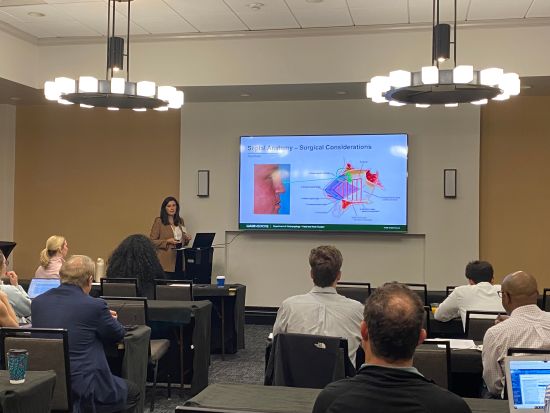
The program was designed to offer attendees both foundational and advanced education through a combination of didactic lectures and practical surgical demonstrations. Lectures covered topics such as facial analysis, septoplasty, rhinoplasty techniques, facial rejuvenation, cleft lip and palate reconstruction, facial trauma management, and reconstructive procedures. The afternoons featured cadaver lab sessions in which participants observed surgical demonstrations and practiced techniques under faculty guidance.
According to Derise, the integration of classroom learning and hands-on experience was one of the course's greatest strengths.
"The course offered a unique combination of expert-led lectures and a hands-on cadaver laboratory," Derise said. "Attendees had the opportunity to learn directly from leaders in the field and then immediately apply those concepts in a practical setting, making for a highly engaging and valuable educational experience."
The cadaver laboratory component played a particularly important role in the course, according to Derise.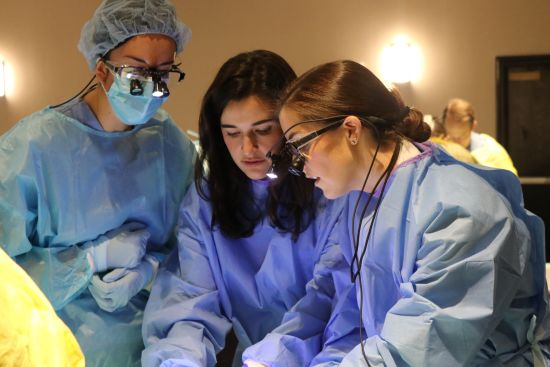
"Hands-on cadaver labs are an invaluable part of surgical education," she said. "They allow trainees to put into practice the techniques and concepts they learn during lectures in a realistic, low-risk environment. This combination of didactic instruction and hands-on experience reinforces learning, builds confidence, and helps solidify surgical anatomy, concepts, and approaches."
The success of the inaugural event has already prompted plans for the future. Derise and the Department of Otolaryngology-Head and Neck Surgery hope to establish the Facial Plastic and Reconstructive Surgery Course as an annual educational offering, with the next course planned for spring 2027.
"We encourage residents from other institutions, as well as practicing faculty, to attend if they are interested in expanding their knowledge and skills in facial plastic and reconstructive surgery," Derise said. "The course provides exceptional access to expert faculty, high-quality educational content, and invaluable hands-on surgical experience."
Derise also emphasized that the event's success was made possible through the contributions of the faculty lecturers and laboratory instructors who volunteered their time and expertise.
"I would like to extend my sincere gratitude to all of the faculty members who participated as lecturers and cadaver lab proctors," Derise said. "Their time, expertise, and dedication were essential to the success of this course. It truly would not have been possible without their support, and we are incredibly appreciative of their contributions."