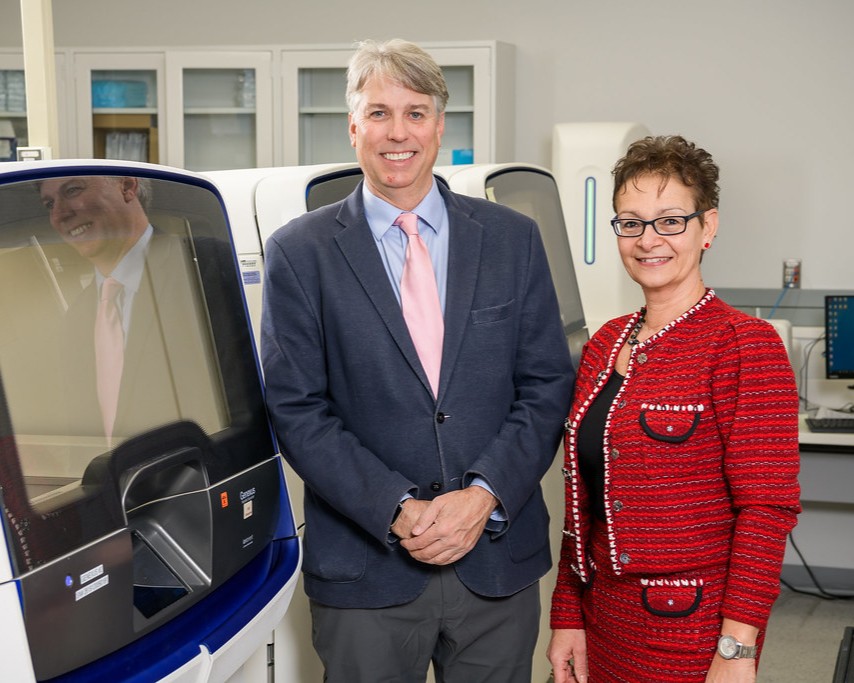
 Drs. Mackinnon and Magi-GalluzziResearchers in the Division of Genomic Diagnostics and Bioinformatics recently developed three new laboratory tests: IDH1 R132 Mutation Analysis, TERT Promoter Mutation Analysis and MLH1 Methylation Analysis by Methylation-Specific PCR and MassArray. These tests help provide more accurate diagnoses and support the development of effective treatment plans.
This initiative was led by Alexander C. Mackinnon, M.D., Ph.D., Robert B. Adams Endowed Professor, Executive Vice Chair, Division Director, Genomic Diagnostics and Bioinformatics, Ammoura Ibrahim, M.D., Molecular Genetic Pathology Fellow and Darshan Shimoga Chandrashekar, Ph.D., Assistant Professor, Genomic Diagnostics and Bioinformatics, Informatics Section Head.
The IDH1 Mutation Analysis and TERT Promoter Mutation Analysis assays are now available to support patients with suspected or confirmed central nervous system tumors. These tests provide insights that support accurate diagnosis and guide personalized treatment plans. Tumors with IDH1 mutations have a greater survival rate and may qualify for targeted treatment. TERT promoter mutations, on the other hand, are linked to aggressive tumor behavior and poor outcomes. While these tests were initially developed to support rapid molecular testing for patients with malignant nervous system tumors, they also provide valuable information for other tumor types, such as thyroid, melanoma and urothelial cancers.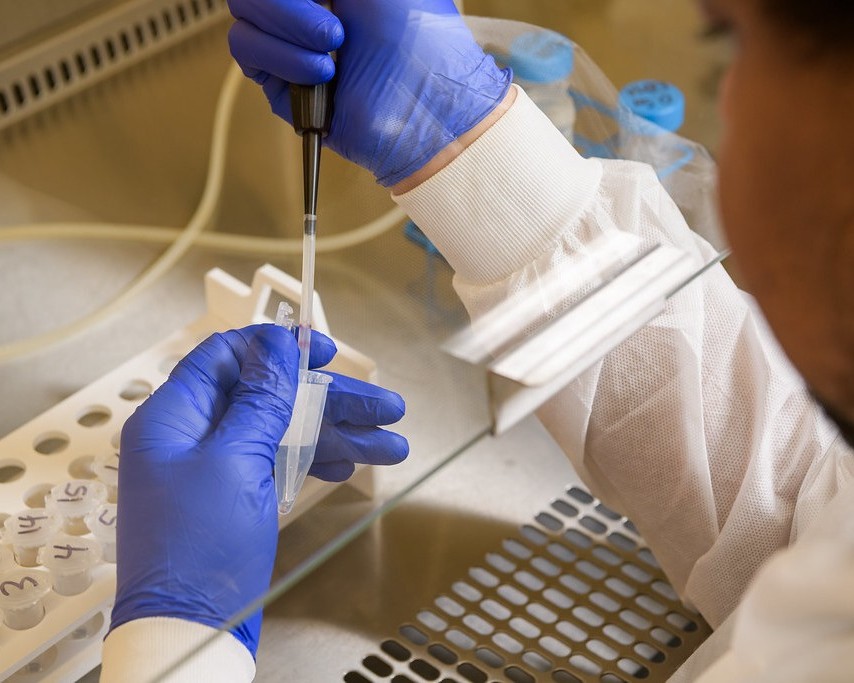
MLH1 Methylation Analysis testing provides a way to detect whether a microsatellite instability-high tumor (MSI-H) is sporadic or inherited. MSI-H tumors are often found in colorectal and endometrial cancers, with only some of these cancers being caused by mutation. Most MSI-H tumors are not genetic and are linked to the MLH1 gene being “switched off” by a chemical change called methylation. Knowing whether MLH1 is methylated helps doctors understand why the tumor formed and points them toward the most appropriate treatment.
“Our lab has successfully implemented the new MLH1 Methylation Analysis assay, replacing the previous test we sent sent out,” said Chandreshekar. “This in-house assay offers faster turnaround times and improved diagnostic accuracy, ensuring timely and reliable results for patient care. I’d especially like to thank Dr. Nirupama Singh who led the analytical and clinical validate of this test.”