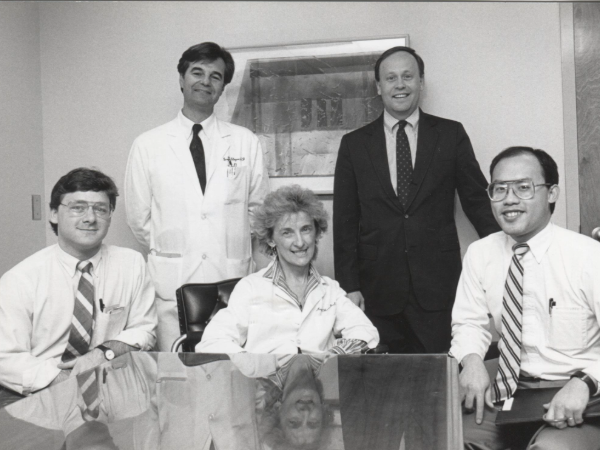
 L to R: Edward Salzberg, M.D., Sergio Stagno, M.D., Mary Pat Hemstreet, M.D., Robert Montgomery and Yung Lau, M.D.2025 marks 80 years of the Department of Pediatrics at the University of Alabama at Birmingham, a milestone that reflects decades of advancement in clinical care, research and education. What began in 1945 as a small academic unit with a local focus has grown into a statewide leader shaped by a longstanding partnership with Children’s of Alabama. Across eight decades, faculty, staff and trainees have contributed to this growth and helped define the department’s mission.
Foundations and Early Growth
In the mid-20th century, pediatric services operated across University Hospital and Children’s Hospital. A major transition occurred in 1968 when the pediatric inpatient service moved fully to Children’s Hospital, creating a unified clinical home that supported the expansion of subspecialty care, improved coordination of training and strengthened the department’s role within the Birmingham medical community.
As patient needs increased, the department’s mission also evolved. Katharine Reynolds Ireland Chair of Pediatrics Yung Lau, M.D., explains, “The department began with a local focus but over time, especially through our partnership with Children’s of Alabama, the mission expanded, said Lau.” We recognized a moral obligation to care for all children in Alabama and beyond. That shaped who we are.”
Development of Subspecialties and Research Capacity
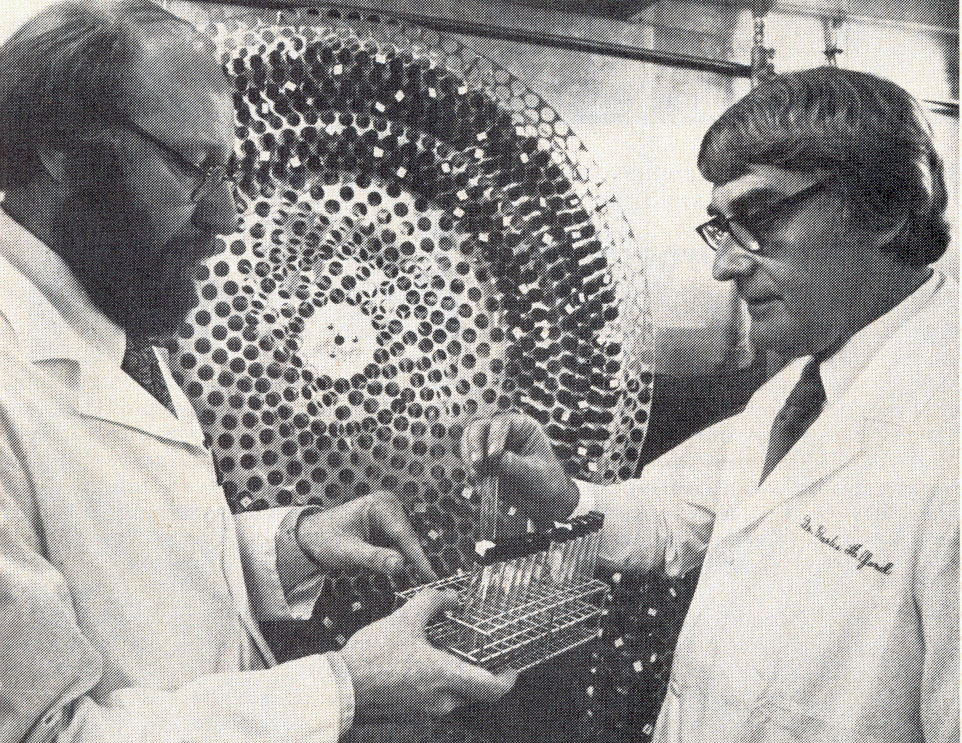 L to R: Richard Whitley, M.D. and Charles Alford, M.D.The 1970s and 1980s brought steady growth in clinical divisions, research programs and training opportunities. Subspecialties including neonatology, infectious diseases, cardiology, nephrology and pulmonology expanded as patient volumes increased. Support from the School of Medicine and Children’s of Alabama strengthened faculty recruitment and helped build the research infrastructure needed for continued development.
Sergio B. Stagno, M.D., who joined the department in 1971 and later served as chair from 1989 to 2014, witnessed much of this progress firsthand. “It has been an amazing success story. The expansion of buildings, programs, faculty, patients and residents has been very impressive,” says Stagno.
During this era, the department adopted a “grow our own” approach by training residents, supporting them through fellowship programs and retaining many as faculty. This strategy stabilized workforce needs across subspecialties and helped strengthen the research enterprise, which grew with the establishment of the Pediatric Research Institute and multiple Centers of Excellence in partnership with Children’s of Alabama.
A defining feature of these decades was the department’s collaborative culture. “What truly set us apart was the collegial and friendly environment,” Stagno notes. “Everyone worked together toward the same mission.” He is confident this foundation will continue to guide the department’s trajectory. “We built something strong and I know the department will carry this mission forward for years to come.”
Modern Growth and Academic Expansion
In 2014 Mitchell B. Cohen, M.D., became chair and led one of the most significant periods of academic expansion in the department’s history. During his tenure, the faculty grew from 174 to 284 to meet the needs of the tripartite mission.
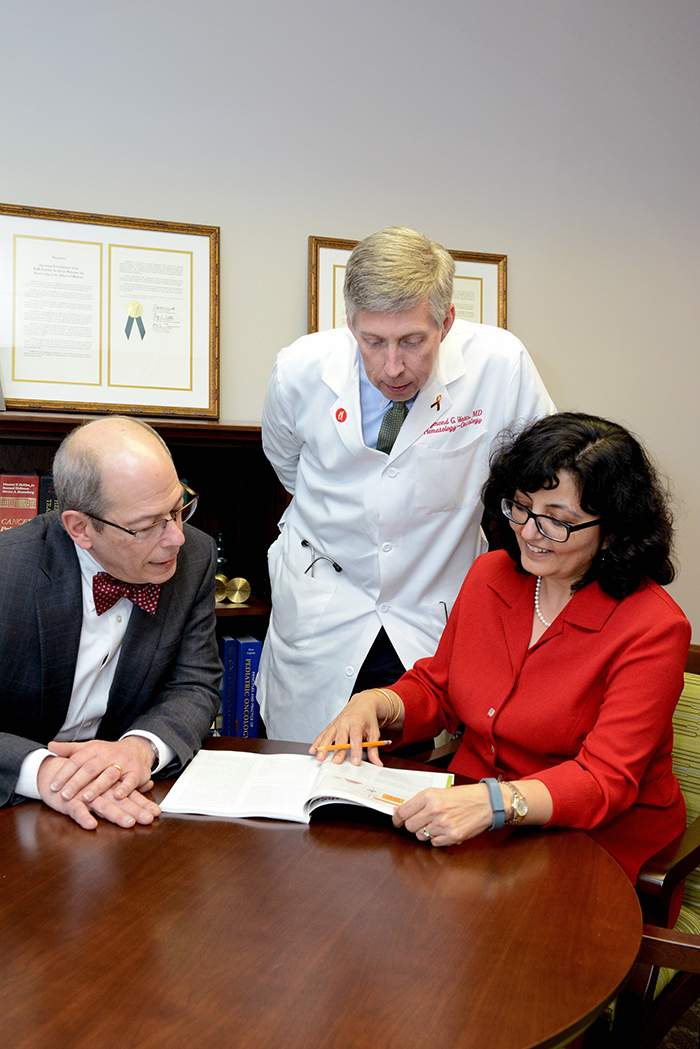 L to R: Mitchell Cohen, M.D., Raymond Watts, M.D. and Smita Bhatia, M.D.Research activity expanded substantially as NIH funding rose from $5.8 million to $25.4 million and the number of NIH-funded investigators increased from eight to 32. “We recognized that we could care about both clinical work and scholarship and that neither was in conflict with the other,” says Cohen.
To support this growth, the department established new infrastructure including the Pediatric Research Office, Clinical Trials Office, Pediatric Office for Improvement Science and the Office for Faculty Development. Clinical programs expanded with the addition of new subspecialty divisions and training opportunities increased through additional residency positions, fellowships and new scholar tracks.
The COVID-19 pandemic brought unprecedented challenges, yet the department continued essential services and adapted operations to meet evolving needs. “The biggest challenge was COVID,” Cohen reflects. “But the resilience we demonstrated, the new ways we cared for patients and the way we supported each other and our patients made me proud.”
The Department Today and the Years Ahead
Following Cohen’s departure in 2024, the department entered a new chapter under Lau’s leadership, marked by continued growth in research, education and clinical care. “What sets us apart is our people and our culture of collaboration,” he says. “It is why faculty and trainees choose to build their careers here.”
Every major pediatric subspecialty is now represented and clinical programs continue to expand across inpatient and outpatient settings. The Biomedical Research and Psychology Building, scheduled to open in 2027, will provide new research space and support continued scientific growth.
Lau emphasizes the department’s commitment to training the next generation of pediatric leaders. “Our training programs are a source of pride. Over 80 years this department has only grown stronger,” says Lau. “With the team we have today, I know we will continue to honor the legacy of those who came before us and deliver the best possible care for the children of Alabama.”