For many families, an autism diagnosis is the gateway to critical early support such as speech therapy, occupational therapy and applied behavior analysis. That diagnosis is guided by criteria from the Diagnostic and Statistical Manual of Mental Disorders, Fifth Edition (DSM-5), the nationally recognized framework clinicians use to diagnose autism spectrum disorder and other neurodevelopmental conditions.
Within the UAB Department of Pediatrics, a pediatric-led autism assessment approach is using this evidence-based standard to help families access answers sooner. By training general pediatricians to diagnose clear autism cases using DSM-5 criteria, the approach is reducing wait times, improving access to care and ensuring children with more complex needs are connected to specialized care when needed.
Building a pediatric-led approach
The approach began with the Primary Care Clinic and Justin Schwartz, M.D., associate professor in the Division of Pediatric Division of Developmental-Behavioral to develop a structured protocol that supports appropriate autism assessments within primary care. As the effort grew, leadership transitioned to Kathleen Vincent, M.D. and Heather Relyea Ashley, M.D., assistant professors in the Division of Academic General Pediatrics, bringing an additional perspective and helping further strengthen training, continuity and family-centered care.
Improving access through timely diagnosis
 Kathleen Vincent, M.D.Autism is a spectrum neurodevelopmental difference with a wide range of presentations and support needs. While subtle or complex cases still require evaluation by developmental pediatric specialists, many children present with clear features that can be accurately identified by trained general pediatricians using DSM-5 criteria.
Long waitlists for specialist evaluations can delay access to therapies during critical developmental windows. In traditional pathways, children may wait 18 months or longer for an evaluation and face additional delays before beginning services such as applied behavior analysis.
“If we’re seeing a 2-year-old and we’re worried about autism, the traditional path can mean they don’t get services until they’re 4 or older,” said Vincent. “That’s a huge developmental period without recommended support.”
When the clinical picture is straightforward, the pediatric-led approach allows families to move forward sooner, often confirming a diagnosis within weeks and helping children begin services during key stages of early development.
“At that age, even a few months can make a meaningful difference,” said Vincent. “Being able to diagnose clear cases sooner helps families move forward during an important period of growth.”
At this time, autism assessments through this approach are available for established patients of the Primary Care Clinic, ensuring evaluations are completed by clinicians who know the child and family and can provide consistent follow-up care.
Training, structure and quality safeguards
What began as informal teaching has become a standardized part of pediatric education. All residents receive DSM-5 autism assessment training by the end of their first year, supported by structured teaching sessions, practical tools and refresher materials. The approach recognizes that comfort levels vary and is designed to help clinicians feel prepared even if evaluations are spaced months apart.
Clear guardrails guide case selection to maintain quality. Pediatricians self-screen referrals so children with nuanced or complex presentations are directed to developmental pediatric specialists.
The Primary Care Clinic’s academic setting also allows for extended appointment times, typically 90 minutes and dedicated nursing support to ensure evaluations are thorough and well-coordinated.
Supporting families beyond the diagnosis
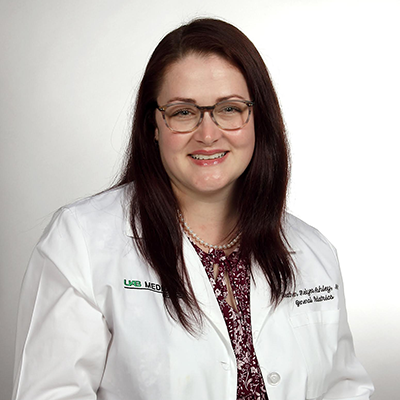 Heather Relyea Ashley, M.D.Support does not end with diagnosis. Families leave the visit with clear documentation, next steps and a follow-up appointment is scheduled within two to four weeks to maintain momentum and prevent families from feeling overwhelmed.
Care plans are tailored to each family’s needs, with referrals connecting families to a range of services including wraparound support through the Alabama Department of Mental Health and school-based assistance through the Regional Autism Network. Families receive help navigating paperwork, coordinating services and understanding next steps, particularly when time, literacy or resource barriers are present.
“We want that longitudinal relationship, so families have a trusted, evidence-based resource not just at diagnosis but afterward as well,” said Ashley.
Pediatricians remain a consistent, evidence-based resource for families as children grow, helping guide care across school transitions and counter misinformation families may encounter online.
Looking ahead with a neurodiversity-informed lens
This work is grounded in a neurodiversity-informed perspective that emphasizes difference rather than deficit. Ashley brings lived experience with autism into her work, reinforcing acceptance and understanding alongside evidence-based clinical care.
Ashley has shared how her experience as a parent of an autistic child has shaped her perspective as a pediatrician. She emphasizes that many challenges arise not from autism itself, but from environments designed for only one way of thinking, processing and interacting.
“Autism is an operating system difference,” said Ashley. “Someone might be using macOS and someone else might be using Windows. Neither is inferior.”
That perspective also informs how the team addresses misconceptions about rising autism diagnoses. Increased identification reflects improved recognition and training, not an epidemic. Autism is present from birth, with characteristics becoming more noticeable as environmental demands grow.
The success of this pediatric-led approach has highlighted opportunities to share training resources and pathways with general pediatricians across Alabama. By expanding access while maintaining rigorous standards, the UAB Department of Pediatrics aims to help more families receive timely, equitable and evidence-based care.