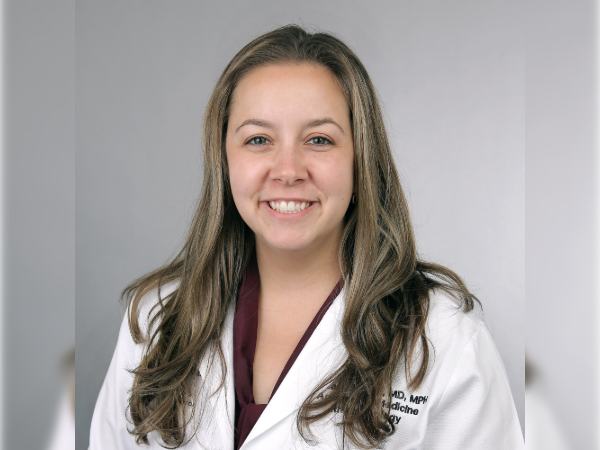
 Brittany Huynh, M.D., MPH, assistant professor in the University of Alabama at Birmingham (UAB) Department of Pediatrics’ Divisions of Pediatric Rheumatology and Adolescent Medicine, has received a $366,000 mentored career development award from the Childhood Arthritis and Rheumatology Research Alliance (CARRA)-Arthritis Foundation Grant Program. The three-year award will support her project, “Teratogen-exposed pregnancy and contraceptive use patterns among adolescents and young adults with rheumatic disease.”
Some medications used to treat rheumatic diseases, including methotrexate and mycophenolate, can cause severe fetal malformations or pregnancy loss if taken during pregnancy. Huynh’s research will examine how often pregnancies occur while adolescents and young adult (AYA) patients are taking these medications and identify gaps in contraceptive use.
“My research and clinical work in both adolescent medicine and pediatric rheumatology revealed clear gaps in reproductive health care for adolescents and young adults with rheumatic disease,” said Huynh. “Receiving this grant provides crucial support to build my career as a physician-scientist at the intersection of these two fields.”
The study will focus on patients ages 10 to 24. Huynh and her team will analyze more than a decade of administrative claims data, along with survey responses from young people in the CARRA Registry, to examine pregnancy rates and outcomes, contraceptive use and gaps in coverage.
Huynh said her previous research found that more than one-third of AYAs with rheumatic disease taking medications that can harm a developing fetus did not know about those risks, while half reported never receiving counseling about them. Preliminary data from a small region of the United States also showed teratogen-exposed pregnancy rates of up to 7.5% over two years. Those findings, along with the high rate of unintended pregnancy among AYAs, inspired her to study the issue on a national scale.
“We cannot effectively fix a problem we have not yet accurately measured,” Huynh explained. “By generating the first robust, population-level benchmarks, this study will provide a baseline measurement against which future interventions can be evaluated.”
By the end of the grant period, Huynh hopes to establish national benchmarks for pregnancies exposed to these medications and contraceptive use in this population. She plans to use the findings to support future research on reproductive health interventions in clinics that care for AYAs with rheumatic diseases.
The work could help clinicians better identify where counseling and care are needed, giving young patients and their families clearer information as they make decisions about treatment and reproductive health.
Congratulations, Dr. Huynh!