 What began as a way to bring pediatric residents together outside the hospital has grown into one of the University of Alabama at Birmingham Department of Pediatrics’ longest-running traditions. Now celebrating its 20th year, the Spring Scramble 5K continues to bring together residents, faculty and community members in support of children and families across Birmingham and beyond.
This year’s Spring Scramble will take place Apr. 25, 2026, in Homewood, welcoming runners, walkers, families and supporters from across the community.
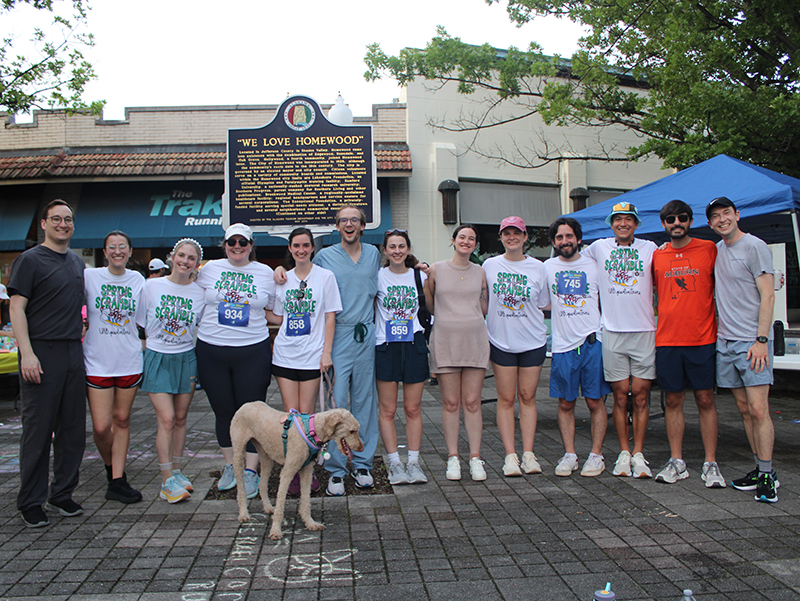
The Spring Scramble is organized through the department’s Coat of Arms, a resident-driven group dedicated to community outreach and child advocacy. Established in 2003, Coat of Arms creates opportunities for residents to engage beyond the clinical setting while supporting children’s health and well-being.
 A tradition rooted in resident leadership
In its early years, Coat of Arms explored several fundraising efforts to support community initiatives. Over time, residents identified the need for an event that encouraged broad participation while aligning with the group’s mission of advocacy and service. That vision led to the creation of the Spring Scramble 5K, which has since become an annual tradition.
“We wanted to design an event that residents could take ownership of and feel connected to,” said Michele Nichols, M.D., professor in the Division of Pediatric Emergency Medicine and program director of the pediatric residency program. “The Spring Scramble became a way to raise awareness, support children and bring people together in a meaningful way.”
While the race initially highlighted specific causes such as childhood literacy and healthy weight management, it has since evolved to support Coat of Arms more broadly. This approach allows residents to direct funding toward a wide range of initiatives throughout the year.
Supporting advocacy year-round
Funds raised through the Spring Scramble support resident-led initiatives that extend far beyond race day. One example is the department’s ongoing partnership with schools in Selma, Alabama, where residents provide backpacks filled with school supplies each year. What began as a response to community need has developed into a sustained effort, with residents packing and delivering supplies annually.
“The goal has always been sustainability and community partnership,” said Nichols. “These are projects residents choose, lead and continue year after year.”
Spring Scramble funding also supports health fairs hosted at Birmingham City Schools, where families rotate through educational booths focused on injury prevention, nutrition, asthma education and literacy. Residents distribute helmets, books and other resources while offering guidance to families.
Additional initiatives include holiday gift programs for primary care clinic families, partnerships with Blazer Kitchen to address food insecurity, puberty education programs in local schools and teddy bear clinics that visit schools and community sites. During these visits, residents use stuffed animals to walk children through common medical experiences, helping reduce fear and build familiarity with doctor visits. Safety showers for babies and toddlers are also supported, providing families with education and essential supplies focused on injury prevention.
 From planning to execution
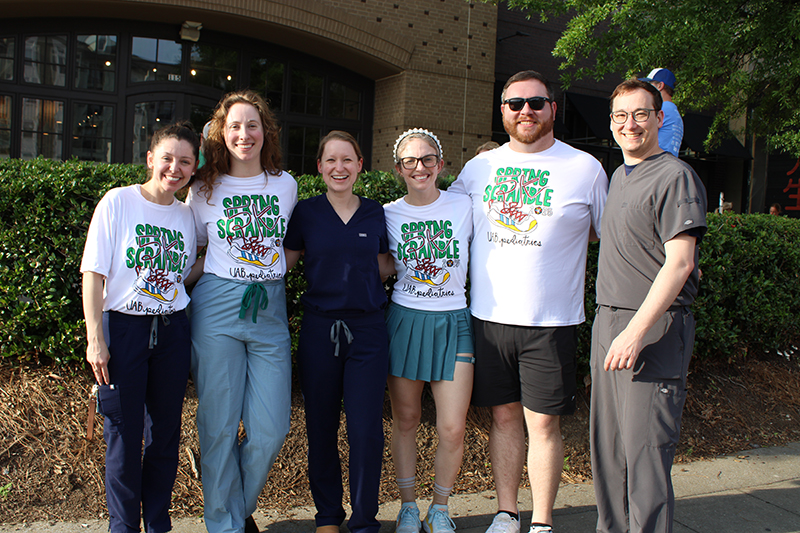
All Coat of Arms initiatives, including the Spring Scramble, are planned and carried out by residents. Trainees select projects, organize committees and lead execution, with faculty advisors providing mentorship and guidance.
“This is truly resident-run,” said Nichols. “They plan it, they lead it and they make it happen.”
Planning for the Spring Scramble spans the academic year and includes resident chairs and committees focused on logistics, sponsorships, marketing and community engagement. Participation continues to grow as residents pass the tradition down from class to class, joined by faculty, alumni and community members.
Looking ahead
Looking ahead, organizers hope to continue increasing participation among staff, faculty and divisions across the department. New engagement opportunities and team involvement are helping strengthen connections across the pediatric community while introducing new participants to the event each year.
Above all, the Spring Scramble remains grounded in its original purpose, advocacy for children, community connection and resident leadership.
“The Spring Scramble reflects who our residents are and what they care about,” said Nichols. “It’s about coming together to support children and families in ways that truly matter.”