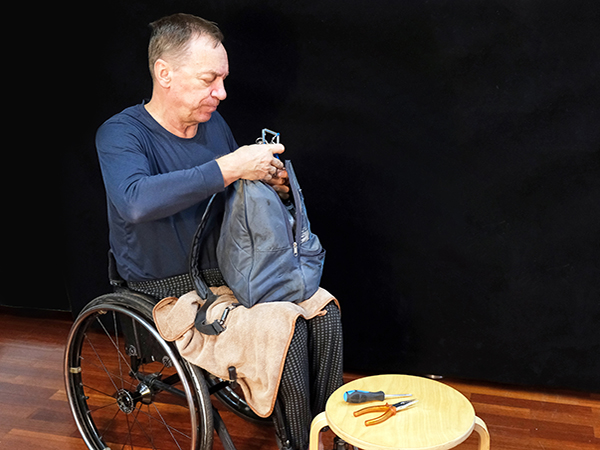
 Man packs tools and essentials in an emergency backpack.
Your alarm clock blares. It is time to begin the day. As you wake up, a mental checklist forms: pay the bill, do the laundry, run the errand, attend the appointment.
For many people with disabilities, that list does not stand alone. Each task is layered with additional questions: Is the building accessible? Will transportation be reliable? Will my mobility device cooperate? Everyday activities require contingency planning.
This added mental load is not simply a result of a diagnosis. It is shaped by environments and systems that are not consistently designed with accessibility or disabled people in mind.
Now layer in something slightly less routine - severe springtime weather.
For people with disabilities, weather preparedness can include additional considerations: access to power for medical equipment, accessible transportation and shelter options, and maintaining essential supplies.
Thankfully, there is ample guidance. Organizations like the Christopher & Dana Reeve Foundation, United Spinal Association, and ready.gov offer detailed resources tailored to people with disabilities. These plans, while thorough, are often long and demanding. And when everyday life requires extra planning, building and maintaining a comprehensive emergency plan can be overwhelming. A 2011 Spinal Cord Injury (SCI) Model Systems research study published in the Archives of Physical Medicine and Rehabilitation found a significant gap between the number of wheelchair users who feel they can evacuate during an emergency or natural disaster and wheelchair users who actually have a plan.
If you do not have the capacity to check every preparedness box this season, you can still create a starting point. Here are a few practical ways to prepare for the “what-ifs” while minimizing the stress of the “to-dos.”
1. Set Alerts
If you have a smartphone, make sure weather alerts are enabled. Most phones receive Wireless Emergency Alerts (WEAs). For iPhone users, go to Settings, Notifications, and toggle on Government Alerts. On Android devices, search “Emergency Alerts” or “Safety Settings” to turn on WEAs.
You can receive alerts from your county Emergency Management Agency (EMA) and download the FEMA app for notifications, preparedness guidance, and recovery assistance.
Finally, it is optimal to have a battery-powered or hand crank NOAA Weather Radio with a tone alert in the event of power, internet, and cell service outages.
Dr. Rachel Cowan, project director of the UAB Spinal Cord Injury Model System and a quadriplegic wheelchair user, remains weather aware through multiple sources.
“I get alerts via app notifications, texts, and email,” Cowan says. “I also signed up for Jefferson County EMA alerts and pay attention to the weather forecast in the spring and fall when tornadoes are most likely.”
2. Stock Up
Whether you evacuate or shelter in place, it is good to have an emergency kit stocked with essentials. Ready.gov provides a list of items like water, non-perishable food, flashlights, and extra batteries. The list, while important, can be lengthy, and does not include additional items and medical supplies a person with a disability may need.
For a shortcut, you can purchase a prepackaged emergency kit. The Red Cross and other companies sell kits suitable for one or an entire family. Then you can focus your time and energy on adding personal necessities like medication, urological, and skin care supplies.
Chris Mackey, a community health senior project coordinator at Lakeshore Foundation and a wheelchair user, learned first-hand the importance of having a plan.
“I had to evacuate from Hurricane Floyd that hit eastern North Carolina. Going without basic supplies for a few days was a good reminder to have supplies and transportation ready ahead of time.”
Many insurance providers, including Medicare and Medicaid, allow patients to receive 90-day supplies of medications and DME products. This strategy may allow you to have more medication available if you are displaced or unable to reach a pharmacy.
3. Prep Devices
Before severe weather, ensure your essential devices are charged and in working order. This may include phones, tablets, power banks, mobility devices, and medical equipment. Run a quick maintenance check. Air up wheelchair tires and check for any loose parts. If you are not skilled in performing wheelchair or equipment maintenance, you can contact your local DME provider and schedule a service appointment.
4. Make Contact
Whether you live alone or with others, communicate with a neighbor, care partner, or local friend of your plan and clarify their role. In the SCI Model Systems study, 51% of wheelchair users with SCI reported relying on assistance to evacuate their home, and 63% reported requiring assistance in evacuating their town.
“I have a small stash of medical supplies at someone else’s house in case my home is damaged or I need to evacuate,” says Cowan. “I also keep a basic wheelchair toolkit in my car or backpack, have the phone numbers of my DME provider programmed in my phone, and know friends with tools who can help if needed.”
Mackey agrees, “Getting to know a neighbor, coordinating with relatives ahead of time, and keeping your phone charged can be life savers.”
5. Decide Where to Go
In advance of severe weather, decide where you will shelter during the storm. The interior part of a basement is usually the safest part of a home, but if you do not have a basement or it is inaccessible, an inside room without windows on the lowest floor is your best option. If you live alone, consider asking someone to stay with you in case an evacuation is needed.
A community storm shelter may be a better option if your home lacks an accessible safe space. The Jefferson County Emergency Management Agency website contains a list of local storm shelters with phone numbers, and findyourtornadoshelter.com provides an interactive map with all U.S. tornado shelters. While the Americans with Disabilities Act (ADA) requires community storm shelters to be accessible, it is still best to call ahead – even though it adds an extra step – to make sure the location will meet your needs.
Dr. Cowan, who usually shelters at home during severe weather, stays in her wheelchair until the threat has passed even if it is late at night. “I don’t like it,” she says. “But for me it is a better choice than trying to get out of bed quickly and to my safe space.”
Mackey has a similar routine. “I use braces, crutches and a wheelchair to get around,” he says. “I’ve slept in my clothes with my equipment on if severe weather was in the area so I could stay as mobile as possible.”
Weather preparedness does not have to be all or nothing. Even small steps – turning on alerts, setting aside a few supplies, or planning with one trusted person – can make a meaningful difference. Start where you can this spring, build over time, and focus on what will help you stay safe, supported, and informed when it matters most.
Resources:
United Spinal Ready to Roll Emergency Preparedness Guide
Emergency Preparedness for People with Paralysis Guide