Social workers are the backbone of compassionate, community-centered care across the UAB Department of Psychiatry and Behavioral Neurobiology. Here, we highlight social workers in three distinct programs: the Community Psychiatry Program Clinic, the Research and Evaluation of Assertive Community Treatment Program, and the Day Treatment Program—each serving patients through tailored, interdisciplinary approaches.
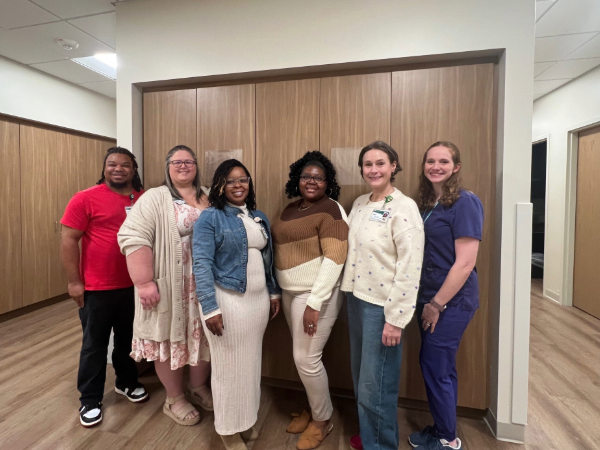 Clinic: Justin Weatherly, Mary Beth Norwood, Tangie McCray, Aisha Pratt-Killian, Loren White, and Bethany PottratzCommunity Psychiatry Program Clinic
At the Community Psychiatry Program (CPP) Clinic, seven full-time psychiatric social workers support patients with serious mental illness (SMI) diagnoses through a blend of clinical expertise and advocacy. These professionals assist psychiatrists during medication monitoring appointments by gathering and communicating updated medical and mental health information. Their extensive knowledge of mental health conditions, treatments, and medications allows them to educate patients, families, and community partners, fostering informed care and collaboration.
“UAB CPP social workers are strong advocates for patients and their families, making needed community resource referrals as requested or needed,” added Loren White, LICSW, Psychiatric Social Work Supervisor in the Community Psychiatry Program. These resources can include housing, food, medical care, and substance use treatment.
Additionally, CPP social workers offer therapy utilizing evidence-based modalities, including Cognitive Behavioral Therapy, Dialectical Behavior Therapy, and Acceptance and Commitment Therapy. Beyond the clinic, many volunteer in community initiatives, including mental health training for law enforcement and the annual Suicide Prevention/Awareness Walk, extending their impact beyond clinical walls.
Research and Evaluation of Assertive Community Treatment Program
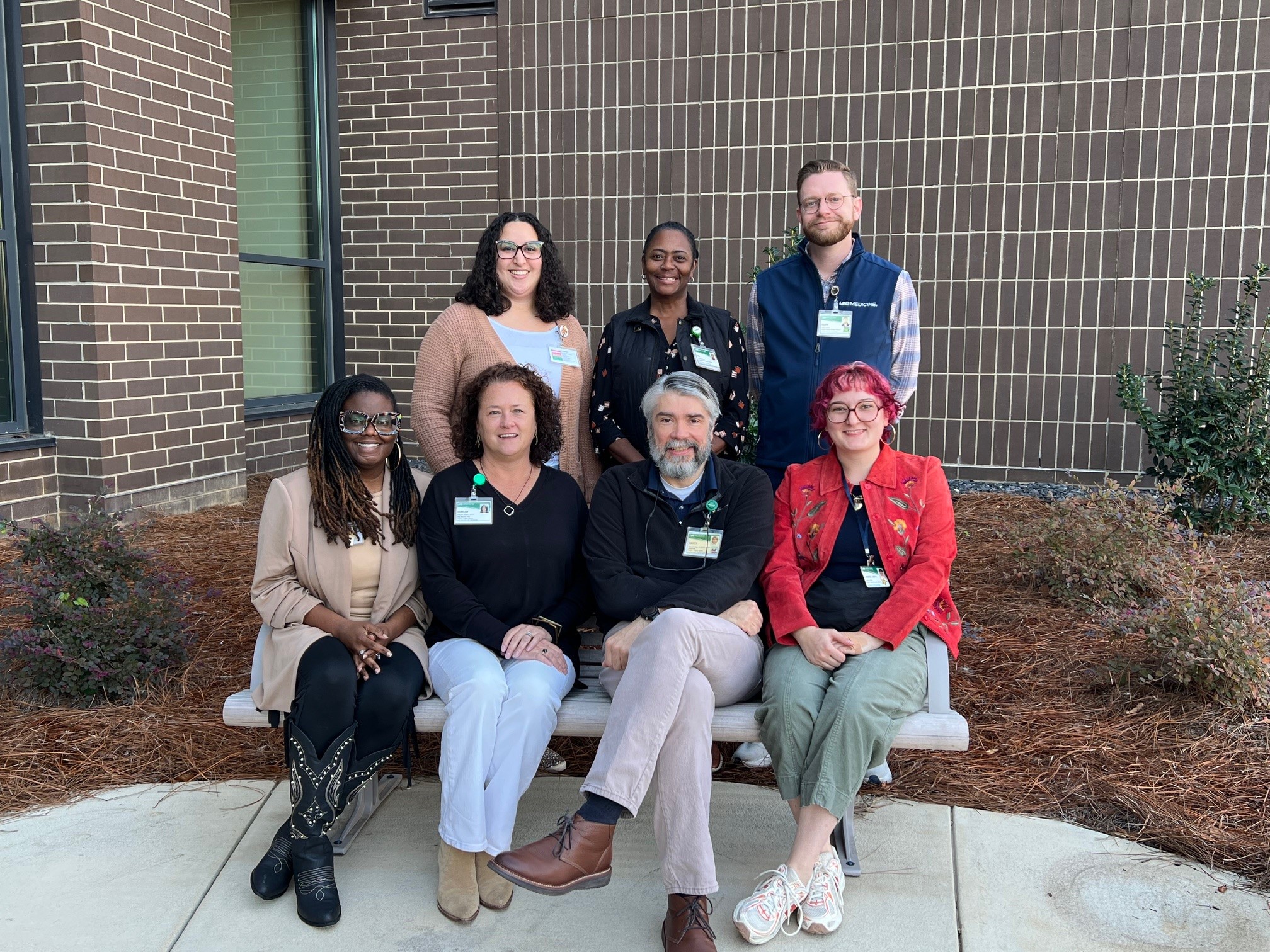 REACT: Front row: Erica Redwine, Duncan Gibson, Harry Findley, and Lanier Griffin. Back row: Alicia Lyles, Val Green, and Aidan VirkusThe Research and Evaluation of Assertive Community Treatment (REACT) Program, which is UAB’s Program of Assertive Community Treatment (PACT), is the first full-fidelity PACT team in Alabama and recently celebrated its 25th anniversary. REACT is an interdisciplinary team providing mental health and other supportive services to individuals with SMI both in their homes and community settings, with a particular emphasis on treatment-resistant schizophrenia.
“REACT social workers are ‘boots on the ground,’” said Duncan Gibson, MSW, LICSW, REACT Team Leader and Manager of Social Services. “Our motto is, ‘Whatever it takes.’”
REACT social workers embody the program’s “whatever it takes” philosophy by conducting mental health and substance use assessments, managing medications, and providing supportive therapy focused on coping skills and rebuilding support systems. They also teach basic living skills, advocate in court settings, and facilitate access to primary care, specialists, and vocational or educational opportunities. REACT social workers play a vital role in maintaining stability and promoting recovery among some of the most vulnerable populations.
Gibson added that Harry Findley, MSW, LICSW, who now serves as the executive director of the CPP, played a crucial role in the development of the REACT Program.
Day Treatment Program
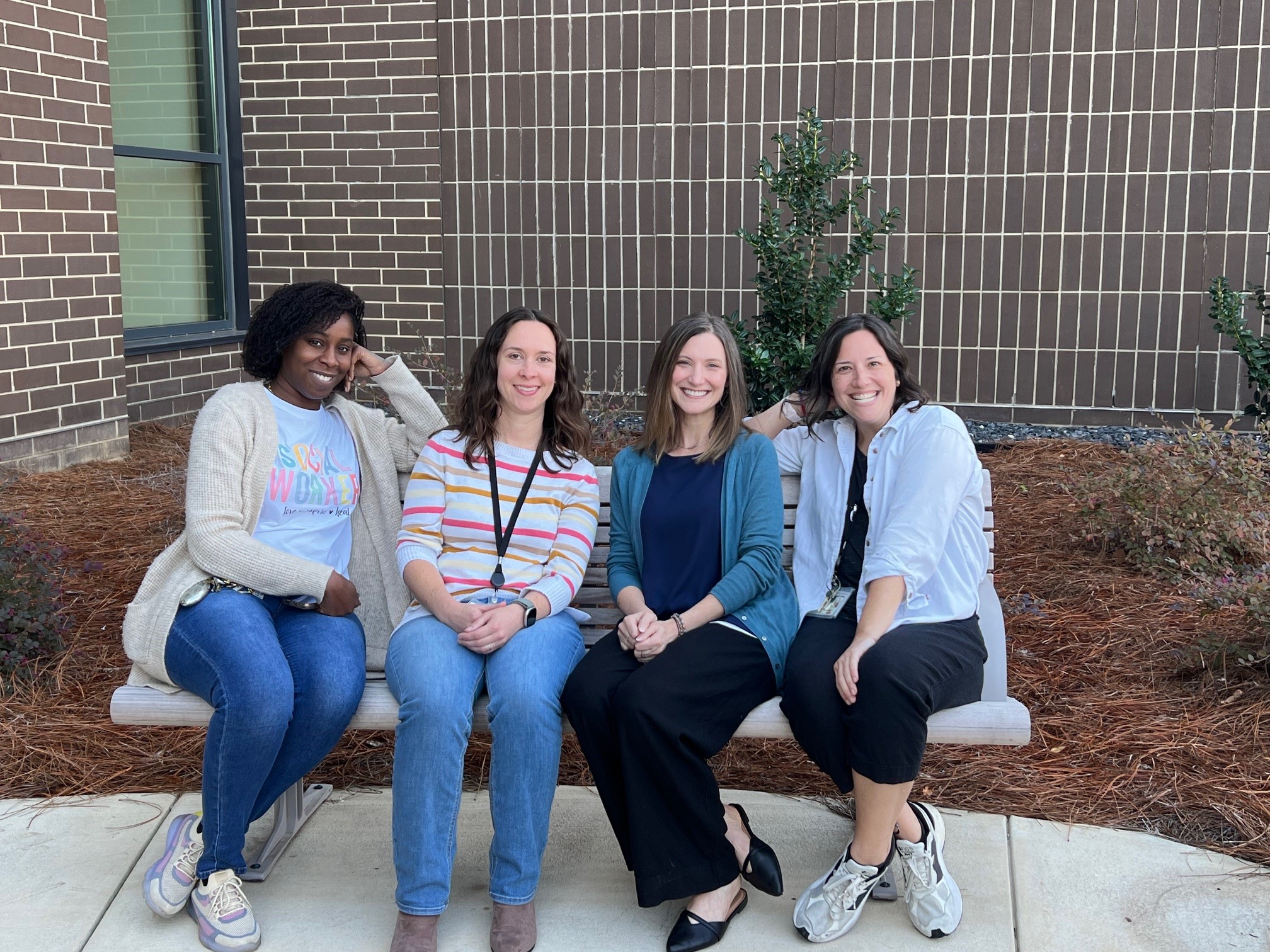 Day Treatment: Adrienne Hargrove, Kerry Bierley, Michelle Belue, Kate StephensLed entirely by social workers, the Day Treatment Program (DTP) offers structured group therapy five days a week for patients with SMI who meet specific eligibility criteria. With three LICSWs and one LMSW, the team designs and facilitates psychoeducational and therapeutic groups, manages treatment planning, and provides crisis intervention and case management.
“DTP is a very unique job for social workers in that we get very close to our patients,” said Kate Stephens, LICSW, DTP supervisor, who has been with the DTP for more than 15 years. “Most of our patients have been attending DTP for years, so we develop a level of rapport with patients not often seen in other areas of clinical care.”
Stephens added that DTP social workers here must be creative, flexible, and exceptionally patient, recognizing that progress often comes in small, meaningful steps. The program provides a safe, respectful, and engaging environment that supports symptom management and enhances overall well-being.
“The daily structure and socialization we provide our patients is hugely beneficial for their overall well-being and for managing symptoms related to their SMI,” Stephens added. “Our team is phenomenal, and I’m so proud to be their supervisor.”