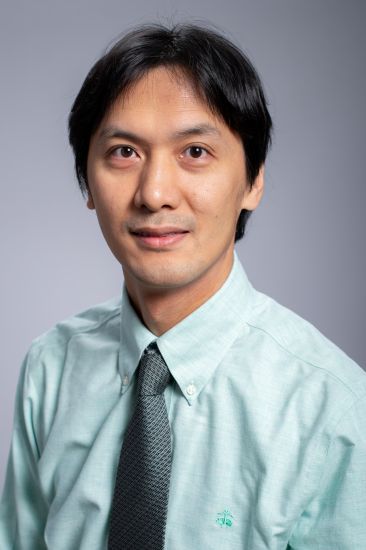
 Shin-ichi Kano, M.D., Ph.D.Scientists have long known that the brain and immune system communicate, but a new UAB-led study reveals an unexpected messenger connecting the two: tiny particles circulating in the bloodstream. The findings, recently published in Nature Communications, demonstrate that these particles can influence brain function and improve social behavior in multiple mouse models with social impairments.
The study, titled “Circulating extracellular vesicle microRNAs mediate immune modulation of social behavior in male mice,” was led by Shin-ichi Kano, M.D., Ph.D., professor and UAB Endowed Professor in Mental Health Research in the UAB Department of Psychiatry and Behavioral Neurobiology, and sheds light on a longstanding mystery in mental health research.
"Scientists have found that people with mental illness often have changes in substances circulating in their blood," Kano said. "These changes may help doctors diagnose diseases, predict outcomes, or guide treatments. However, we do not yet know whether they play a role in causing symptoms."
To investigate, researchers tested whether blood components from healthy mice could improve social behavior in mice with social difficulties. The team focused on extracellular vesicles (EVs), which are microscopic particles released by cells into the bloodstream that carry molecular cargo and act as biological messengers between organs and tissues.
The results showed that EVs from healthy mice improved sociability in several mouse models with social deficits. Researchers discovered that beneficial vesicles originated from T cells, an important part of the immune system. Once released into the bloodstream, the EVs traveled to the brain and delivered molecular instructions that altered how brain cells communicated with one another.
The study also adds to a growing awareness in research that the immune system state may shape behavior through mechanisms that extend far beyond inflammation or infection.
"This study reveals a previously unknown pathway that the immune system communicates with the brain," Kano said. "We found that EVs circulating in the blood may do more than serve as biomarkers of disease. They may actively influence how the brain works and how people behave."
Among the molecules carried by these vesicles, one microRNA called miR-23a-3p emerged as particularly important. The researchers found evidence that this molecular signal helps regulate communication between neurons in the prefrontal cortex, a brain region critical for social interactions. By restoring healthy patterns of neural activity, the EVs helped improve social behavior in affected mice.
Although the findings are promising, researchers emphasize that the work remains in an early stage. The experiments were conducted in animal models, and additional research will be required to determine whether similar mechanisms occur in people.
Still, the discovery could eventually open new avenues for understanding and treating disorders characterized by social difficulties, including autism spectrum disorder and schizophrenia. Future studies will focus on identifying the specific T cells that produce these vesicles, understanding how they target particular brain cells, and determining whether the same signaling pathways exist in humans.
"We hope these findings will help scientists better understand why social difficulties occur in some mental illnesses," Kano said. "While this research is still in the early stages, it could lead to new tools for identifying social impairments and new treatments that improve communication between brain cells."
More broadly, Kano believes the work opens an entirely new area of scientific inquiry.
"These discoveries may help scientists better understand a wide range of brain and mental health disorders and could lead to new approaches for diagnosis and treatment in the future," he said.
Co-authors on the study from the UAB Department of Psychiatry and Behavioral Neurobiology include Ken Matoba, Eisuke Dohi, Phoebe Garcia, Jose francis-Oliveira, Mirmohammadali Mirramezanializamini, Inssaf Berkiks, Frida Anguiano, Jana Badrani, Oluwaseun Fatoba, Md Sorwer Alam Parvez, Takahiro Kochi, Norimichi Ito, and Minae Niwa. An additional UAB co-author is David Crossman from the Department of Genetics. Collaborating institutions include the National Center of Neurology and Psychiatry (Japan), SUNY University (New York), and Johns Hopkins University (Maryland).