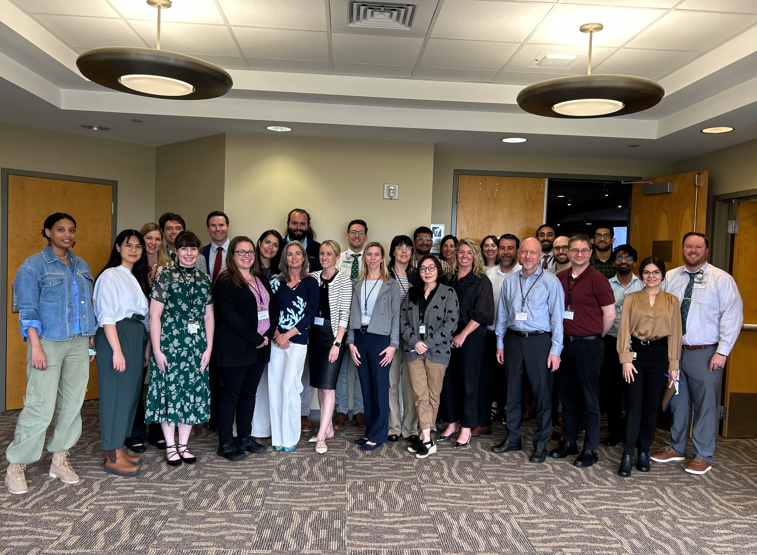
The UAB Department of Radiation Oncology is expanding its impact far beyond Alabama, attracting clinicians, physicists, and trainees from across the United States and around the world to learn from experts in radiation oncology. Through a growing portfolio of specialized training programs, the department has become a destination for health care professionals seeking firsthand exposure to advanced treatment technologies, clinical workflows, and implementation strategies.
What began as a series of educational offerings has grown into a program with a truly global reach. To date the courses have welcomed participants from at least 24 countries, including Mexico, Chile, India, Kenya, UAE, Taiwan, and Singapore as well as from institutions across the United States. The program’s virtual offerings have have helped expand the reach and impact. Whether arriving from major academic medical centers or smaller communities, attendees share a common goal: learning directly from the multidisciplinary teams at UAB that are helping shape the future of radiation oncology.
"What makes these programs so meaningful is that their impact extends far beyond the individuals who come to Birmingham,” said Corey Speers, M.D., Ph.D., professor and chair, Merle M. Salter Endowed Chair of Radiation Oncology in the Department of Radiation Oncology. “When physicians and physicists return home, they take with them not only new technical skills, but practical approaches they can adapt to improve cancer care in their own institutions and communities. Sharing what we have learned at UAB, and learning from our colleagues around the world in return, is an important part of our mission and one of the ways an academic department can have a truly global impact."
The department currently offers five external training programs spanning Stereotactic Radiosurgery, HyperArc Clinical Observation, HyperArc Trainee Observation, Ethos Clinical Observation, and Ethos Adaptive Radiotherapy. While these courses provide hands-on experience with cutting-edge technologies, one of their greatest strengths is access to the faculty, physicians, physicists, and dosimetrists, who use these approaches every day. Participants observe real-world clinical workflows, engage in case-based discussions, and gain practical insights from teams with extensive experience implementing and refining advanced treatment techniques.
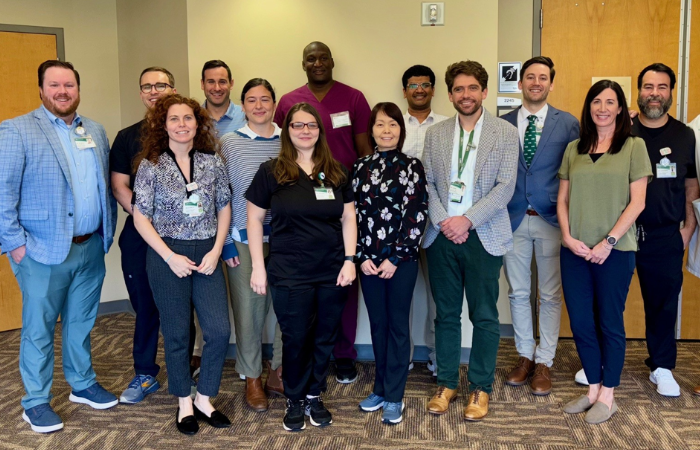 “One of the things we’ve tried to do with these courses is go beyond simply demonstrating the technology,” said Dennis Stanley, Ph.D., director of the Ethos Adaptive Radiotherapy course. “We want participants to understand what it actually takes to implement these techniques in clinical practice, from treatment planning and patient selection to quality assurance, workflow, and the day-to-day decisions that make a program successful. Our goal is to provide practical strategies that help institutions overcome implementation challenges and build sustainable programs tailored to their patients and resources.”
A major driver of interest has been UAB's leadership in adaptive radiotherapy. In addition to clinical observation opportunities, the department launched its Ethos Adaptive Radiotherapy Course in 2025, providing an immersive, hands-on training experience using real patient scenarios. The course showcases how artificial intelligence-enabled adaptive planning can help clinicians create a customized daily radiation treatment in as little as 15 to 20 minutes, compared with the much longer timelines associated with traditional approaches.
“Bringing adaptive radiotherapy to institutions across the world has been a rewarding experience,” said Michael Soike, M.D., director of the Ethos Adaptive Radiotherapy course. “We’re able to teach groups how to use this powerful technology in a constructive way. Doing it yourself is one thing, teaching another group how to do it on their own represents a separate set of challenges. I’m proud of the program we have developed over the past two years.”
The impact of these programs is significant. Each participant returns home equipped with new knowledge and practical experience that can influence patient care, program development, and treatment delivery within their own institution. By sharing expertise with clinicians from across the globe and fostering collaboration among radiation oncology professionals, UAB is helping accelerate the adoption of advanced treatment approaches and extending the reach of high-quality cancer care far beyond its walls, while reinforcing its role as a leader in radiation oncology education, innovation and clinical excellence.