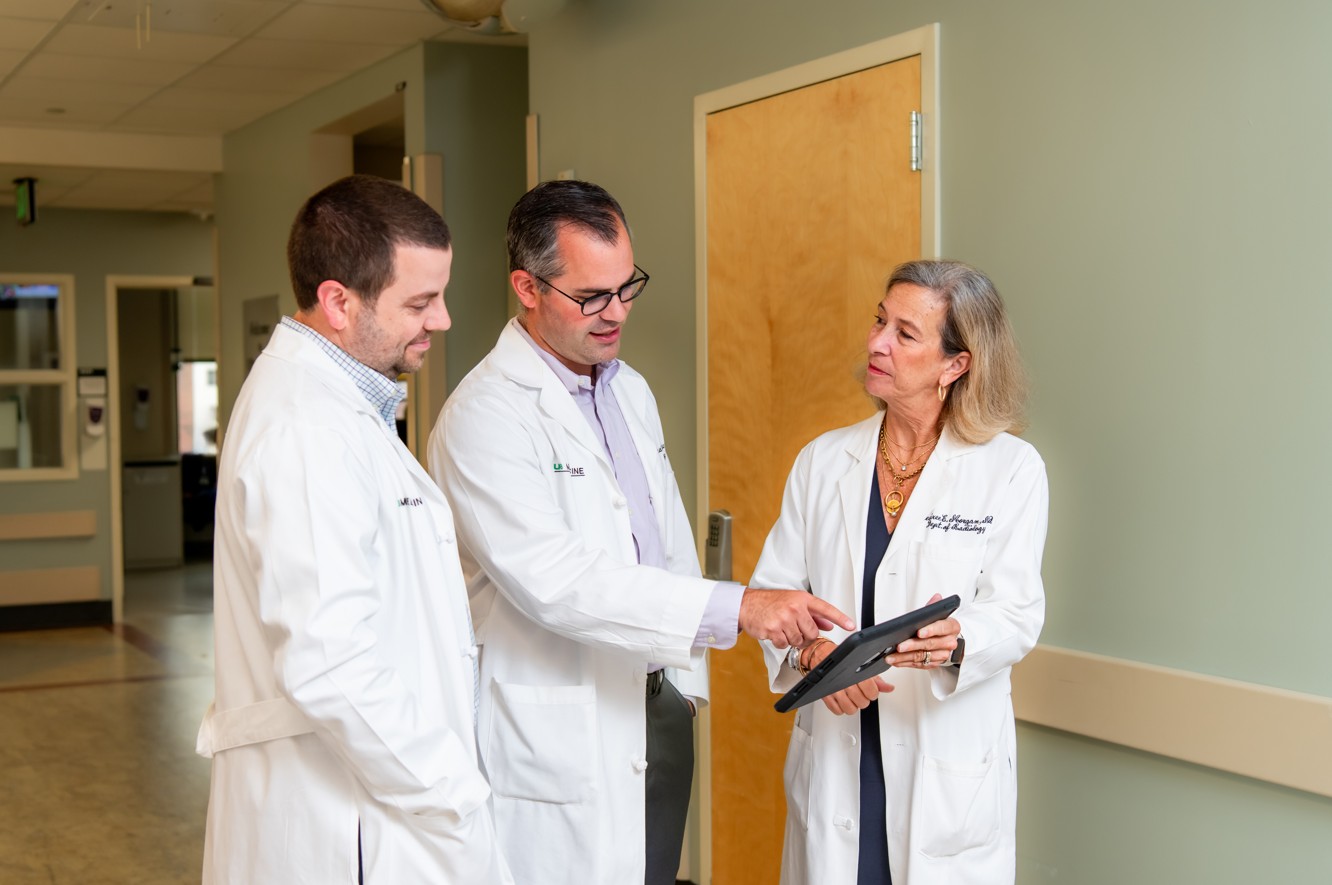
This is the third in a series of articles highlighting the divisions and sections within the UAB Department of Radiology.
Radiologists rarely meet patients face to face, but their work plays a central role in diagnosis and treatment. Every day, abdominal radiologists read and interpret scans that help doctors decide the next steps.
Abdominal radiology is a broad field that centers on diagnosing conditions affecting organs like the liver, pancreas, gallbladder, intestines, kidneys, bladder, and reproductive organs.

Much of an abdominal radiologist's work involves cancer care. Imaging reports help surgeons and oncologists understand how a tumor is behaving or whether a treatment is working. They also support care for patients with digestive conditions, kidney stones, and gynecological concerns.
“Through our reports and our multidisciplinary conference, we collaborate to provide patient-centered care in virtually every department,” said Sam Galgano, M.D., chief of the abdominal imaging section in the UAB Department of Radiology.
For people experiencing symptoms like stomach pain, nausea, or digestive issues, imaging can be a crucial step in getting answers. Typically, a primary care provider or specialist orders a scan after an initial evaluation.
From there, abdominal radiologists work closely with those providers to determine which imaging test will be most useful and interpret the results to identify the cause.
What kinds of imaging are used?
Abdominal radiologists rely on several types of imaging, each with its own strengths. This includes CT scans, MRI, ultrasound, X-rays, and fluoroscopy.
“One of the most amazing parts of abdominal imaging is that our field utilizes every kind of imaging available,” Galgano said.
By choosing the right test for the right situation, radiologists help ensure patients get accurate and timely diagnoses.
In addition, advancements in technology have significantly improved abdominal imaging in recent years. New MRI techniques, for example, allow doctors to assess conditions that once required invasive procedures.
Today, imaging can detect prostate cancer earlier, evaluate liver health without a biopsy, and assess inflammatory bowel disease in areas that traditional scopes can’t reach. Artificial intelligence is also being used to improve image quality and reduce scan times.
These innovations mean faster diagnoses, fewer invasive procedures, and more precise treatment planning for patients.
Clearing up common misconceptions
One common misunderstanding is that abdominal radiologists only focus on the abdomen. In reality, their expertise often extends further, including ultrasound of the neck and thyroid and CT angiography of the extremities.
At some institutions, including UAB, abdominal radiologists also perform procedures such as image-guided biopsies and aspirations, work that many assume is handled solely by interventional radiologists.
“Many people think that interventional radiology performs all of these procedures, but we play an important role at UAB to help diagnose and treat a multitude of conditions through our interventional practice,” Galgano said.
Why the work matters
For radiologists, the most meaningful part of the job is the impact on patients, even if it happens behind the scenes.
They help detect life-threatening conditions in critically ill patients, track progress for those undergoing cancer treatment, and provide essential information that guides care decisions across specialties.
“The absolute best part of abdominal radiology is the group of people we work with (both inside and outside the department) and the ability to have such a profound impact on so many patients’ lives,” Galgano said.