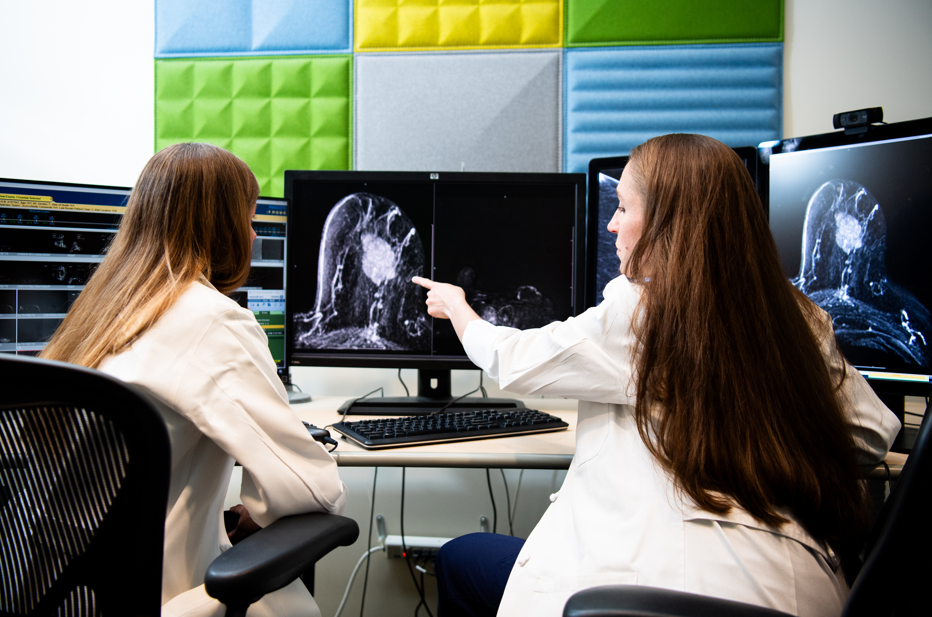
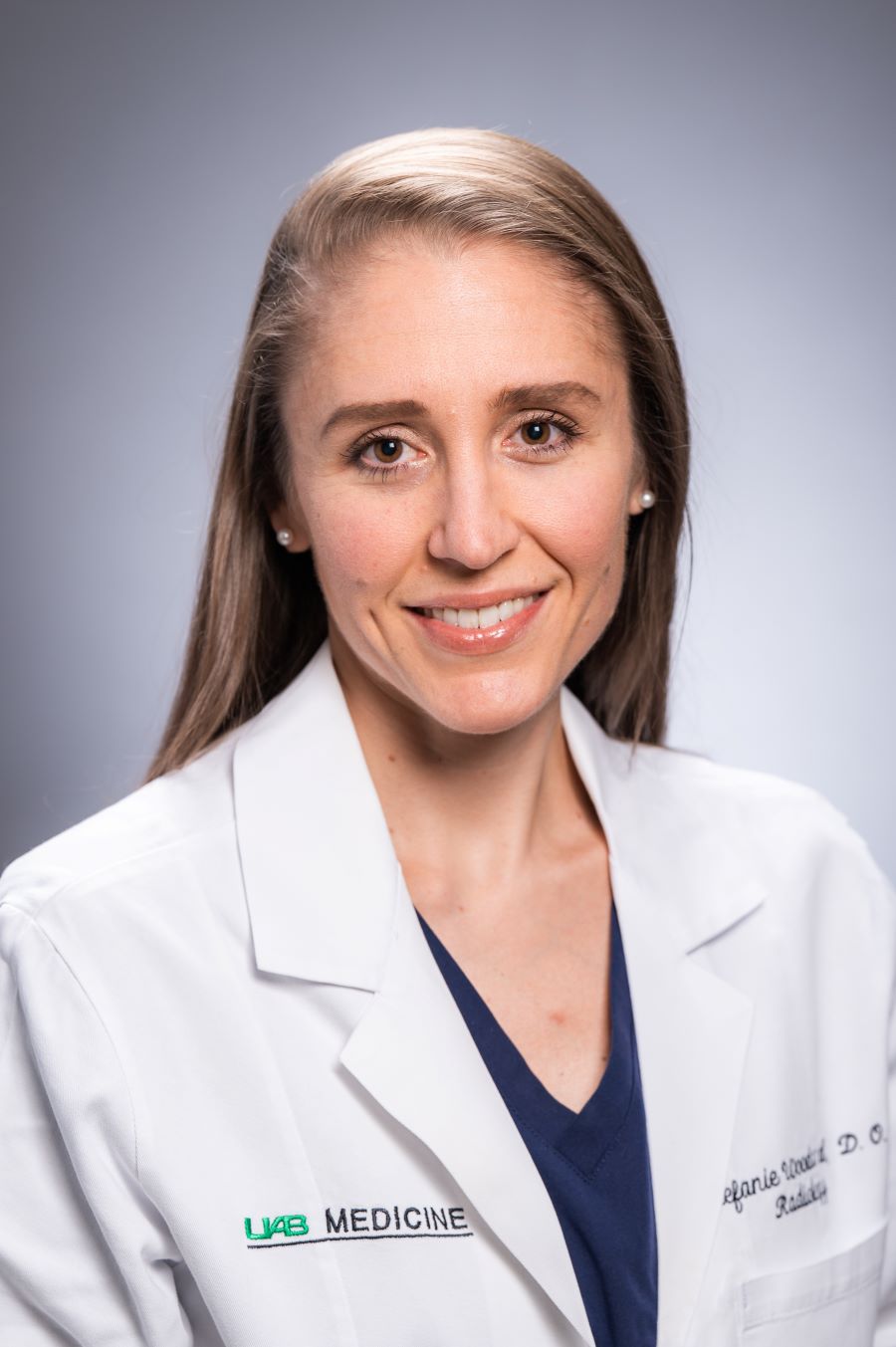
The UAB Department of Radiology breast imaging section provides patients across Alabama and the Southeast with access to advanced imaging technologies, minimally invasive procedures, and multidisciplinary care. Stefanie Woodard, D.O., associate professor and section chief of the breast imaging section in the UAB Department of Radiology shares how her team is helping advance breast cancer detection and treatment for women at risk.
Breast radiologists are often the first health care professionals to identify breast cancer, frequently before a patient experiences symptoms.
“Breast radiologists play an important role in the detection, diagnosis, and treatment of breast cancer,” Woodard said. “Our goal is to detect breast cancer as early as possible when treatment is less extensive and outcomes are better.”
The section offers comprehensive services, including screening and diagnostic mammography, ultrasound, breast MRI, contrast-enhanced mammography. In addition to services, the section provides exceptional image-guided procedures such as biopsies, aspirations, and localizations. In addition to services, the section provides specialized treatments like breast cancer cryoablation and intralesional steroid injections for idiopathic granulomatous mastitis.
As a leading academic medical center and regional referral destination, UAB breast imaging offers technologies and expertise not widely available elsewhere. The program performs approximately 5,000 breast MRIs annually and is a high-volume center for MRI-guided breast biopsies.
“Our combination of clinical skill, advanced technology, multidisciplinary collaboration, and research allows us to provide expert care,” Woodard said.
Advances such as 3D mammography have improved cancer detection while reducing unnecessary callbacks. Abbreviated MRI and contrast-enhanced mammography are expanding screening options, while artificial intelligence offers opportunities to improve diagnostic accuracy.
“While surgery remains the gold standard for most breast cancer patients, breast radiologists at UAB can also now offer cryoablation, a less invasive non-surgical treatment option for women who meet certain criteria,” Woodard said.
Patient experience remains a priority. Diagnostic mammography and ultrasound patients receive results during their visit, helping reduce uncertainty and allowing them to better understand their next steps.
“We recognize that breast imaging can be stressful,” Woodard said. “Our team prioritizes compassionate care and clear communication to minimize discomfort.”
Close collaboration among radiologists, breast surgeons, oncologists, pathologists, nurse practitioners, and the UAB Breast Health clinic team, ensures imaging findings are integrated into patient care. Several conferences, including multidisciplinary breast cancer and benign radiology-pathology conferences, foster this collaborative approach.
Research is also central to the section’s mission. Faculty participate in national studies, including CMIST, TMIST, and I-SPY, while conducting research involving advanced MRI, artificial intelligence, and minimally invasive interventions.
“These studies help advance breast cancer detection and treatment while bringing innovative approaches directly to our patients,” Woodard said.
As a regional referral center, UAB provides access to specialized services available at only a limited number of breast imaging centers nationwide. Woodard pointed to the team’s response to a recent national MRI biopsy needle shortage as a source of pride.
“I am particularly proud of the expertise and dedication of our team in the midst of recent MRI biopsy needle shortages,” Woodard said. “During these critical national supply shortages that forced many institutions to suspend MRI-guided biopsies, our team maintained UAB’s high-volume service with almost no interruption.”
Looking ahead, Woodard sees breast imaging playing a larger role in predicting future breast health, alongside advances in artificial intelligence, personalized screening, and minimally invasive therapies.
The most important message remains simple: screening mammography saves lives.
The American College of Radiology and Society of Breast Imaging recommend annual screening beginning at age 40 for women at average risk and breast cancer risk assessment by age 25. Most women diagnosed with breast cancer have no family history of the disease, and early-stage cancers often have no symptoms.
“At UAB, we follow evidence-based recommendations and have developed institutional breast imaging guidelines to promote consistent, high-quality care across our health system,” Woodard said.