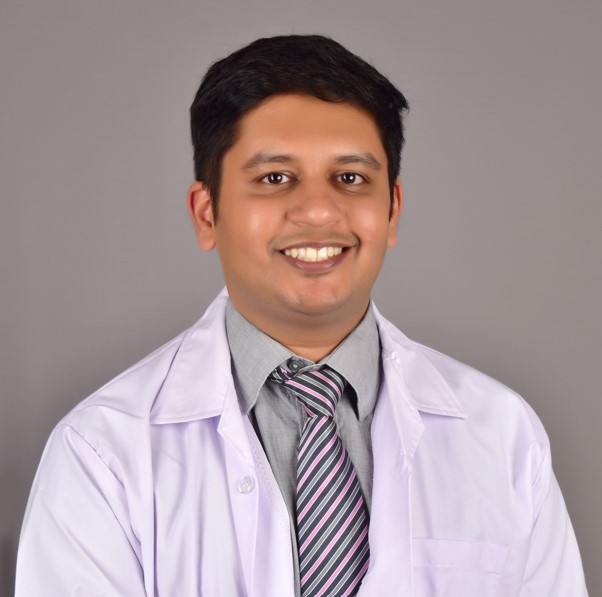
Anmol Dhawan, M.D., MBBS, joined the UAB Department of Radiology as an instructor in the cardiopulmonary imaging section in March 2026. He earned his medical degree from the Armed Forces Medical College in Pune, India, in 2017, followed by a diagnostic radiology residency at Bharati Vidyapeeth Medical College, also in Pune, which he completed in 2023.
After residency, Dhawan practiced as a general radiologist in India for approximately one year, gaining broad experience across imaging modalities and organ systems. That hands-on exposure helped solidify his interest in chest and cardiovascular imaging and motivated him to pursue subspecialty training. He came to UAB to complete a fellowship in cardiopulmonary imaging, which led to a faculty position.
Learn more about his journey and what inspires his work below.
What inspired you to pursue a career in this field?
Dhawan: During my first radiology rotation in medical school, what immediately appealed to me was how much it resembled solving a puzzle. You're handed a set of images and clinical context, and your job is to make sense of it all and arrive at an answer that actually helps the patient. That kind of systematic, pattern-based thinking felt like a natural fit for me, and it still does.
What aspects of your new role here are you most excited about?
Dhawan: UAB has a genuinely busy and complex clinical environment, which is exactly what you want as a cardiothoracic radiologist; the volume and variety of cases here are hard to match. I'm also excited to be involved in teaching. I benefited a lot from mentors who took the time to explain their reasoning, and I'd like to pass that on to residents and fellows who are just starting to find their footing in subspecialty radiology.
What is your primary area of expertise within your field, and what sparked your passion for it?
Dhawan: I mostly work on chest CT and cardiac CT, with a particular interest in interstitial lung disease and congenital heart disease. I'm also looking to expand into cardiac MRI, which feels like a natural next step given how complementary it is to what I already do. The common thread across all of it is that these are areas where the radiologist's read genuinely changes how a patient is managed, and that sense of direct clinical impact is a big part of what drew me here.
What are your goals for making an impact through both your teaching and patient care in this role?
Dhawan: On the patient care side, I want to be the kind of subspecialist that clinicians can rely on for a thoughtful, complete read, not just a list of findings, but a report that actually helps them make a decision. For teaching, I hope to help trainees develop a framework for approaching complex cardiopulmonary cases so that the reasoning becomes second nature, not just the conclusions. If I can contribute to even a few people choosing cardiothoracic radiology as their subspecialty, that would be a real win.
Anything else you’d like to add?
Dhawan: I came to UAB not knowing quite what to expect, and the institute and the department have both surprised me in the best way. There's a genuine sense of investment here, in the institution, in the trainees, in the patients, and it's been clear from the start that people take a lot of pride in what they're building at UAB. I'm glad to be a part of it.