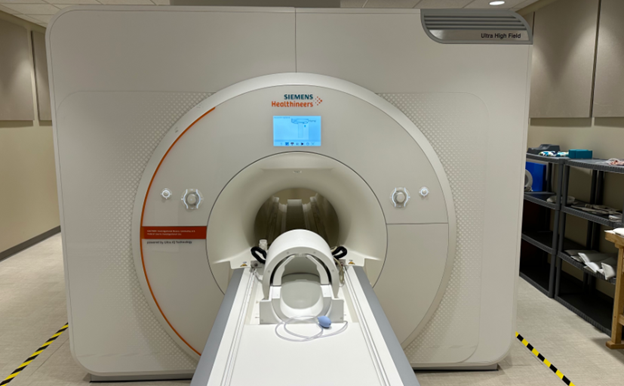
The University of Alabama at Birmingham (UAB) and Auburn University have teamed up to offer a powerful new brain imaging service for people with epilepsy in Alabama. This service has been available to patients since January 2024.
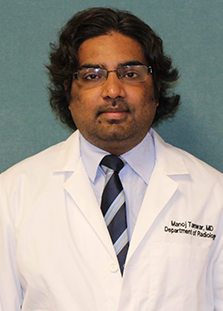
“It gives me immense happiness to provide this new service to epilepsy patients in Alabama,” said Manoj Tanwar, M.D., MRI director in the UAB Department of Radiology. “This work could not be possible without the efforts of many colleagues at UAB and Auburn.”
At the center of this collaboration is a highly advanced MRI scanner called a 7‑Tesla (7T) MRI. Most hospitals use MRI scanners that are much lower in strength. A 7T MRI produces extremely detailed images of the brain, allowing doctors to see things that may not appear on standard scans.
For some people with epilepsy, routine brain scans do not show a clear cause of their seizures. The new 7T MRI can create much higher‑resolution images, which may help doctors identify tiny brain abnormalities, lesions that are often missed with traditional imaging. Finding these lesions can be critical for diagnosis, treatment planning, and, in some cases, surgery.
While 7T MRI scanners are available at research institutions across the country, very few are approved for routine patient care. The scanner used for this service is especially unique as it is the world’s first clinically approved parallel‑transmit 7T MRI system installed for patient use.

“We are very excited to provide this impactful diagnostic evaluation for our epilepsy patients as we continue to strive to provide the best care for our patients,” said Mahmud Mossa-Basha, M.D., professor and chair, Witten-Stanley Endowed Chair of Radiology in the UAB Department of Radiology. “For the right patients, the literature has shown this technology can detect abnormalities that otherwise go missed with the typical MRI scanners and other imaging tests that we use.”
The scanner is located in Auburn University’s Neuroimaging Center in the Samuel Ginn College of Engineering. Although the scanner is housed at Auburn, it is used clinically by the UAB Department of Radiology. The scanner was approved by the U.S. Food and Drug Administration for use on patients and provides significantly better imaging than Auburn’s previous research‑only 7T scanner.

In addition to clearer images, the new system includes specialized technology that allows doctors to perform advanced types of brain imaging, offering insights that were not previously possible.
“This collaboration between Auburn University and the University of Alabama at Birmingham is exciting from a research perspective and provides world-class clinical imaging capabilities to the state of Alabama,” said Thomas Denney, Ph.D., director of the Auburn University of Neuroimaging Center.
This collaboration not only improves care for epilepsy patients but also creates new opportunities for medical research and innovation within the state. By sharing expertise and resources, the two institutions are bringing a rare, cutting‑edge technology to Alabama patients.