Tania K. Arora, M.D., Professor in UAB’s Division of Surgical Oncology, was recently featured on UAB MedCast discussing melanoma diagnosis, staging and surgical treatment, including how immunotherapy is changing care.
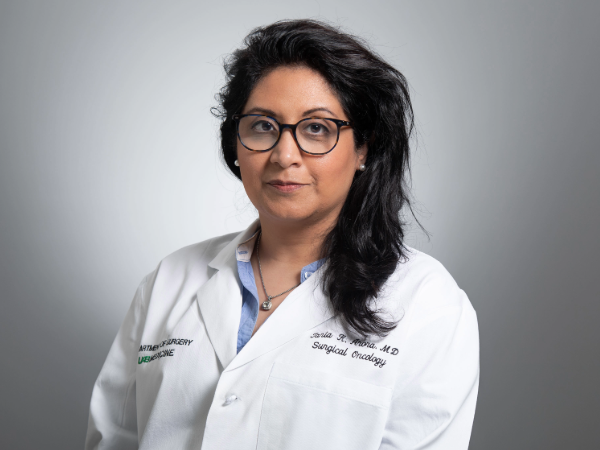 She emphasizes a multidisciplinary approach, bringing together dermatology, pathology, medical and radiation oncology, and surgery.
Diagnosing and staging melanoma
Arora reviews the ABCDE framework—asymmetry, border irregularity, color variation, diameter and evolution—for identifying suspicious skin lesions. She highlights changes over time as particularly important and notes that itching or spontaneous bleeding may also warrant evaluation.
Diagnosis begins with a skin biopsy. Breslow thickness, the microscopic measurement of tumor thickness, helps guide staging and treatment. Along with ulceration and evidence of spread to lymph nodes or distant sites, it informs prognosis. Imaging may help assess the extent of advanced disease before treatment.
Surgery and the shift toward earlier therapy
Surgery remains the foundation of treatment for localized melanoma. Wide local excision removes the tumor and a surrounding margin of skin, determined primarily by tumor thickness and location. Sentinel lymph node biopsy helps detect microscopic nodal spread in selected patients without clinically apparent lymph node involvement.
Arora highlights the growing role of neoadjuvant immunotherapy, given before surgery. Two pivotal trials, SWOG S1801and NADINA, demonstrated improved event-free survival with strategies incorporating preoperative immunotherapy in selected patients with resectable advanced melanoma. These findings underscore the importance of multidisciplinary evaluation before surgery.
For recurrent or metastatic disease, treatment options include combination immunotherapy, targeted therapy for tumors with actionable mutations, and tumor-infiltrating lymphocyte (TIL) therapy for eligible patients.
Why patients choose UAB
Arora identifies UAB’s tumor boards and multidisciplinary care as key strengths, bringing specialists together to develop individualized treatment plans.
“I think the greatest strength we have here at UAB is our tumor boards and our multidisciplinary care,” Arora says. “We have the best come together, bringing all of their expertise to treat patients.”
Arora also emphasizes prevention and early detection through sun protection, avoiding tanning beds, and appropriate dermatologic follow-up. A personal or family history suggestive of inherited cancer risk may warrant genetic counseling.
To listen to the full episode, visit the UAB MedCast website.