Chandler McLeod, M.S., Ph.D., biostatistician in the UAB Department of Surgery, has built a career around understanding complex systems.
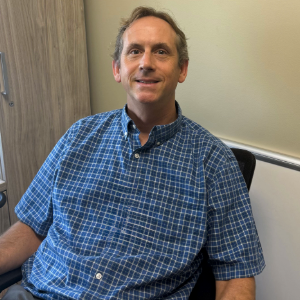 First, those systems involved chemical processes. Later, they included the technology behind semiconductor manufacturing. Today, as a biostatistician in the UAB Department of Surgery, Chandler studies another kind of complex system - medical data and the stories it can tell about patients, treatments, and outcomes.
His work mainly takes place behind the scenes, and it plays an important role in advancing surgical research. By applying statistical methods to clinical questions, Chandler helps researchers move from an idea to evidence that can ultimately inform patient care.
For him,, the numbers are never simply numbers. Each data point represents a person, a medical experience, and an opportunity to learn something that could improve future outcomes.
The Early Years: Mobile, Auburn, and Engineering
Chandler grew up in Mobile, Alabama, before making his way to Auburn University. At Auburn, he pursued chemical engineering, a discipline that gave him an early foundation in mathematics, problem-solving, and the careful study of complicated processes. He earned both his Bachelor of Science and Doctor of Philosophy in chemical engineering.
Chemical engineering taught Chandler to approach challenges methodically. Large problems could be divided into smaller questions. Assumptions had to be examined, results had to be tested, and conclusions had to be supported by evidence. Those habits would remain with him, even as his career eventually moved beyond the traditional boundaries of engineering.
From Oregon to Ann Arbor
After completing his doctorate, work took him across the country to Hillsboro, Oregon, where he joined Intel Corporation. He spent seven years working in the fast-moving semiconductor industry. The environment required technical precision, careful analysis, and the ability to make decisions using large amounts of information. The experience strengthened his ability to think critically and work collaboratively, but it also marked only the first chapter of a career that would eventually take an unexpected turn.
Oregon became significant to Chandler for more than his work at Intel. While living there, he met Karin Hardiman, M.D., Ph.D., his wife. As Dr. Hardiman’s medical career progressed, the couple moved to Ann Arbor, Michigan. For Chandler, the move presented an opportunity to reconsider what he wanted the next chapter of his own career to look like.
After years spent applying data and analytical thinking to semiconductor manufacturing, he became interested in using those same skills to answer questions with a more direct connection to human health. Chandler returned to the classroom at the University of Michigan, where he earned a Master of Science in biostatistics.
The career shift may have appeared dramatic from the outside, but for Chandler, many of the fundamentals remained the same. Engineering and biostatistics both require an ability to break complicated problems into smaller pieces, understand uncertainty, and determine whether the evidence actually supports a conclusion. What changed was the subject of those questions.
Instead of analyzing processes involved in manufacturing, he could now use data to study patients, treatments, and medical outcomes. Eventually, the couple’s professional paths brought them to UAB Surgery. Dr. Hardiman joined the department as a surgeon-scientist in the Division of Gastrointestinal Surgery, while Chandler found his own place supporting the department’s growing research mission through biostatistics.
In a career that began more than 2,000 miles away in Oregon, the two had found themselves working toward the same larger goal from different sides of academic medicine.
Finding His Place in Surgery
At UAB, Chandler began working with researchers across the Department of Surgery, including epidemiologist Paul MacLennan, Ph.D., professor of surgery and director of Transplant Analytics.
Dr. MacLennan’s work spans epidemiology, study design, data management, and advanced statistical analysis, with a particular focus on solid organ transplantation. Working within that environment gave Chandler the opportunity to learn and apply his statistical training to complex questions involving transplant patients and outcomes.
The collaboration also demonstrated an important part of Chandler’s role: a biostatistician’s work does not simply begin when someone hands over a completed dataset. Often, it starts much earlier. A researcher may come with a clinical observation or a question they want to investigate. From there, he helps determine how that question can be studied, what data are needed, which statistical methods are appropriate, and what conclusions the resulting evidence can reasonably support. His role is as much about asking the right questions as it is about finding answers.
That distinction is especially important in clinical research, where datasets can contain hundreds or thousands of variables and where an apparent relationship between two factors may not tell the entire story.
By collaborating with surgeons, epidemiologists, and other investigators throughout the research process, Chandler helps build a stronger foundation for the studies that ultimately inform patient care.
The Science Behind the Statistics
Chandler’s research interests now include advanced statistical methods, machine learning, reproducible research, and transplantation, along with the foundational methodologies that shaped the field.
Even concepts that are now central to medical research have roots in much earlier experiments. Chandler points to the history of randomization and experimental design, including the work of statistician R.A. Fisher, whose agricultural experiments helped formalize methods researchers still rely upon today.
Long before randomized studies became synonymous with clinical research, researchers were asking how they could fairly compare one intervention with another while reducing the influence of outside factors. For him, that history underscores a principle that remains relevant even in an era of machine learning and massive datasets; sophisticated technology cannot compensate for a poorly designed study. The quality of the question and the methods used to answer it still matter. That same philosophy carries into McLeod’s interest in reproducible research.
A statistical result should not depend on a series of steps understood only by the person who performed the analysis. The process should be organized and documented so that another researcher can understand how the data were prepared, why particular decisions were made, and how the final conclusions were reached.
For McLeod, getting the analysis right is ultimately about more than numbers on a screen. In medical research, the conclusions drawn from those numbers can influence future studies, clinical decisions, and, ultimately, patient care.
An Experiment in the Garden
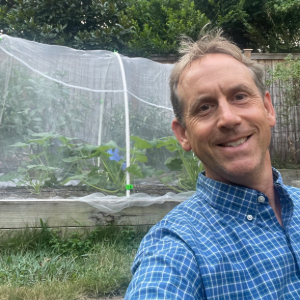 Chandler's innovative squash vine borers trap McLeod’s instinct to investigate problems does not disappear when he leaves work.
Outside of UAB, he enjoys gardening, where he has found himself conducting experiments of an entirely different variety.
Recently, squash plants in his garden presented a particularly stubborn problem, squash vine borers. The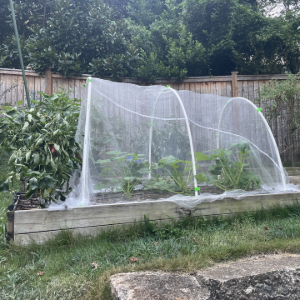 insect lays eggs near squash plants, and after hatching, the larvae can bore into the stem and damage the plant from the inside.
Rather than simply accept losing part of the crop, McLeod began working on a system designed to interrupt the insects before they could reach his plants. It is a considerably lower-stakes experiment, but the process carries a familiar rhythm.
Observe a problem. Develop an idea. Test it. See what happens. Then use the result to decide what to try next. There is also a fitting connection between the garden and his appreciation for the history of statistics. Some of the principles of modern experimental design that now underpin clinical research were first developed through agricultural experiments.
More than a century later, McLeod spends his workdays applying statistical thinking to questions in surgery before heading home to solve a few agricultural problems of his own.
Finding Meaning in the Numbers
McLeod’s path to UAB Surgery has taken him from Mobile to Auburn, Oregon, and Michigan, with each stop shaping the way he approaches problems today.
Along the way, he met his wife, Karin Hardiman, and years later, the two found themselves working in the same department, each contributing to better patient care and scientific advancement in their own way.
Whether he is studying surgical outcomes or protecting squash in his garden, Chandler keeps returning to the same instinct: stay curious, ask good questions, and keep looking for a better answer.