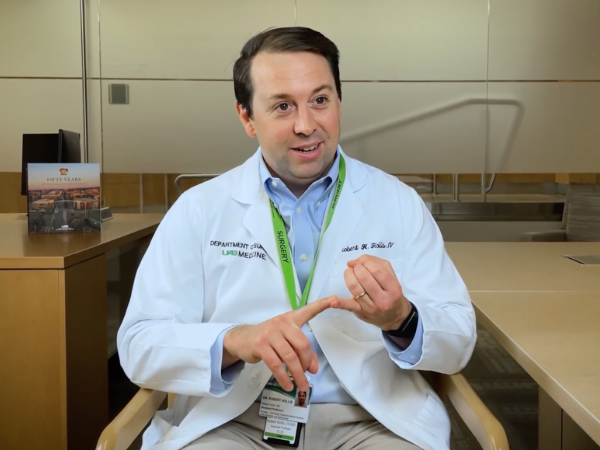
Robert H. Hollis, M.D., MSPH, the leader of the O'Neal Cancer Center Colorectal Cancer Management Team and an assistant professor in the UAB Division of Gastrointestinal Surgery, discussed key aspects of colorectal cancer, including common symptoms, screening options, treatment approaches, and hereditary risk factors, as part of an educational video series produced by the O'Neal Comprehensive Cancer Center.
 Understanding Colorectal Cancer: Causes, Detection, and Treatment
Hollis explained how colorectal cancer develops from abnormal growths in the colon or rectum that can progress to an invasive stage and eventually spread if left untreated. He described symptoms that should prompt evaluation, including rectal bleeding, unexplained weight loss, and changes in stool size or shape.
Hollis also outlined current screening options. Colonoscopy remains a gold standard, allowing physicians to both identify and remove precancerous polyps during the procedure. He noted that alternatives, such as Cologuard, a stool-based test that detects blood and DNA fragments associated with higher-risk lesions, are available for patients who may not have easy access to colonoscopy. Newer blood-based tests were recently approved for patients as an alternative to colonoscopy or stool-based tests; however, these tests have limited ability to detect precancerous lesions and can miss early-stage cancers.
"For patients diagnosed with colorectal cancer, we have extensive resources and specialized providers at UAB to care for them, including our nationally accredited multi-disciplinary colorectal cancer clinic," Hollis said.
Watch the full O'Neal Cancer Center Education Series video here.
About the O'Neal Education Series
The O'Neal Education Series is an educational initiative from the O'Neal Comprehensive Cancer Center at UAB that brings together physicians from diverse cancer specialties to provide patients, caregivers, and the broader community with clear, reliable information on cancer prevention, diagnosis, and treatment. Each segment features UAB Medicine specialists discussing a specific cancer type, addressing common questions, and explaining the latest advances in care. The series is part of UAB's commitment to patient-centered care and community awareness.