On World Pancreatic Cancer Day, the UAB Pancreatobiliary Disease Center (PDC) hosted an awareness booth in The Kirklin Clinic (TKC), engaging patients, caregivers, and staff in meaningful conversations about one of the most lethal cancers affecting Alabama and the nation. The initiative aimed to increase community understanding of pancreatic cancer risk factors, early symptoms, and the importance of timely diagnosis. This awareness initiative was led by Division of Surgical Oncology faculty members: J. Bart Rose, M.D., MAS, director of the PDC, Sushanth Reddy, M.D., head of surgery for the PDC, and PDC research scholar Victor Perim, MD.
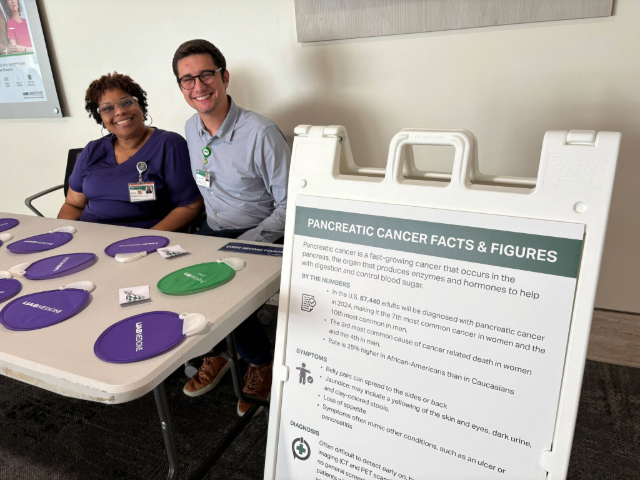 Pancreatic cancer remains one of the most challenging malignancies in the United States, with the number of new cases continuing to rise each year. In 2025, approximately 67,440 new diagnoses are expected nationwide, and an estimated 51,980 deaths. This equates to about 1 in 56 men and 1 in 60 women with develop pancreatic cancer. Unfortunately, outcomes remain poor given pancreatic cancer often presents at an advanced, incurable stage. Early-stage disease is difficult to detect due to the absence of early symptoms and the lack of any effective broad-based screening program for the general population.
This challenge is especially pressing in Alabama. The state experiences an age-adjusted pancreatic cancer incidence rate of 12.9 per 100,000, with roughly 839 new cases diagnosed each year. Mortality remains high, with an age-adjusted death rate of 11.5 per 100,000, and data over recent years show a slight upward trend in pancreatic cancer related deaths.
“These statistics are sobering and underscore why awareness initiatives are crucial for our community,” Rose said.
Rose says increasing public understanding of pancreatic cancer, promoting earlier evaluation of concerning symptoms, and ensuring access to specialty care are essential steps in addressing a disease that continues to pose a significant public health burden across Alabama.
Throughout the event, staff distributed educational materials and answered questions from visitors relating to warning signs such as unintentional weight loss, jaundice, new-onset diabetes, and persistent abdominal or back pain. Because pancreatic cancer often presents late, awareness remains a critical tool for earlier detection.
“We believe in meeting patients where they are,” Rose said. “Pancreatic cancer is often difficult to detect early, and empowering individuals with knowledge can make a critical difference in when they seek care.”
The UAB Pancreatobiliary Disease Center brings together experts in surgery, gastroenterology, oncology, radiology, genetics, nutrition, and supportive care to deliver coordinated, patient-centered treatment. The team specializes in evaluating and treating patients with benign and malignant diseases of the pancreas and biliary tract, including pancreatic ductal adenocarcinoma, cystic neoplasms, pancreatitis, and biliary obstruction. By hosting awareness events like the one at TKC, the Center reinforces its mission to improve early recognition, reduce disparities in diagnosis, and provide exceptional care to patients across Alabama and the Southeast.