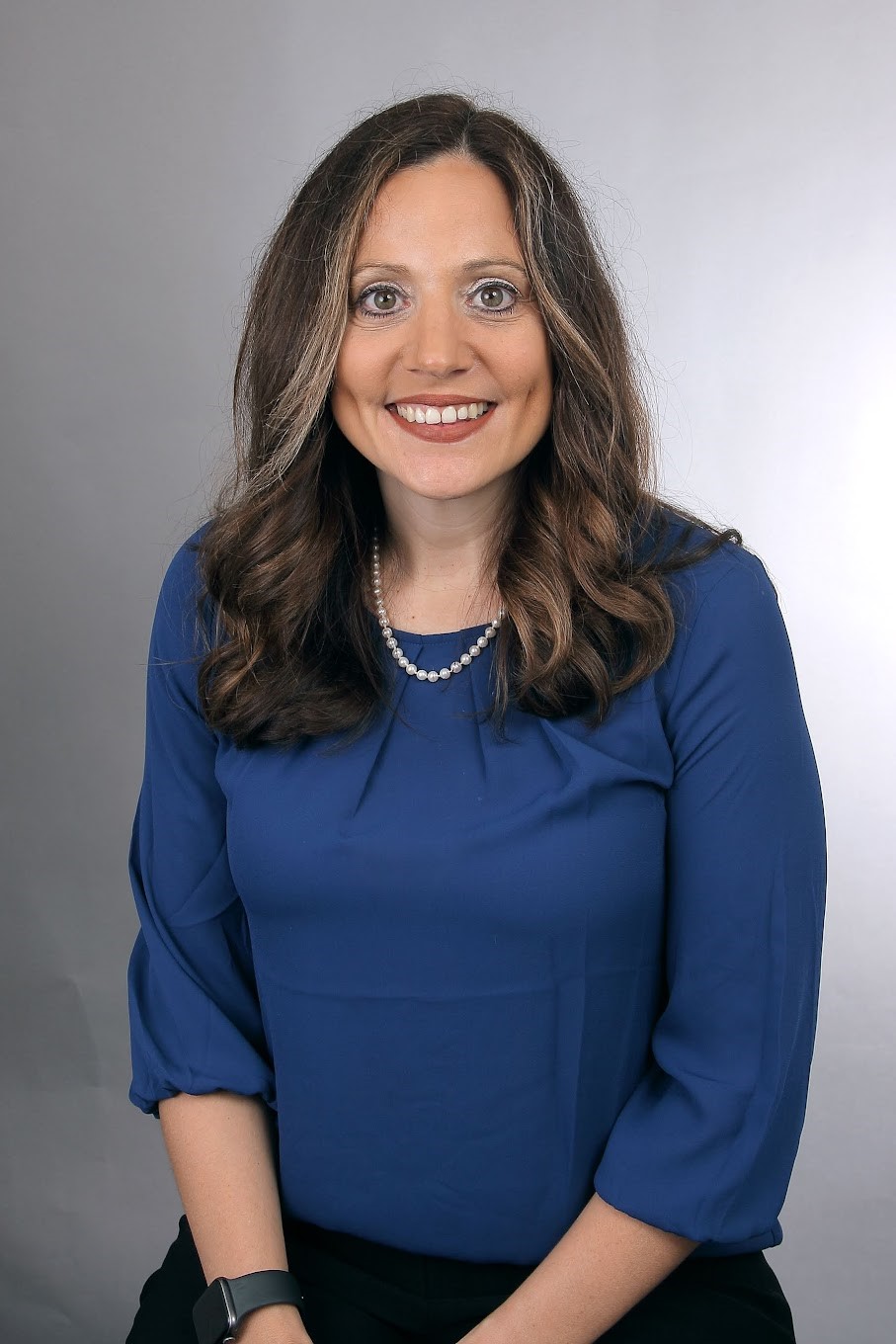
Betsy Hopson, Ph.D., MSHA, joined the Department of Urology as an assistant professor in November 2025. She earned her undergraduate degree at Huntingdon College, majoring in business administration with a concentration in healthcare management. Her interest in healthcare began in high school, when someone took a chance on her and trained her in medical office billing. Through a co-op program, she worked in a large urology practice in Atlanta, leaving school early each day to handle billing. The practice also paid for her certification in medical billing and coding. She thrived in the fast-paced environment and imagined a future in billing—long before she realized how deeply healthcare would shape her life.
As she advanced into coordinator roles, she witnessed the effects of fragmented systems and saw the profound difference that multidisciplinary, lifespan-focused care could make. She returned to graduate school to earn a master’s in healthcare administration (MSHA), aiming to build programs that improved outcomes while remaining sustainable from both systems and business perspectives.
She earned her Ph.D. in rehabilitation science at UAB, a field that aligned with her mission: optimizing quality of life, function, and autonomy for people with disabilities. Her research is shaped directly by patient conversations. Whenever she identified a need, she designed projects to study it and used her findings to improve existing processes. That feedback loop has become the cornerstone of her career.
She also completed a graduate certificate in mixed methods research to intentionally incorporate the voices of people with lived experience into her studies, along with specialized training in community-based action research and photovoice. Most recently, she began a graduate certificate in AI in medicine, believing the future of healthcare will require the compassionate, ethical integration of technology to improve lives.
Learn more about her journey and what inspires her work below.
Can you share your professional background and experiences prior to joining our institution?
Hopson: My career began at Children’s Healthcare of Atlanta, where I coordinated the Hemophilia Program and partnered with the CDC to develop the first National Hemophilia Registry. That work opened my eyes to the power of data, collaboration, and advocacy to improve care for people with lifelong conditions.
When I joined UAB and Children’s of Alabama to coordinate the Spina Bifida (SB) Program, my career trajectory changed. Working again with the CDC, I helped establish the National Spina Bifida Patient Registry, which has become one of the most influential national initiatives in the field. As the coordinator of the SB program, I began hearing needs that were not being addressed, questions about sexual health, relationships, independence, abuse, and the uncertainty of adulthood. Their honesty shaped every step I took next.
Recognizing that my patients were aging out of pediatric systems with nowhere to go, I helped develop the Spina Bifida Transition/Adult Clinic, which became the foundation for the STEP (Staging Transition for Every Patient) Program. STEP is now a nationally recognized lifespan model replicated across multiple conditions, and it later provided the platform to build UAB’s Lifespan Down Syndrome Clinic. In addition to my faculty position in urology, I will still be directing the STEP Program and both the lifespan Spina Bifida and Down Syndrome programs at UAB.
What inspired you to pursue a career in this field?
Hopson: My life was forever changed by meeting and spending time with individuals with spina bifida and their incredible caregivers. I saw grit, determination, resilience, grace, kindness, and an appreciation for even the smallest act of support. That combination of strength and vulnerability propelled me to want life to be better for them.
My inspiration came from seeing just how hard life can be for individuals with disabilities and believing with my whole heart that healthcare shouldn’t make it harder. I fell in love with this work because of the conversations I had with my patients. When I listened, really listened, I realized how powerful it was to simply care and to use that compassion to build better systems.
I saw patients struggling silently with questions about identity, relationships, fertility, and safety, often believing these things weren’t possible for them because of their diagnosis. Their honesty lit a fire in me. Each day became a new opportunity to ease a burden, solve a barrier, or create a pathway that didn’t exist. This field became my calling because I realized that meaningful, lifelong impact grows out of listening deeply, honoring their lived experience, and advocating relentlessly.
What aspects of your new role here are you most excited about?
Hopson: Truly—everything. I am excited to continue building and expanding lifespan programs that address real needs for individuals with disabilities. I am looking forward to teaching students not only how to care for patients, but how to see the whole person behind the diagnosis. I am energized by the possibility of embedding rigorous mixed methods and into our clinical work.
I’m also deeply excited about the opportunity to advance research in transition readiness, self-efficacy, and sexual and reproductive health, areas that have been overlooked for far too long. Becoming faculty gives me the academic space and freedom to innovate, mentor, and build both within UAB and globally. Most of all, I’m excited to create work that leaves a meaningful ripple effect.
What is your primary area of expertise within your field, and what sparked your passion for it?
Hopson: My primary areas of expertise include:
- Lifespan transitional systems of care
- Sexual and reproductive health in congenital conditions
- Sexual abuse prevention for individuals with disabilities
- Creating multidisciplinary, lifespan models of care (Down syndrome, spina bifida)
- Mixed methods research integrating lived experience
- Care coordination for people with childhood-onset medical complexity
What sparked my passion was witnessing firsthand the gaps in knowledge, gaps in safety, and gaps in support. My drive comes from wanting to build systems that honor the full humanity of the individuals we serve.
What are your goals for making an impact through both your teaching and patient care in this role?
Hopson: In teaching, my goal is to empower students and trainees to see the person, not the diagnosis. I want them to understand the importance of dignity, curiosity, humility, and deep listening. I want to train the next generation to care for individuals with disabilities in ways that are compassionate, evidence-based, and human-centered.
In patient care, my goal is to ensure that every patient transitions into adulthood with confidence, independence, and safety. I want to prevent avoidable suffering—especially sexual abuse, misinformation, and gaps in care. I strive to embed screening, safety, and self-efficacy into routine practice, so these essential elements are no longer optional or overlooked. Most importantly, I want to make sure no patient ever feels alone, forgotten, or “too complex” for the system.
Anything else you’d like to add?
Hopson: Faith guides my work, and I truly try to find opportunities each day to make a difference in someone’s life. My daughters, Logan and Payden, and my husband, Derrick, are my greatest sources of strength and joy, they ground me, support me, and remind me of what truly matters.