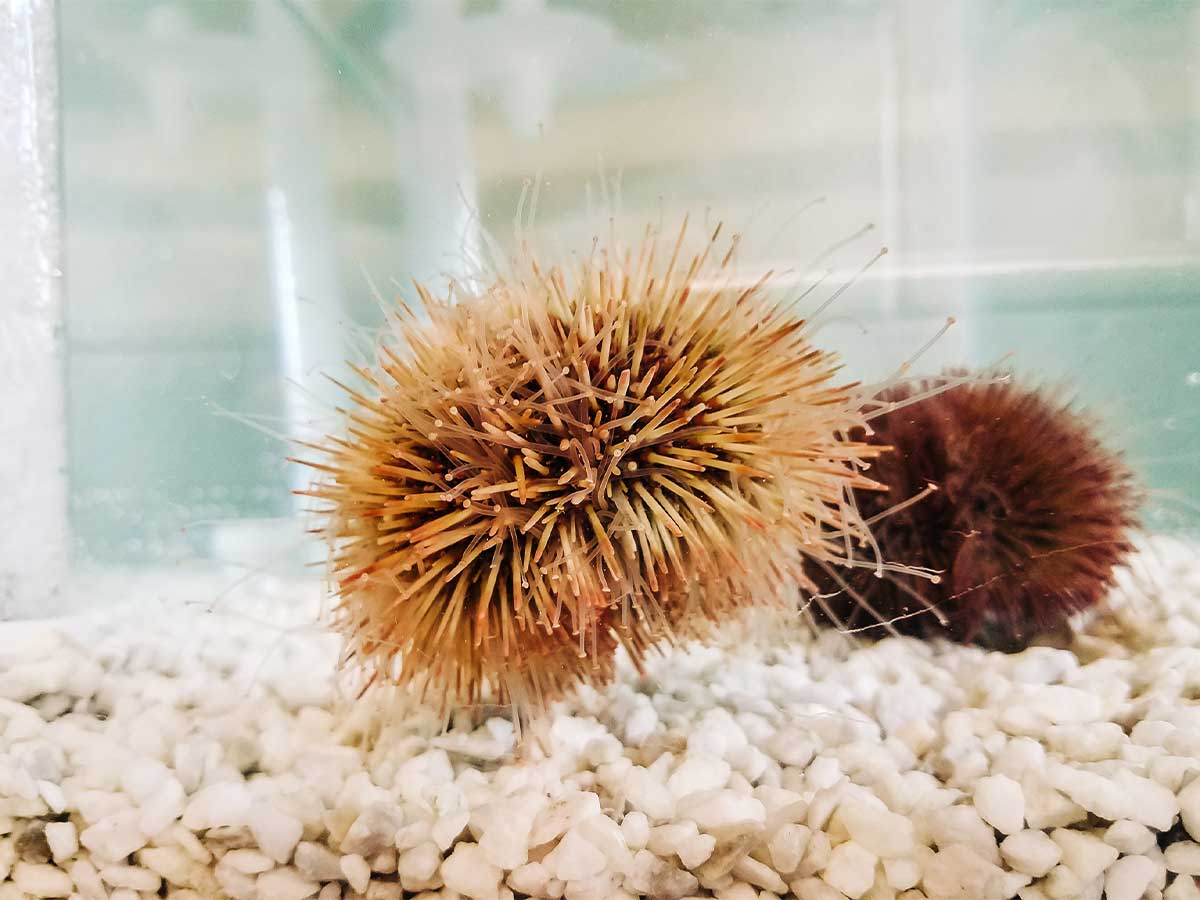
When looking at the environmental and genetic effects on development in humans, the last place you might think to look is in the ocean. Sea urchins specifically have similar embryonic qualities as humans, making them a valuable model for understanding genetic and environmental influences on embryonic development.
Victoria K. Gibbs, Ph.D., serves as an associate professor in the Biomedical Sciences program and is one of the leading investigators of this project. Her grant collaborators include academics from UAB, Brown University, and Gloucester Marine Genomics Institute, and the Aquatic Germplasm and Genetics Resource Center (AGGRC) at Louisiana State University. All research partners are working together to improve techniques in gene editing, cell culture, cryopreservation, husbandry, and education in the sea urchin model. This work will hopefully give other researchers better accessibility and tools for future opportunities with the sea urchin model.
The UAB portion of the collaboration involves working with the AGGRC to standardize cryopreservation of sperm in the sea urchin, Lytechinus variegatus, while improving care and breeding strategies (husbandry) for culture of sea urchins in land-based systems.
Cryopreservation is the process of preserving biological material at extremely low temperatures. The materials can range from cells, such as sperm, up to embryos to prevent decay for long periods of cold storage with the goal of reviving them in the future.
“I look forward to developing clear protocols and procedures we can share with researchers to improve sea urchin husbandry and for how to preserve valuable genetic lines via cryopreservation, which can support research in development and even conservation of aquatic species,” said Gibbs
This area of research also gives Gibbs the opportunity to work alongside and teach undergraduate and graduate level students. Gibbs particularly looks forward to showing students the process of scientific inquiry, “I hope their experiences support their future pursuits of careers in science.”
This study was funded by a $908,000 grant issued by the National Science Foundation Division of Integrative Organismal Systems Enabling Discovery through Genomics (EDGE) program and will be funded through 2028.