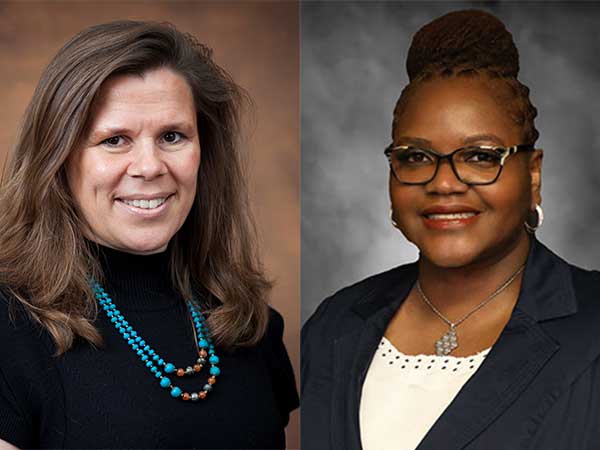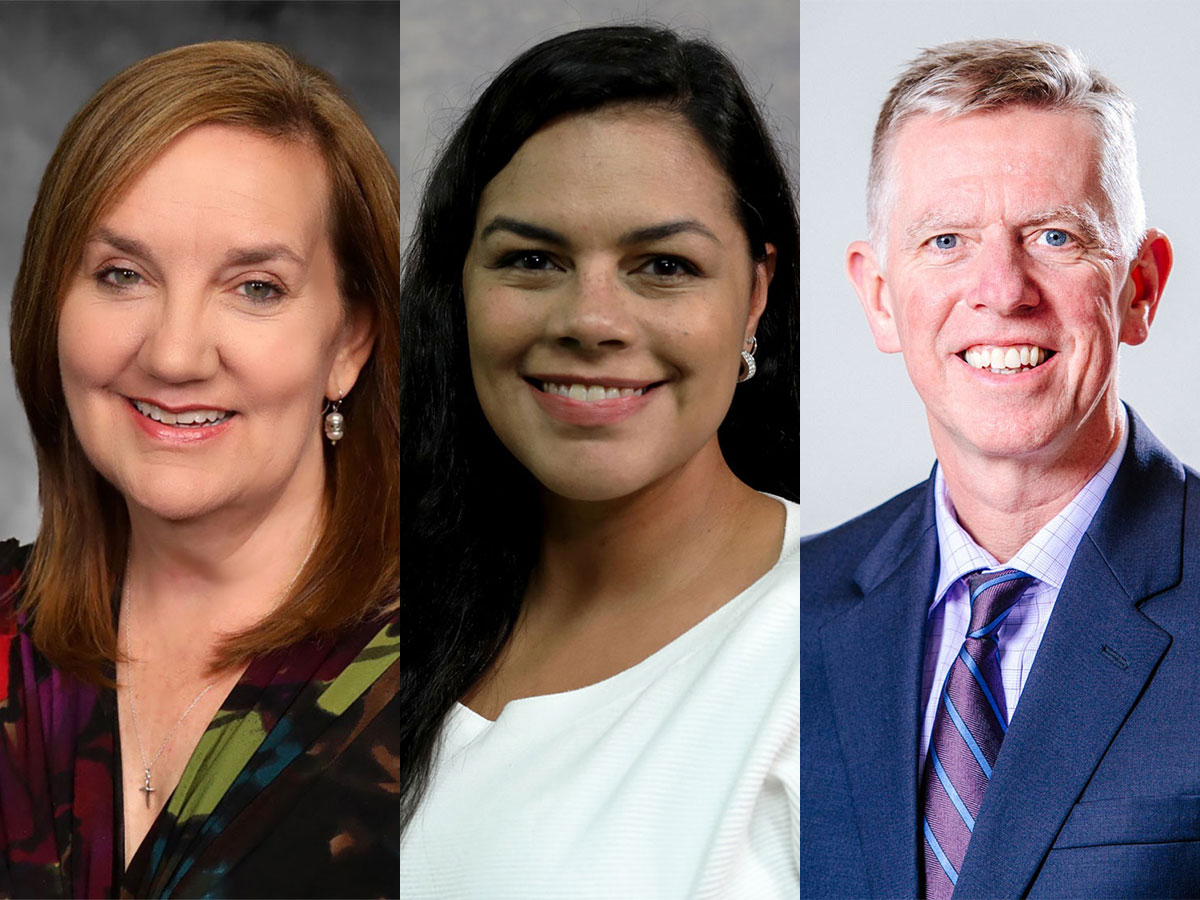
Three longtime University of Alabama at Birmingham (UAB) collaborators, Mary Bowman, OTR/L, Sarah dos Anjos, PhD, OTD, MS, OTR/L, and David Morris, PT, PhD, have taken their research to major rehabilitation meetings this month. Their research is based on neuroplasticity, the nervous system’s ability to change and reorganize after injury and with repeated activity, a process that can help people regain function after neurological injury.
Bowman, assistant professor of occupational therapy, and Morris, distinguished professor and chair of the UAB Department of Physical Therapy, are representing UAB at the World Congress for Neurorehabilitation (WCNR) in Daegu, South Korea, where they will present work in constraint-induced movement therapy (CIMT) and neuroplasticity-based rehabilitation. They will also host a UAB booth at WCNR before traveling to Seoul for the World Stroke Congress to host a second booth and share information about UAB’s rehabilitation programs and training.
At the same time, dos Anjos, associate professor of occupational therapy, is presenting and moderating ACRM sessions in Washington, D.C., focused on how evidence-based stroke rehabilitation approaches are evaluated and applied in practice. She also co-chairs the Movement Interventions Task Force within the Stroke Interdisciplinary Special Interest Group at ACRM.
In 2026 alone, Bowman, dos Anjos, and Morris have collaborated on at least 10 publications and presentations. Much of that work centers on CIMT, also called CI Therapy, a neuroplasticity-based rehabilitation approach developed at UAB starting in the late 1980s by Edward Taub, PhD, and the CI Therapy Research Group. The therapy has been refined at UAB for decades, and Bowman, dos Anjos, and Morris continue to advance both the science and clinical application of the approach.
A team in research, clinical practice, and education
The work of these collaborators extends beyond CI Therapy. Earlier this year, Bowman, dos Anjos, Morris, and other UAB colleagues proposed a neuroplasticity-based model for rehabilitation to guide planning and delivery of treatment for neurological disease or injury. The model proposes five therapeutic aims intended to promote beneficial neuroplastic changes and considers individual patient needs and circumstances.
The team also brings this work into clinical care. Bowman and dos Anjos deliver upper-extremity CI Therapy and other treatments through the UAB Neuroplasticity Rehabilitation Program, an outpatient faculty practice directed by Bowman.
Patients with stroke, traumatic brain injury, multiple sclerosis, and other neurological conditions travel from across the United States and abroad for treatment, which combines intensive motor training, behavioral strategies, and restraint of the less-affected arm and hand. Occupational therapy and physical therapy doctoral students gain clinical experience in the program, which serves as a capstone site for OT students.
Bowman and Morris also train health professionals to use CI Therapy in clinical practice. Morris is director of training and Bowman is clinical director and instructor in the UAB Training for CI Therapy program, which teaches clinicians around the world how to establish CI Therapy programs for adults and children.
At WCNR, examining recovery beyond the clinic
The research Bowman and Morris are presenting at WCNR addresses several enduring questions in rehabilitation, including how treatment is structured and experienced, whether gains made in the clinic carry into everyday life, and how those changes can be measured.
Bowman is presenting as part of a symposium on the “transfer package,” the CI Therapy component shown to contribute the greatest improvement in real-world use of the more-affected arm and hand. She is also discussing evidence linking the transfer package to neuroplastic changes in the brain.
“One part of the transfer package is a home skill assignment in which the patient and therapist choose everyday activities, ranging from easier to more challenging, for the patient to practice outside the clinic,” Bowman said. “They review the results at the next session and problem-solve any difficulties.”
She is also sharing preliminary findings from a pilot clinical trial exploring patients’ experiences with the Keys treatment protocol. The protocol includes all CIMT components but delivers them in shorter sessions spread over a longer period. The goal is making the intensive therapy more feasible for outpatient stroke rehabilitation. dos Anjos, Morris, and UAB PhD in Rehabilitation Science student Sadegh Mojaradinloo, BSc OT, are co-authors.
Morris’ presentation asks a related question: how well do rehabilitation measures capture what people actually do in daily life? He is presenting a study on the Lower Extremity Motor Activity Log, a tool used with people with stroke and multiple sclerosis. The researchers are refining the log to better capture how people use their legs in daily life compared with what they can do in a clinic or other controlled setting. Mojaradinloo, Bowman, and dos Anjos are co-authors.
At ACRM, weighing approaches to stroke rehabilitation
At ACRM, dos Anjos’ work is addressing how clinicians interpret evidence and make treatment decisions in stroke rehabilitation.
She is presenting with Monika Gross, BFA, MSME/T, M.AmSAT, executive director of The Poise Project, and Yu-Chen Chung, PT, PhD, visiting instructor at Oregon Institute of Technology, in a symposium examining how clinicians balance efforts to restore movement after stroke with strategies that help patients compensate for lost function. The presenters will consider the benefits and limitations of both approaches and the clinical and ethical factors that influence their use.
“Restorative and compensatory approaches are not necessarily mutually exclusive,” dos Anjos said. “The challenge is deciding when and how to use each one based on the patient’s goals, circumstances, and stage of recovery.”
dos Anjos is also the corresponding presenter for a symposium comparing recommendations for arm and hand rehabilitation after stroke across English-language clinical guidelines. She is presenting with Elena Donoso Brown, PhD, OTR/L, associate professor and department chair at Duquesne University; Caitlin Newman, OTR/L, therapy manager at Shirley Ryan AbilityLab; and Veronica Rowe, PhD, OTR/L, associate professor of occupational therapy at Georgia State University. Together, they will examine where guidelines agree and differ, including how they evaluate evidence and develop recommendations.
“By synthesizing recommendations across guidelines, the symposium will identify interventions that are consistently recommended, inconclusive, or not recommended, helping clinicians translate the collective evidence into rehabilitation practice,” dos Anjos said.
While in Washington, dos Anjos is also supporting UAB OTD students who are presenting three systematic reviews at ACRM. Read more about the students’ research and conference experience.