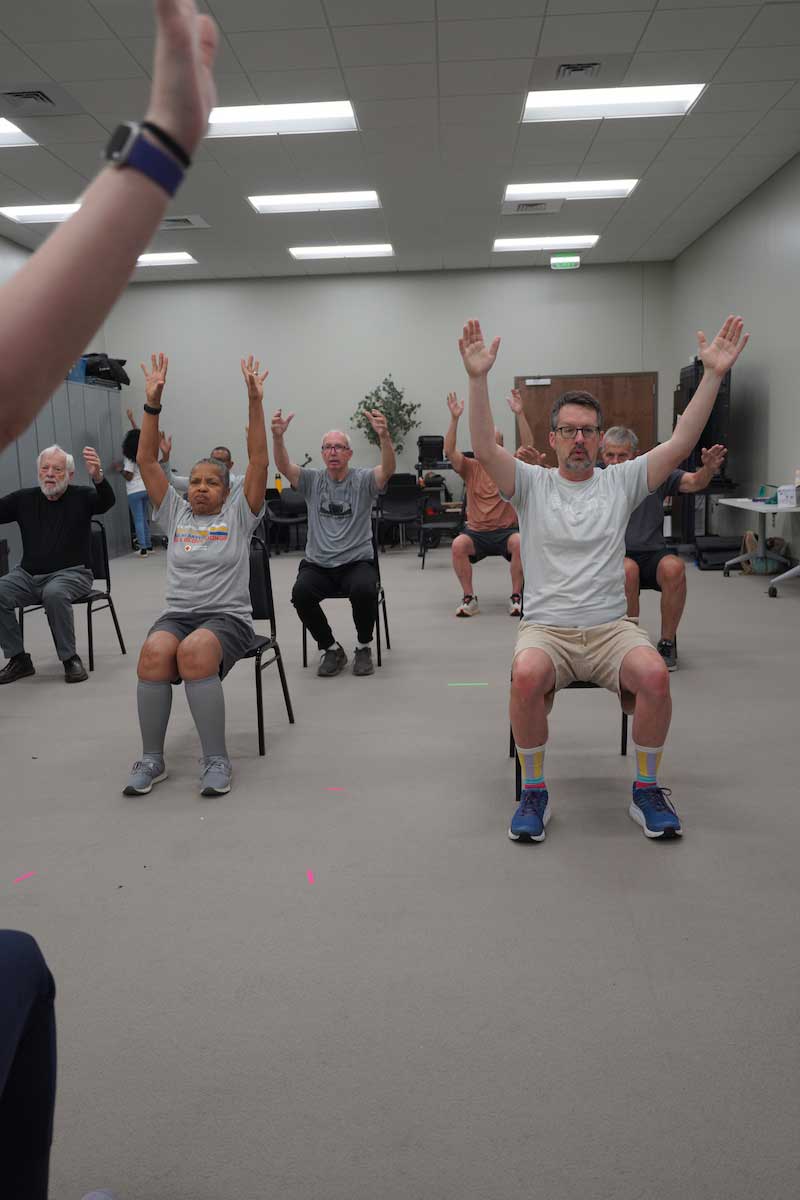
It’s become routine at this point. Vanessa Kaczmarek instructs the class to strike a specific stretch. But, before all the exercise participants begin, they await her to ask one specific member of the group, “how long should you hold a stretch?”
There are a few laughs in the room because he’s answered this same question at every class for months now. Although it’s become a running joke for everyone, it serves as a point of education Kaczmarek aims for in the PD Power Hour class she leads with support from CEDHARS.
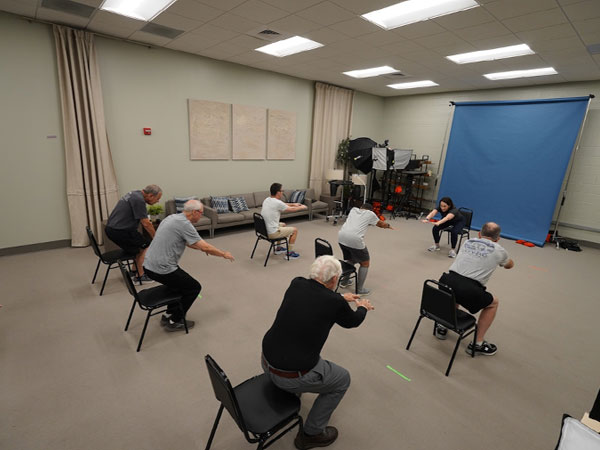
Exercise for people with Parkinson’s can feel intimidating, expensive or inaccessible. But twice a month at CEDHARS’ home in the Wellness, Health and Research Facility (WHARF), participants gather for the free exercise classes designed specifically to empower people with Parkinson’s to move more safely, confidently and independently. The class was designed to get people into the welcoming atmosphere of the WHARF, while also providing high quality care provided by an expert in neurologic physical therapy.
“By coming to the building, participants are getting great exercise while also being exposed to various research projects that are going on throughout campus and different wellness programs that we have to offer through NCHPAD,” said CEDHARS Lab Director Alex Evancho.
Although CEDHARS’ primary focus is cutting-edge disability health research, Evancho saw an opportunity to create a bridge between research, rehabilitation and long-term community wellness for people with Parkinson’s disease, serving a common problem.
“The whole idea behind the class was to engage people in exercise after they were done with research,” she said. “The class would just kind of act as a bridge between the research side of things and NCHPAD wellness, while also engaging the community.”
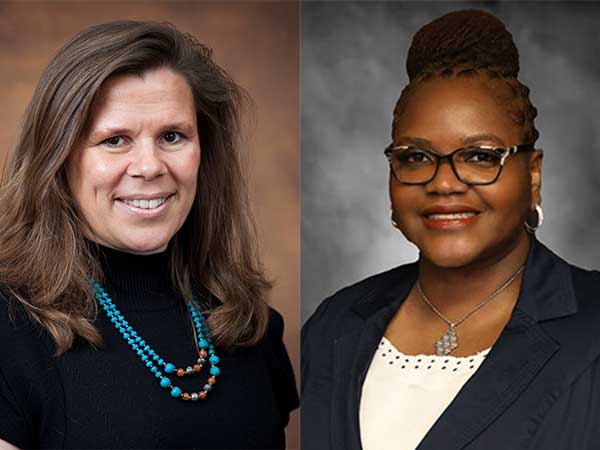
And the timing was serendipitous. Evancho was talking with Kaczmarek, a long-time colleague and friend, who expressed interest in leading a group class. As a neurological physical therapist, Kaczmarek typically sees patients in a one-on-one setting in her clinic.
“There’s a lot of research on the benefits of more group-based things for the community aspect to help with some of those non-motor symptoms,” Kaczmarek said. “The classes are really targeting symptoms and really look a lot like the individual sessions that I do with people, just in a group.”
The class structure is based on Parkinson’s Wellness Recovery (PWR) Moves, designed by Dr. Becky Farley to improve daily function and mobility. The four movements incorporated into classes are power up, power rock, power twist and power step. The exercise movements specifically target balance, posture and rigidity, which typically deteriorate with Parkinson’s. Because the class is led by a neurological physical therapist, participants receive exercise instruction that is grounded in clinical expertise and adapted to the movement challenges commonly experienced by people with Parkinson’s.
“You can perform those four movements in lots of different positions … and there are variations to each of the movements, so that again you can make it very individualized.”
Kaczmarek, PT, DPT, NSC, is a PWR! Moves Certified Therapist, which are key differentiating pieces of the class from other community offerings led by exercise instructors.
In translating research to practice, it was important to Evancho to reduce the barrier of entry. Unlike research studies, there is not a strict exclusionary criteria, so a larger portion of the population can be included. In addition to attendance being free of charge, once Kaczmarek performs a safety screening, participants can attend any class their schedule allows.
“It was disappointing to me when people would get screened out of the research study, so I wanted to have something to offer them,” Evancho said. “It’s nice to be able to give them a perk, you know, like a benefit as well.”
The translational science approach has also created a feedback loop from research to programs and back. Participant recruitment is often a challenge for researchers, but having this community-based program has created a base of participants consistently asking about opportunities to participate in research.
“The same people keep coming back, which is to me a good sign,” Evancho said. “And they ask me regularly about what other studies are going on… they want to be engaged.”
From making a meaningful impact on people’s daily lives to remembering how long to stretch, PD Power Hour at the WHARF emphasizes the “E” in CEDHARS – engagement. With its success, Evancho and Kaczmarek hope to expand class offerings as well as extend this model to other populations.
“I love it, but I want to do more groups,” Kaczmarek said. “Let’s do groups with other populations. Let’s do this. How can we do this in other ways? Because I also recognize that there are lots of groups for people with Parkinson’s, but there aren’t lots of groups for other populations, and I think that’s a neat opportunity.”